
Insights for AI builders
Tutorials, product updates, and ideas to help you build and ship AI applications faster.
Subscribe via RSS
Claude Code Skills for Non-Technical Teams: How to Build, Name, and Structure Them
Learn how to build Claude Code skills that non-engineers can actually use—with the right name, description, and reference file structure.

Claude Mythos vs Claude Opus 4.8: What's the Difference?
Claude Mythos is a new model tier above Opus. Compare capabilities, access restrictions, pricing, and what it means for AI builders.

How to Use Design Tokens with AI Agents: Consistent Brand Visuals Across Every Output
Design tokens stored in a JSON file let AI agents apply your brand colors, fonts, and layouts consistently across carousels, slides, and ads.

How Anthropic's Non-Engineering Teams Use Claude Code: 4 Patterns That Work
Legal, marketing, design, and finance teams at Anthropic use Claude Code differently than engineers. Here are the four patterns that drive real results.

How to Build a Brand Voice Profile for AI: Extract Your Voice in 15 Minutes
Learn how to create a brand voice file that makes every AI output sound like you—using skills, interviews, and real content samples.

How to Use AI for Brand Identity: Voice, Body of Work, and Visual Design Tokens
Build three brand context files—voice, body of work, and design tokens—so every AI output looks and sounds like your brand automatically.

How to Use Perplexity Computer for Business Automation: Connectors, Skills, and Tasks
Perplexity Computer connects to Gmail, Notion, GitHub, and 100+ tools out of the box. Learn how to set up skills and run automated business tasks.

Ideogram 4.0: The Best Open-Weight Image Model You Can Fine-Tune
Ideogram 4.0 is the highest-ranked open-weight image model available. Learn what makes it stand out, its strengths, and how to use it in workflows.

Local AI Inference with RTX Spark: What Changes When You Run LLMs On-Device
NVIDIA's RTX Spark chip enables local LLM inference with 128GB unified memory. Learn the privacy, cost, and offline benefits for AI workflows.

MAI Transcribe 1.5: Is Microsoft's New Model the Best Transcription AI?
MAI Transcribe 1.5 claims to be the world's most accurate transcription model and 5x faster than competitors. Here's what the data shows.

Microsoft Build 2026: MAI Models, Scout Agent, and RTX Spark Explained
Microsoft Build 2026 introduced seven new AI models, the Scout autopilot agent, and RTX Spark chip. Here's what matters for AI builders.

Miso One Voice Model: The Open-Source TTS That Sounds Like a Real Human
Miso One is an open-weight voice model that claims to be the most emotive TTS available. Learn how it compares and how to run it locally.

NVIDIA Nemotron 3 Ultra: The 550B Open-Weight Model Built for AI Agents
NVIDIA's Nemotron 3 Ultra is a 550B parameter open-weight model designed for agentic tasks. Learn its benchmarks, training recipe, and use cases.

Perplexity Computer vs OpenClaw: Which AI Agent Platform Should You Use?
Compare Perplexity Computer and OpenClaw across setup complexity, integrations, security, cost, and use cases to find the right agent platform.

Recraft 2.0 vs GPT Image 2 vs Ideogram 4.0: Which AI Image Model Wins?
Compare Recraft 2.0, GPT Image 2, and Ideogram 4.0 across realism, text rendering, editing, and open-weight availability to find the right model.

What Is the Slot Machine Method for AI Agents? Why Restarting Beats Correcting
Anthropic's own teams restart Claude sessions instead of correcting drift. Learn why this approach produces better results and how to apply it.

What Is the Intelligence Staircase? How AI Capability Jumps Work
Intelligence doesn't scale linearly—it jumps in steps. Learn what the intelligence staircase means for AI development and what comes after human-level.

What Is Perplexity Computer? The Hosted AI Agent Alternative to OpenClaw
Perplexity Computer is a fully hosted AI agent with pre-built connectors, skills, and multi-model support. Learn how it compares to self-hosted agents.

What Is Project Glasswing? Anthropic's Controlled Cybersecurity AI Rollout
Project Glasswing gives vetted cybersecurity partners access to Claude Mythos. Learn how the program works and what it signals about AI safety rollouts.

What Is Recursive Self-Improvement in AI? Anthropic's RSI Report Explained
Anthropic published research on AI building itself. Learn what recursive self-improvement means, the three future scenarios, and what it means for builders.
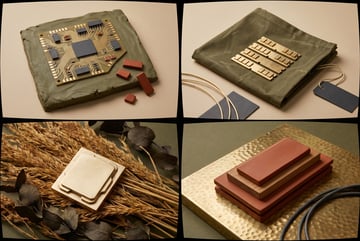
What Is the RTX Spark Chip? NVIDIA's AI-First GPU-CPU for Local Model Inference
NVIDIA's RTX Spark is a hybrid GPU-CPU chip with 128GB unified memory that can run large LLMs locally. Here's what it means for AI builders.

ChatGPT Memory Dreaming Update: How to Use and Optimize Your Memory Profile
ChatGPT's new Dreaming memory system creates a structured profile from your past chats. Learn how to review, edit, and optimize it for better AI outputs.

How to Use Claude Code for Non-Engineers: 4 Patterns from Anthropic's Own Teams
Anthropic's legal, marketing, design, and finance teams use Claude Code without coding skills. Here are the 4 patterns that drive their results.

GitHub Copilot App vs OpenAI Codex: The Key Difference Is Model Choice
The new GitHub Copilot app offers a Codex-like coding experience but lets you pick any model provider. Here's how it compares and when to use each.