
Insights for AI builders
Tutorials, product updates, and ideas to help you build and ship AI applications faster.
Subscribe via RSS
The Death of the $50K Internal Tool Build (and What Survives It)
AI app builders now compile production-grade internal tools for the cost of dinner. Here's what that does to the custom-software dev-shop economy.
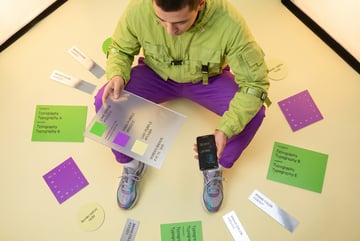
What Is a Design Token System for AI Agents? How to Lock In Consistent Brand Visuals
Design tokens store your brand colors, fonts, and layout rules in a JSON file that AI agents reference every time they generate visual content.

The Compiler Comparison: Is the LLM Actually a Compiler?
An LLM is non-deterministic where gcc is not — but reproducibility is a workflow property, not an engine one. Here is why that distinction matters.

What Lovable's Backend Push Reveals About the Spec-Layer Race
As Lovable, Bolt, and v0 all ship backends, feature parity stops being a differentiator. The real race is over who owns the spec layer.

Microsoft MAI Models Explained: Thinking, Code, Image, Transcribe, and Voice
Microsoft announced seven in-house AI models at Build 2026. Here's what each MAI model does, how they benchmark, and when you'd use one over Claude or GPT.

The mindstudio.json Manifest: The One File a Remy Project Requires
A field-by-field walkthrough of the mindstudio.json manifest — appId, roles, tables, methods, interfaces, and scenarios — and what each one declares.

Minimax M3: The 1M Token Coding Model That Claims to Beat GPT 5.5 on SWEbench
Minimax M3 is a coding-focused model with a 1 million token context window that outperforms GPT 5.5 and Gemini on SWEbench Pro at a fraction of the cost.

The 'Build It For Me' Shift: Why No-Code Gave Way to AI App Builders
No-code asks you to assemble the app by hand. AI app builders generate it from a description. Here is what that shift in interaction model actually changes.

The One Layer of Your AI-Built App You Actually Own
"Open source AI app builder" hides four different things. Here's a taxonomy of what's open across Remy, Bolt, Lovable, and Replit — and what you keep.

How to Watch a Remy App Run in Production, End to End
Remy ships request logs, method metrics, captured console output, and a system log the agent itself can read to debug a live app. Here's the full picture.

Scenarios: How Remy's Agent-Authored Test Cases Work
Remy scenarios are seed scripts the agent writes to put your dev database into a known state. Here's the execution model and the headless protocol.

Manifest, Methods, Tables, Roles, Interfaces, Scenarios: The Remy Vocabulary
A plain-language Remy glossary covering the six core primitives every builder meets: the manifest, methods, tables, roles, interfaces, and scenarios.

What a Full-Stack App Actually Costs When AI Compiles It
AI-compiled apps run $100-500 in tokens to build, once. Here's the full cost breakdown—and what it means for dev-shop and per-seat pricing.

The Vertical Internal-Tool Market Is About to Restructure
As AI compiles custom internal apps for the cost of a lunch, the build-vs-buy line moves — and enterprise software spend reorganizes around owned apps.

What Does 'Full-Stack' Actually Mean in an AI App Builder?
Most AI app builders claim full-stack. Few meet the bar. Here are the five criteria that separate a real backend from a polished demo.

What Is Microsoft Scout? The AI Autopilot Agent for Windows Explained
Microsoft Scout is an always-on AI agent that manages your Windows OS, Teams, Outlook, and calendar. Here's how it works and who it's designed for.

What Is Miso One? The Open-Source Voice Model That Sounds Like a Real Human
Miso One is an open-weight TTS model that produces highly emotive, human-sounding speech. Here's what it can do and how it compares to closed voice models.

What Is NVIDIA Nemotron 3.5 ASR? The Streaming Speech-to-Text Model Explained
NVIDIA Nemotron 3.5 ASR is a 600M streaming model supporting 40 languages with cache-aware architecture. Learn how it works and when to use it.

Word Boosting in AI Transcription: How to Fix Product Names and Rare Vocabulary
Word boosting lets you inject custom vocabulary into ASR models at decode time—no fine-tuning needed. Here's how it works and when to use it.

How to Use AI for Ad Creative Variation at Scale: The Marketing Sub-Agent Pattern
Anthropic's growth team uses two specialized sub-agents—one for headlines, one for descriptions—to generate hundreds of ad variations in minutes.
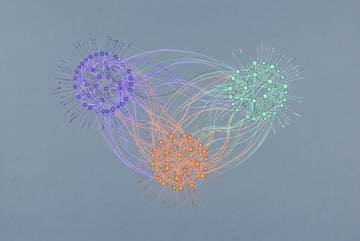
How to Build an AI Brand Voice System: Voice Profile, Body of Work, and Design Tokens
Build three reusable brand context files so every AI output sounds and looks like your brand—without re-explaining yourself every session.

Anthropic RSI Report: Three Scenarios for the Future of AI and What They Mean for Builders
Anthropic's recursive self-improvement report outlines three futures: plateau, human-guided acceleration, and full RSI. Here's the builder's guide.

Anthropic's Three AI Futures: Plateau, Human-Guided Acceleration, or Full RSI
Anthropic's RSI report outlines three possible AI futures. Here's what each scenario means for businesses building on AI platforms today.

ChatGPT Memory Dreaming Update: How to Audit and Optimize Your Memory Profile
ChatGPT's new Dreaming memory update changes how it learns from past chats. Learn how to review, correct, and optimize your memory summary.