
AI App Builder Alternatives
Choosing between tools that build a working application — Airtable, Bubble, Glide, Retool, Lovable, Bolt, v0, Replit Agent, Softr, OutSystems and Remy. 'Best X alternatives' round-ups and head-to-head matchups, for someone actively shopping rather than learning. Excludes automation glue (Zapier, n8n, Make), which stays in AI Workflow Automation, and coding agents (Cursor, Claude Code, Codex), which stay in AI Coding Tool Comparisons — those compare on different axes.

How to Build a Free Calendly Clone Using AI Coding Agents
A step-by-step look at how one builder used AI coding agents like Codex to clone Calendly's core features into a free, self-hosted scheduling tool.

How to Build a News Aggregator Website with AI, No Code Required
Learn how to build a text-only, ad-free news aggregator using Lovable's AI website builder, no coding skills needed, from idea to live site.

Lovable vs Replit vs Codex vs Claude Code: Which One to Build With?
Comparing Lovable, Replit, Bolt, Codex, and Claude Code to help you match your app idea to the right AI builder or coding agent.

What Is Lovable? The AI App Builder Explained Simply
What is Lovable? An explainer on the AI platform that turns plain-English descriptions into real, hosted apps with databases and logins.

The Best AI Platforms for Building Approval Workflows
Comparing Retool, Airtable, chatbot builders, and Remy for expense, vendor, PTO, and procurement approval workflows — what each actually ships.

The Best AI Platforms for Full-Stack Apps: Backend Depth Compared
Five AI platforms compared on backend, database, and auth depth — not surface polish alone — to find what actually ships a full-stack app.

The Best AI Tools for Building Real Software With No Code
A practical comparison of AI tools that let non-technical builders ship real, working software — not just clickable prototypes.

Five Questions That Separate a Real AI App Builder From a Toy
A five-question framework for evaluating AI app builders before you commit a team workflow to one — backend depth, ownership, and fit.

Five Airtable Alternatives for When the Base Becomes an App
Airtable is a strong database that gets expensive as an app — $45 per editor a month on Business. Five alternatives, including one you own outright.

Five Bubble Alternatives for Apps That Need a Real Backend
Bubble is a capable visual builder, but some apps need generated code and a native backend. Five alternatives, compared honestly.

Five Glide Alternatives When Your App Outgrows a Spreadsheet
Glide is great for spreadsheet-simple apps. Here are five alternatives for when you need real auth, a real database, and a full backend.

Five Retool Alternatives Your Ops Team Can Actually Maintain
Retool needs an engineer to wire up. Five alternatives — including one that compiles a full app from a plain-language spec — for teams that don't have one.

Five v0 Alternatives When You Need a Backend, Not Just a UI
v0 is excellent at generating frontend components. Here are five alternatives to reach for when the project needs a real backend too.

Best Bolt.new Alternatives for Production Full-Stack Apps
Bolt is fast for prototypes, but iteration burns credits and the backend leans on third-party infra. Here are the strongest Bolt alternatives for production.

Best Lovable Alternatives in 2026: Past the Prototype
Seven Lovable alternatives ranked on backend depth, auth, database persistence, deployment, and lock-in — for builders who need apps that survive production.

Best Replit Agent Alternatives in 2026: Five That Ship Real Apps
Replit Agent builds full-stack apps from a prompt in the browser. These five alternatives go from natural language to a deployed app a different way.

The 'Build It For Me' Shift: Why No-Code Gave Way to AI App Builders
No-code asks you to assemble the app by hand. AI app builders generate it from a description. Here is what that shift in interaction model actually changes.

Remy vs Airtable: Database-First or Spec-First Apps
Airtable starts from a spreadsheet and adds an interface. Remy starts from a plain-language plan and compiles a real app. Here's which shape fits your work.
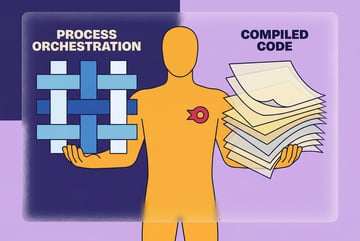
Remy vs Appian: AI Product Agent vs Enterprise Low-Code
Appian is enterprise low-code built on process automation. Remy compiles a plain-language plan into real, ownable code. Here's which one fits which job.
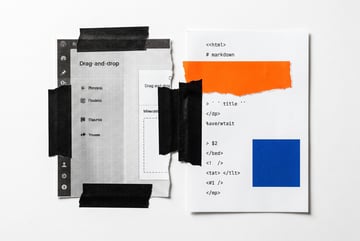
Remy vs Bubble: A Visual Canvas or a Plan You Own
Bubble builds apps on a visual canvas you assemble by hand. Remy compiles a plain-language plan into real code you own. Here's which fits your build.

Remy vs Glide: Compiled Apps or Spreadsheet No-Code
Glide turns a spreadsheet into an app you point and click together. Remy compiles a plain-language plan into a real full-stack app you own. Here's the fit.

Remy vs OutSystems: Spec-Driven vs Enterprise Low-Code
OutSystems is enterprise low-code with deep governance and compliance. Remy compiles a plain-language plan into real, ownable code. Here's which fits which job.

Remy vs Replit Agent: Full-Stack Builder Showdown
Replit Agent writes and runs code in a sandbox. Remy compiles a plain-language plan into a full stack with per-release databases. Here's which fits your build.

Remy vs Retool: When a Drag-and-Drop Builder Isn't Enough
Retool is the incumbent internal-tools builder. Remy compiles a plain-language plan into real, ownable code. Here's which one fits your team — and your budget.