Microsoft Build 2026: MAI Models, Scout Agent, and RTX Spark Explained
Microsoft Build 2026 introduced seven new AI models, the Scout autopilot agent, and RTX Spark chip. Here's what matters for AI builders.

What Microsoft Actually Announced at Build 2026
Microsoft Build 2026 was a dense event. Between seven new first-party AI models under the MAI banner, an autonomous browsing agent called Scout, and a compact new AI chip called RTX Spark, there was a lot packed into a few days.
Not all of it is equally consequential for builders. Some announcements matter immediately. Others are longer bets. This article breaks down what was announced, what it actually means, and where it fits into the broader shift in how AI systems get built and deployed.
The MAI Model Family: Microsoft’s First-Party AI Push
MAI stands for Microsoft AI — and Build 2026 marked the most significant expansion of Microsoft’s proprietary model portfolio to date.
Seven New Models, Different Jobs
Microsoft unveiled seven new MAI models at Build 2026. Rather than releasing a single flagship and calling it a day, the company is following a pattern that’s become standard across the industry: a tiered family of models optimized for different use cases, latency profiles, and cost points.
The lineup includes models suited for:
- Long-context reasoning — handling extended documents, codebases, or research threads without losing coherence
- Multimodal inputs — processing text alongside images, structured data, and potentially audio
- Agentic tasks — designed specifically to handle multi-step instructions, tool use, and self-correction loops
- Low-latency edge inference — small, fast models that can run locally or on constrained hardware
Remy doesn't write the code. It manages the agents who do.
Remy runs the project. The specialists do the work. You work with the PM, not the implementers.

This tiered structure makes sense. No single model is optimal for every task. A model built for deep document reasoning is going to be slower and more expensive than what you need to classify support tickets or extract structured data from a form.
Why Microsoft Is Building Its Own Models
Microsoft already has deep integration with OpenAI — Azure OpenAI Service gives developers access to GPT-4o, o3, and the broader OpenAI lineup. So why invest in a parallel first-party model family?
A few reasons:
- Cost control at scale. When you’re running inference across Azure’s enterprise customer base, owning the model stack has significant margin implications.
- Integration depth. First-party models can be more tightly coupled with Windows, Office, Azure services, and Copilot than third-party models can.
- Regulatory positioning. Some enterprise customers — particularly in government and finance — have contractual or regulatory preferences for models their vendor controls directly.
- Differentiation. Offering both OpenAI models and proprietary MAI models gives Microsoft a broader menu and more flexibility in how it competes with Google and Amazon.
The MAI models are available through Azure AI Foundry and can be accessed via the same API surface as other models in the Azure catalog. For teams already building on Azure, the onboarding friction is low.
What the MAI Models Are Good At (Based on Early Reports)
The agentic-oriented MAI models appear to be the most significant in the near term. They’re specifically tuned for tool-calling, structured output generation, and multi-step task execution — which matters a lot if you’re building anything that goes beyond simple prompt-and-response.
Long-context handling is another standout. Some of the MAI models support very large context windows, which opens up use cases around contract analysis, code review across large repos, and multi-document synthesis.
The smaller, faster models in the lineup are optimized for latency-sensitive applications — think real-time copilot features inside desktop or web applications where a two-second response time is already too slow.
Scout: Microsoft’s Autonomous Browsing Agent
Scout is Microsoft’s new autopilot agent — and it’s one of the more concrete demonstrations of where the company sees agentic AI heading.
What Scout Actually Does
Scout is an AI agent designed to operate a browser autonomously on behalf of a user. You give it a goal — “research competitors in this space and summarize their pricing models,” or “find all invoices from last quarter and pull the totals” — and it navigates the web, interacts with pages, and returns structured results.
This puts Scout in the same category as products like Operator (OpenAI) and Claude’s computer use capability. The core idea is the same: an AI that doesn’t just generate text but actually takes actions in a digital environment.
What Microsoft has emphasized with Scout is its integration into the broader Microsoft 365 and Azure ecosystem. Scout can:
- Pull data from web pages and synthesize it into reports
- Interact with web-based tools and SaaS applications
- Execute multi-step research tasks without requiring step-by-step human input
- Hand off results to other agents or Copilot features within the Microsoft stack
Where Scout Fits in Microsoft’s Agent Strategy
Seven tools to build an app. Or just Remy.
Editor, preview, AI agents, deploy — all in one tab. Nothing to install.
Scout isn’t a standalone product — it’s part of Microsoft’s Copilot stack. The broader framing Microsoft is pushing is that Copilot is evolving from an assistant (reactive, answers questions) to an autopilot (proactive, completes tasks).
Scout represents the research and browsing layer of that autopilot vision. Other agents in Microsoft’s ecosystem handle coding (GitHub Copilot), data analysis (Copilot in Excel), and communication (Copilot in Teams). Scout adds the web-native browsing capability that those other agents lack.
For enterprise teams, this is notable. A Scout-enabled workflow could, for example, monitor a set of competitor websites, pull updates on pricing or product changes, and push a weekly summary to a Slack channel or Teams workspace — all without human intervention.
What to Watch For
Browser-based agents have a few persistent challenges that Scout will need to address:
- Reliability on dynamic pages. Modern web apps often use JavaScript-heavy interfaces that are harder to navigate programmatically than static pages.
- Login and auth. Authenticated web applications require careful handling of credentials, session tokens, and MFA flows.
- Hallucinated actions. Agents that interact with UIs can misclick, submit incorrect data, or get stuck in loops. The stakes are higher than a model that just generates text.
Microsoft hasn’t published detailed reliability benchmarks for Scout yet. The controlled demos at Build showed clean, linear task execution — real-world performance across diverse websites and applications will be the real test.
RTX Spark: The Local AI Chip Play
The third major announcement from Build 2026 — developed in partnership with NVIDIA — is RTX Spark, a new AI-optimized chip (and accompanying hardware) designed for local inference.
What RTX Spark Is
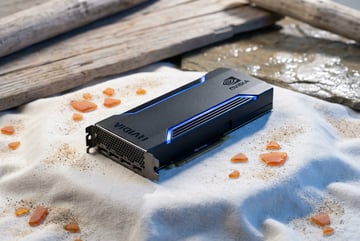
RTX Spark is NVIDIA’s compact AI computing platform. It’s a small form factor desktop device built around an RTX 50-series GPU, designed specifically to run AI workloads locally — without sending data to a cloud inference endpoint.
The key specs that matter for AI workloads:
- High-bandwidth memory (HBM) for fast model loading and inference
- Tensor cores optimized for transformer-based model architectures
- A compact physical footprint — closer to a Mac Mini than a workstation tower
- Low power draw relative to GPU performance
- Native support for ONNX, TensorRT, and popular model formats including GGUF
Microsoft’s involvement here is primarily on the software side: Windows AI and Azure AI stack compatibility, along with Copilot+ PC certification, which means RTX Spark hardware can run certain on-device AI features directly.
Why Local Inference Matters
For most consumer applications, cloud inference is fine. But enterprise use cases often have hard constraints around data residency, latency, and cost at scale.
Data residency: Regulated industries — healthcare, legal, financial services — often can’t send sensitive documents to a third-party cloud inference endpoint. Local inference keeps the data on-premise.
Latency: For real-time applications (voice interfaces, real-time transcription, coding assistants in the IDE), cloud round-trips add meaningful delay. A local chip eliminates that.
Cost at scale: Cloud inference is priced per token. If you’re running high-volume inference across a large team, the per-token costs can get significant. A one-time hardware investment can be cheaper over a multi-year horizon.
RTX Spark is positioned as Microsoft and NVIDIA’s answer to teams that want capable local inference without building a full data center. It’s compact enough to sit on a desk or in a small server rack.
Practical Implications for AI Builders
RTX Spark supports running open-weight models locally — LLaMA variants, Mistral, Phi, and other models available in GGUF or similar formats. This means teams can deploy capable models on local hardware without any API dependency.
It also opens up hybrid architectures: use local RTX Spark inference for sensitive or high-frequency tasks, and cloud-based large models for complex, lower-frequency reasoning tasks. The routing logic between local and cloud inference is where a lot of interesting engineering will happen over the next year.
What Build 2026 Means for AI Builders
Taken together, these three announcements — MAI models, Scout, and RTX Spark — tell a coherent story about Microsoft’s direction.
Microsoft Is Betting on Agents as the Primary AI Interface
The Scout announcement makes it explicit: the future Microsoft is building toward isn’t one where users type prompts into a chat box. It’s one where AI agents receive goals and execute multi-step plans across tools, applications, and the web.
This aligns with what most enterprise AI teams are already finding in practice: single-turn prompt-response AI is useful but limited. The value goes up significantly when you can chain reasoning steps, use tools, and act on the results.
The Model Landscape Keeps Getting More Competitive
Seven new MAI models adds to an already crowded field. Builders now have more choices than ever — and more responsibility to pick the right model for each task rather than defaulting to the largest available option.
The right model for your use case depends on:
- Latency requirements
- Context length needed
- Whether you need multimodal inputs
- Cost per call at your expected volume
- Whether the model supports structured output (JSON, function calling)
The MAI models are specifically worth evaluating for any team already on Azure — the integration with Azure AI Foundry, Azure OpenAI Service, and Microsoft 365 means they fit naturally into existing infrastructure.
Local AI Is Becoming a Real Option
RTX Spark signals that local inference is graduating from a hobbyist concern to a legitimate enterprise option. The hardware is getting capable enough, small enough, and power-efficient enough to deploy in real business environments.
This matters for AI builders who’ve been hesitant to recommend on-premise solutions because the hardware requirements were impractical. That calculus is changing.
Frequently Asked Questions
What are the MAI models Microsoft announced at Build 2026?
MAI stands for Microsoft AI — the company’s family of first-party language models. At Build 2026, Microsoft announced seven new models covering different use cases: long-context reasoning, multimodal inputs, agentic task execution, and low-latency edge inference. They’re available through Azure AI Foundry and designed to complement the OpenAI models already offered through Azure.
What is the Scout agent and what can it do?
Scout is Microsoft’s autonomous browsing agent. It’s designed to take high-level goals — like researching a topic, gathering competitor data, or pulling information from web-based tools — and execute multi-step browser interactions to complete them without step-by-step human input. Scout is part of Microsoft’s broader Copilot autopilot initiative.
One coffee. One working app.
You bring the idea. Remy manages the project.
What is RTX Spark and who is it for?
RTX Spark is a compact AI computing platform developed by NVIDIA in partnership with Microsoft. It’s a small form factor desktop device built for running AI inference locally, without sending data to cloud endpoints. It’s aimed at enterprises with data residency requirements, teams that need low-latency inference, or organizations running high enough inference volume that local hardware is more cost-effective than cloud APIs.
How do the MAI models compare to OpenAI’s models on Azure?
The MAI models are Microsoft’s first-party alternative — not a replacement for OpenAI’s models, which remain available through Azure OpenAI Service. The MAI family is particularly optimized for deep integration with Microsoft’s own products (Windows, Office, Azure services) and offers Microsoft more control over pricing, customization, and enterprise-specific features. For most Azure builders, the practical approach will be using both families depending on the task.
Can I use Scout or MAI models outside of Microsoft’s ecosystem?
MAI models are accessed through Azure AI Foundry, so there’s a dependency on Azure infrastructure. Scout is currently integrated into the Microsoft Copilot and Microsoft 365 stack. Teams using non-Microsoft cloud infrastructure won’t have native access to these products directly — though third-party platforms that integrate with Azure APIs can surface MAI models in other environments.
What does RTX Spark mean for running open-source models?
RTX Spark supports running open-weight models locally in standard formats like GGUF. This means teams can run LLaMA variants, Mistral, Phi, and similar models on local hardware without any cloud API dependency. For teams interested in hybrid architectures — local inference for sensitive data, cloud inference for complex tasks — RTX Spark makes the local side of that equation significantly more practical.
Key Takeaways
- Microsoft’s MAI model family expanded significantly at Build 2026 — seven new models covering reasoning, multimodal, agentic, and edge use cases, all available through Azure AI Foundry.
- Scout brings autonomous browser-based agent capability to the Microsoft Copilot stack, letting agents research, gather data, and interact with web tools without step-by-step human direction.
- RTX Spark makes local AI inference a more realistic enterprise option — compact hardware with serious GPU power, designed for data-sensitive or latency-sensitive environments.
- The broader signal is agentic AI. All three announcements point toward systems that execute multi-step goals rather than answer single questions.
- For builders, the priority is flexibility — being able to mix models, connect tools, and iterate on agent logic quickly matters more than betting on any single announcement.
If you want to start building multi-model agent workflows without getting bogged down in infrastructure, MindStudio is worth a look. It’s free to start, and you can have something working in under an hour.