
Insights for AI builders
Tutorials, product updates, and ideas to help you build and ship AI applications faster.
Subscribe via RSS
Google Gemma 4-12B: A Laptop-Runnable Open Model That Matches Gemma 4-26B
Google's Gemma 4-12B runs on 16GB of VRAM and performs nearly as well as the 26B version. Here's what it can do and why it matters for local AI workflows.

How AI Compiles a Spec Into a Full-Stack App: The Real Pipeline
From markdown spec to deployed app: the parse, generate, compile, migrate, and deploy pipeline that turns annotated prose into production code.

What Is Local AI Inference? Why NVIDIA RTX Spark Changes Everything
NVIDIA's RTX Spark chip brings 128GB unified compute to laptops, enabling large LLMs to run locally without internet. Here's what it means for AI builders.

MAI Transcribe 1.5: Is Microsoft's New Model Really the Best Transcription AI?
MAI Transcribe 1.5 claims to be the world's most accurate and fastest transcription model—5x faster than competitors. Here's what the benchmarks show.

Meta AI Pendant: What It Is, Why It's Controversial, and What Builders Should Know
Meta's always-on AI pendant records conversations and generates summaries. Here's how it works, the privacy risks, and what it signals for ambient AI wearables.

Minimax M3: A 1M Token Context Coding Model That Claims to Beat GPT 5.5
Minimax M3 is a coding model with a 1 million token context window that outperforms GPT 5.5 on SWE-bench Pro. Here's what it can do and how to access it.

How to Mix Claude and Gemini 3.5 Flash in One AI Coding Workflow for Better Frontends
Use Claude Opus for planning and page copy, then Gemini 3.5 Flash for UI design. This multi-provider workflow builds better full-stack apps at lower cost.

NVIDIA Nemotron 3 Ultra: 550B Parameters, 5x Faster, 30% Cheaper for Agents
NVIDIA's Nemotron 3 Ultra is a 550B open-weight model built for agentic tasks. It beats trillion-parameter models on agent benchmarks at a fraction of the cost.

Per-Release Databases and Atomic Deployment: The Rollback Story
Per-release databases mean schema changes apply to a clone, not live data. Rollback is atomic: code, schema, and data revert together in one step.

Recraft 2.0 vs GPT Image 2: Which AI Image Model Wins in 2026?
Recraft 2.0 is now ranked #2 overall in AI image generation, beating MAI Image and Midjourney. See how it stacks up against GPT Image 2 across key categories.

The Six Sub-Agents Inside Remy: What Does Each One Actually Do?
Remy's six specialist sub-agents—Coding, Design, Roadmap, QA, Architecture, Research—each handle a different part of building your app. Here's what they do.

Remy vs Airtable: Database-First or Spec-First Apps
Airtable starts from a spreadsheet and adds an interface. Remy starts from a plain-language plan and compiles a real app. Here's which shape fits your work.
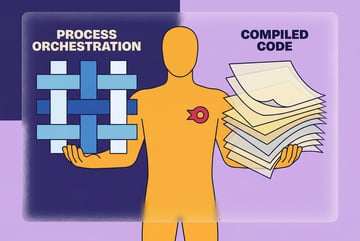
Remy vs Appian: AI Product Agent vs Enterprise Low-Code
Appian is enterprise low-code built on process automation. Remy compiles a plain-language plan into real, ownable code. Here's which one fits which job.
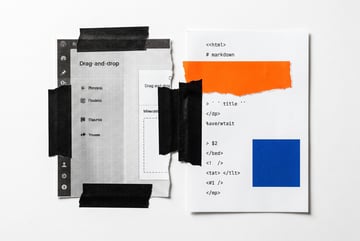
Remy vs Bubble: A Visual Canvas or a Plan You Own
Bubble builds apps on a visual canvas you assemble by hand. Remy compiles a plain-language plan into real code you own. Here's which fits your build.

Remy vs Codex: Two Different Bets on What an AI Builder Is
Codex is a coding agent that edits files and opens PRs in a repo you own. Remy compiles a plain-language spec into a deployed full-stack app. Which to use when.
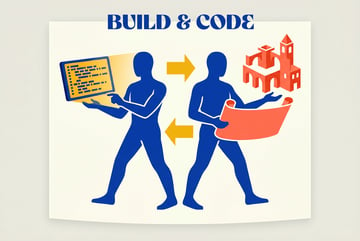
Remy vs Devin: Autonomous Coder or Spec-Driven Product Agent
Devin is an autonomous coding agent that works tasks in a codebase. Remy compiles a plain-language spec into a deployed full-stack app. Which one fits your job.

Remy vs Glide: Compiled Apps or Spreadsheet No-Code
Glide turns a spreadsheet into an app you point and click together. Remy compiles a plain-language plan into a real full-stack app you own. Here's the fit.

Remy vs Make: Visual Scenarios or AI-Compiled Apps?
Make wires apps together on a visual canvas of modules. Remy compiles a full-stack app from a plain-language plan. Here's which job each one is built for.

Remy vs n8n: Wiring Workflows or Compiling a Real App
n8n is open-source automation you can self-host and wire node by node. Remy compiles a full-stack app from a plain-language spec. Which fits which job?

Remy vs OutSystems: Spec-Driven vs Enterprise Low-Code
OutSystems is enterprise low-code with deep governance and compliance. Remy compiles a plain-language plan into real, ownable code. Here's which fits which job.

Remy vs Replit Agent: Full-Stack Builder Showdown
Replit Agent writes and runs code in a sandbox. Remy compiles a plain-language plan into a full stack with per-release databases. Here's which fits your build.

Remy vs Retool: When a Drag-and-Drop Builder Isn't Enough
Retool is the incumbent internal-tools builder. Remy compiles a plain-language plan into real, ownable code. Here's which one fits your team — and your budget.

Remy vs Softr: A Layer on Airtable or Code You Own
Softr builds a polished app on top of Airtable and other data sources. Remy compiles a plan into a real full-stack app you own. Here's which fits your build.

Remy vs v0: When a Product Agent Beats a UI Generator
v0 generates a frontend you drop into your own codebase. Remy compiles a whole deployed app from a plan you own. They're different shapes — here's which you need.