
Multi-Agent Orchestration
When and how to run multiple AI agents as a team — Paperclip vs OpenClaw architecture, multi-agent companies, agent role design, when single-agent loops are better.
How to Build a Grokbot AI Agent Team for Your Business
A practical guide to setting up Grokbot, structuring an agent leadership team, and applying the context, connections, capabilities, cadence framework.
What Is Agent-to-Agent Commerce? Inside Stripe's AI Payment Push
Stripe is building machine payment protocols, agent wallets, and stablecoin rails so AI agents can transact directly. Here's how it works.

What Is Grok Bot? xAI's Multi-Agent Assistant Explained
Grok Bot runs teams of always-on AI agents, each with its own cloud computer, synced across phone and desktop. Here's how it works.

Grok Bot vs Open Claw vs ChatGPT: Which Agent Setup Wins?
Grok Bot, Open Claw, and ChatGPT compared on memory, context sharing, and multi-agent workflow to see which agent setup actually holds up.

What Is OpenClaw? The Wild Origin Story of an AI Agent Project
OpenClaw grew from a WhatsApp hack into a viral open-source AI agent project. Here's the real story of how it happened and what it means.

Inside a 24/7 Multi-Agent AI System Trading a Simulated $100K Portfolio
A multi-agent AI setup with research, risk, and execution roles runs a nonstop paper-trading experiment. Here's how it works and what it shows.

How to Use GPT-5.6 Ultra Mode: Multi-Agent Coordination for Complex Tasks
GPT-5.6 Ultra mode spawns at least four AI agents simultaneously to tackle demanding tasks. Here's when to use it and what to expect on cost and speed.

What Is GPT-5.6 Ultra Mode? Multi-Agent Coordination for Complex Tasks
GPT-5.6 Ultra Mode spawns four or more parallel agents to tackle demanding tasks. Learn when to use it, what it costs, and how it compares to standard mode.

How to Use the Advisor-Executor Pattern: Plan with Fable 5, Build with Sonnet
Cut AI costs by 50% using the advisor-executor pattern. Use Fable 5 for planning and code review, then switch to Sonnet for implementation and execution.

How to Build an AI Content Factory: Automate Product Videos with Multi-Agent Workflows
Turn a static product catalog into marketing videos automatically. Learn how to use multi-agent workflows and AI video tools to generate content at scale.

How to Use Multi-Agent Workflows for Parallel Content Production at Scale
Fan out multiple AI agents to process product catalogs, generate content, and validate outputs in parallel using orchestration tools like Archon.

How to Use Fable 5 as Architect and GPT-5.6 Sol as Worker in Multi-Agent Systems
Fable 5 excels at planning complex systems while GPT-5.6 Sol executes at lower cost. Learn how to combine both models in a single agentic workflow.

How to Decide When to Use a Single Agent vs a Multi-Agent Team
Four questions determine whether your task needs one agent or many: size, independence, separation of concerns, and checkability. Here's how to apply them.

What Is GPT-5.6 Ultra Mode? Multi-Agent Coordination for Demanding Tasks
GPT-5.6 Ultra spawns four or more coordinated agents to tackle complex tasks. Learn when to use it, what it costs, and how it compares to standard modes.

GPT-5.6 Sol vs Claude Fable 5: Which Model Wins for Multi-Agent Workflows?
GPT-5.6 Sol costs 3x less than Claude Fable 5 but falls short on creativity. Here's which model wins for different agentic use cases.

How to Use Fable 5 as Orchestrator and GPT-5.6 as Worker in Multi-Agent Workflows
Use Fable 5 for planning and review while GPT-5.6 Sol handles execution. This model routing pattern cuts costs by 10x without sacrificing quality.

How to Use the Advisor-Executor Pattern in Claude Code to Extend Your Fable 5 Limit
Use Fable 5 as an advisor and Opus or Sonnet as executor to get 93% of the work done at a fraction of the token cost—with a real example.

How to Build a Complete Company from Scratch with One AI Agent Prompt
See how a single /goal prompt with Claude Fable 5 produced a business plan, brand, product, landing page, and launch videos in under 4 hours.

How to Use Fable 5 as Architect and Grok 4.5 as Construction Crew in Multi-Agent Workflows
Use frontier models for planning and cheaper models for execution. This real example built a 50-district 3D city for $8 using this split-model pattern.

Multi-Agent AI Systems: How to Catch Hallucinations Without Reading Every Output
Learn how multi-agent swarms with checker agents catch hallucinations, worker shortcuts, and even boss-model bugs automatically—no human review needed.

Multi-Perspective AI Research: How Sub-Agents Beat Single-Prompt Deep Research
Using 5 expert sub-agents for research produces better results than 100+ parallel agents. Here's the architecture and why it works for AI workflows.
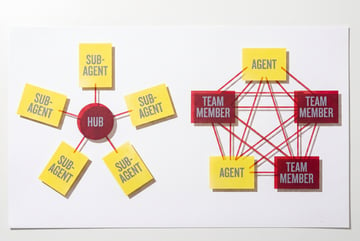
Sub-Agents vs Agent Teams in Claude Code: What's the Difference and When to Use Each
Sub-agents report to one session but can't talk to each other. Agent teams can debate and collaborate. Learn which architecture fits your workflow.

How to Prevent AI Sycophancy in Your Workflows: The Multi-Persona Council Method
AI models agree with you 88% of the time. Learn how to use a multi-persona council—contrarian, buyer, researcher—to stress-test ideas before you build.

How to Coordinate Multiple AI Agents Without Copying and Pasting Between Tools
Most AI users manually carry context between tools. Learn how ticket-based queues and shared state let agents hand off work without human intervention.