What Is the RTX Spark Chip? NVIDIA's AI-First GPU-CPU for Local Model Inference
NVIDIA's RTX Spark is a hybrid GPU-CPU chip with 128GB unified memory that can run large LLMs locally. Here's what it means for AI builders.
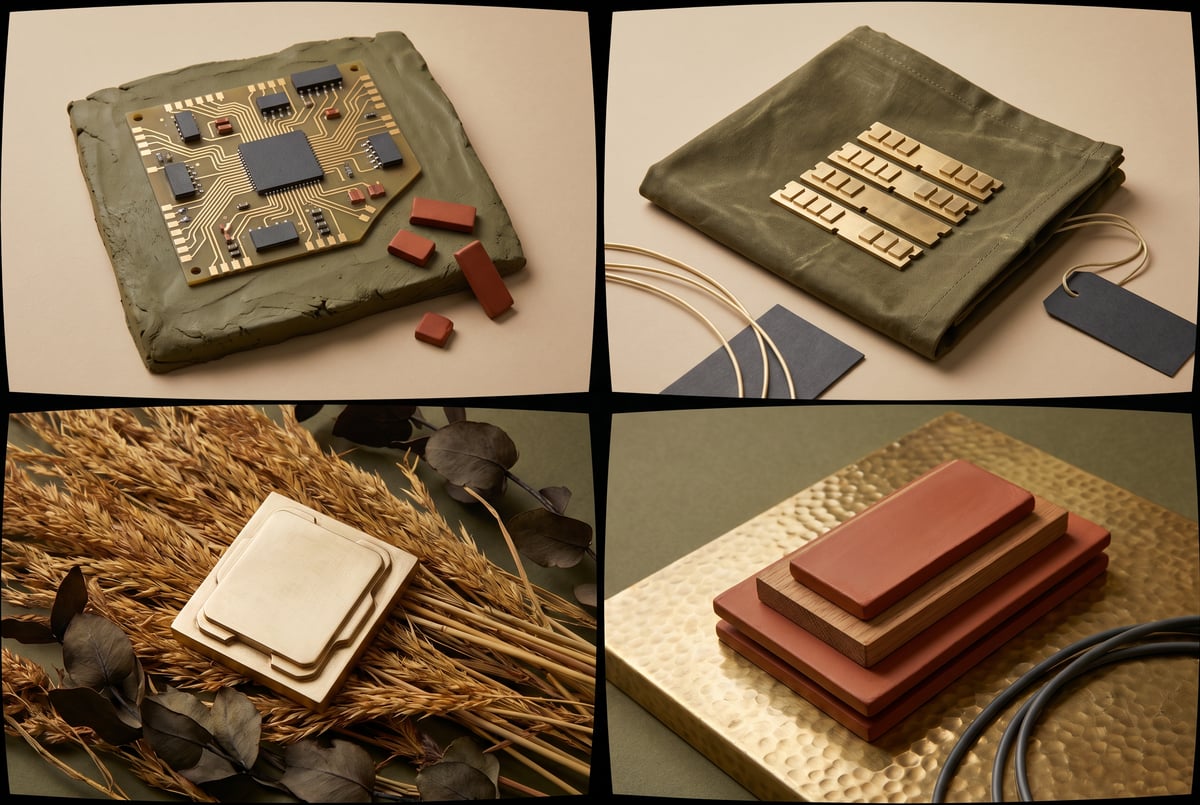
NVIDIA’s Bet on the Edge: Why Local AI Inference Is Having a Moment
For the past few years, running large language models meant one thing: the cloud. You sent your prompts to OpenAI, Anthropic, or Google, waited for a response, and paid per token. That model made sense when GPUs were scarce and models were big.
That calculus is shifting. NVIDIA’s RTX Spark chip — a tightly integrated GPU-CPU hybrid with 128GB of unified memory — is designed to run serious LLMs locally, on your desk, without a data center. It’s one of the clearest signals yet that powerful on-device AI inference is becoming a real option, not just a hobbyist experiment.
This post breaks down what RTX Spark is, what it can actually run, and why it matters for anyone building AI-powered applications or working with enterprise AI systems.
What the RTX Spark Chip Actually Is
RTX Spark is NVIDIA’s compact personal AI supercomputer chip, combining a high-core-count ARM-based CPU with Blackwell GPU architecture on a single unified package. The result is a system-on-chip (SoC) design that looks more like something you’d find in an Apple Silicon Mac than in a traditional GPU workstation — but with AI inference as the primary design goal.
Plans first. Then code.
Remy writes the spec, manages the build, and ships the app.

The chip powers NVIDIA’s personal AI computing initiative, which aims to bring data-center-class AI performance into a device small enough to sit on a desk. The underlying silicon is the GB10 Grace Blackwell Superchip, pairing a 72-core Grace CPU (ARM Neoverse) with a Blackwell-generation GPU, connected via a high-bandwidth NVLink-C2C interconnect.
What makes this design unusual isn’t raw compute — it’s the memory architecture.
128GB Unified Memory: The Number That Changes Things
The headline spec is 128GB of unified LPDDR5X memory, shared between the CPU and GPU. In traditional desktop setups, your GPU has its own VRAM (typically 8–24GB for consumer cards) and your CPU has separate system RAM. These two pools don’t share efficiently, which creates a hard ceiling on what you can load into GPU memory.
With a unified memory architecture, the RTX Spark chip sees all 128GB as a single addressable pool. Both the CPU and GPU can access it directly without slow memory transfers over PCIe. For LLM inference, this matters enormously.
A 70-billion-parameter model in 4-bit quantization takes roughly 35–40GB of memory. A 405B parameter model in heavily quantized form might need 100–200GB. With 128GB of fast unified memory, you can load models that would be impossible to run on any single consumer GPU — and run them without the latency of cloud round-trips.
The Grace CPU Side
The 72-core Grace CPU isn’t an afterthought. It handles orchestration, I/O, tokenization, and the parts of inference pipelines that don’t benefit from GPU parallelism. Having a capable CPU tightly coupled to the GPU — rather than connected via PCIe with its latency and bandwidth constraints — means the system can run more efficient end-to-end inference without bottlenecks.
This CPU-GPU integration also means RTX Spark can run full agent loops, RAG pipelines, and multi-step workflows without constantly shuttling data between separate chips.
What You Can Run on RTX Spark
The practical question for AI builders is: what models actually fit and run well on this hardware?
70B Parameter Models at Full Speed
Models in the 70B parameter class — like Meta’s Llama 3.1 70B or Mistral’s larger variants — fit comfortably in 128GB of unified memory when quantized to 4-bit or 8-bit precision. At 4-bit, a 70B model occupies roughly 35–40GB, leaving plenty of room for the system, the inference runtime, and context.
Inference speed for these models depends on memory bandwidth, not just raw FLOPS. The GB10’s unified memory architecture and NVLink interconnect deliver high enough bandwidth to run 70B models at speeds that feel responsive for interactive applications — not just batch jobs.
200B Parameter Models (With a Caveat)
NVIDIA has stated that two RTX Spark systems can be linked together via NVLink to share 256GB of combined unified memory, enabling inference on models up to 200B parameters. A single unit can handle models up to roughly 100B parameters in quantized form.
That’s a significant claim. Running a 100B-class model locally — without cloud infrastructure — was effectively impossible on consumer hardware before this generation of unified memory designs.
Smaller Models With Room to Spare
- ✕a coding agent
- ✕no-code
- ✕vibe coding
- ✕a faster Cursor
The one that tells the coding agents what to build.
If you’re running Llama 3 8B, Mistral 7B, Phi-3, or similar smaller models, RTX Spark has memory to spare. In those cases, you can run multiple models simultaneously or keep large context windows open — which matters for agentic workloads that need to track long conversation histories or maintain state across many reasoning steps.
Multimodal and Vision Models
Multimodal models that process both text and images (like LLaVA variants or Qwen-VL) also benefit from the unified memory pool, since image embeddings and model weights can coexist without memory pressure forcing constant swapping.
How RTX Spark Fits Into the Broader AI Chip Picture
NVIDIA didn’t invent the idea of unified CPU-GPU memory. Apple’s M-series chips have used this approach since 2020, and they’ve become a popular platform for running local LLMs via tools like llama.cpp and Ollama. But Apple Silicon is built for consumer devices first, with AI inference as a secondary capability.
RTX Spark is inverted: AI inference is the primary design goal. That shows up in the choice of Blackwell GPU architecture (optimized for INT4 and FP8 inference workloads), the NVLink interconnect (designed for AI workloads), and the software stack (NVIDIA’s AI platform, including CUDA, TensorRT, and their NIM inference microservices).
How It Compares to Cloud Inference
Running models locally on RTX Spark versus calling a cloud API involves real tradeoffs.
Local inference advantages:
- No per-token cost — relevant for high-volume workloads
- No data leaving your network — relevant for regulated industries or sensitive data
- No API rate limits or availability dependencies
- Lower latency for short, frequent requests once the model is loaded
Cloud inference advantages:
- No upfront hardware cost
- Instant access to the largest models (GPT-4o, Claude 3.5, Gemini Ultra)
- No maintenance burden
- Scales horizontally without planning
RTX Spark doesn’t make cloud inference obsolete. For many use cases — especially those requiring frontier model capability or elastic scaling — cloud remains the right answer. But for organizations that have predictable workloads, data privacy requirements, or high enough inference volume that per-token costs add up, local inference on hardware like RTX Spark starts making economic sense.
Where It Sits Versus Traditional GPU Workstations
A high-end RTX 4090 has 24GB of VRAM. That’s enough for 7B–13B models and, with difficulty, some 34B models in heavy quantization. To run a 70B model on discrete GPUs, you typically need multiple cards — an expensive, power-hungry, physically large setup.
RTX Spark puts 128GB of unified memory in a compact device at significantly lower power consumption than a multi-GPU rig. It’s a different class of hardware, aimed at a different use case: the developer, researcher, or enterprise team that wants local AI capability without building a server room.
Who RTX Spark Is Designed For
NVIDIA has been explicit that RTX Spark targets AI developers, researchers, and enterprise teams — not general consumers. The use cases they emphasize include:
AI developers and researchers who want to experiment with large models locally without cloud costs. Fine-tuning smaller models, running inference benchmarks, testing RAG pipelines — these all benefit from having a capable local environment.
Enterprise AI teams with data privacy or compliance requirements. Healthcare, finance, and legal are obvious categories where running models on-premises rather than through a third-party API matters for regulatory reasons.
Everyone else built a construction worker.
We built the contractor.
One file at a time.
UI, API, database, deploy.
Edge AI deployments where reliable internet connectivity isn’t guaranteed or where latency requirements make cloud round-trips impractical.
Independent AI builders who want to run open-source models as a foundation for custom applications without ongoing API costs.
The hardware is not cheap — NVIDIA positioned it as a professional device, not a consumer purchase. But the economics can work for organizations that are already spending significant money on cloud inference.
Local Inference and the Future of AI Application Architecture
RTX Spark represents a broader trend worth paying attention to: AI inference is moving toward the edge, not just toward bigger cloud clusters. Several forces are pushing this direction simultaneously.
Open-source model quality is improving rapidly. The gap between frontier closed models and capable open-source models has narrowed meaningfully over the past 18 months. Llama 3.1 70B performs competitively with GPT-3.5 on many benchmarks. As that gap continues to close, the case for running local open-source models gets stronger.
Quantization techniques are maturing. Methods like GGUF quantization (used by llama.cpp), GPTQ, and AWQ make it possible to run models at 4-bit or even lower precision with acceptable quality loss. This directly expands what fits in a given memory budget.
Enterprise AI adoption is driving on-premises demand. As more organizations move from AI experiments to production deployments, data governance concerns become real constraints. On-premises inference — on hardware like RTX Spark — is a natural response.
The agentic AI shift. AI agents that reason and act across multiple steps often generate far more model calls than a single user query. Cloud API costs for agentic workloads can scale uncomfortably fast. Local inference changes that cost structure.
How MindStudio Connects to Local and Cloud Inference
One practical challenge with local model inference is the tooling layer. You can run a Llama 70B model on RTX Spark hardware, but turning that into a working AI application — with a UI, integrations to business tools, and reliable workflows — still requires significant engineering work.
This is where a platform like MindStudio fits. MindStudio lets you build AI agents and automated workflows without writing infrastructure code. And importantly, it supports running local models via Ollama and LM Studio alongside its library of 200+ cloud-hosted models — so you can build an application that uses a local model for sensitive data processing and a cloud model for tasks that benefit from frontier capability.
If you’re an enterprise team deploying AI on RTX Spark hardware, the combination is practical: run your local inference layer on-device, and use MindStudio to build the application logic, connect to your existing tools (HubSpot, Salesforce, Slack, Google Workspace), and deploy workflows that actually do something with the model’s output.
For AI builders who want to experiment without committing to a full local setup, MindStudio’s free tier gives access to a wide range of models out of the box — no API keys required, no separate accounts. You can start building agents today and layer in local model support when the use case demands it.
You can try MindStudio free at mindstudio.ai.
Frequently Asked Questions
Seven tools to build an app. Or just Remy.
Editor, preview, AI agents, deploy — all in one tab. Nothing to install.
What is the RTX Spark chip?
RTX Spark is NVIDIA’s compact personal AI supercomputer chip, combining a 72-core ARM Grace CPU with a Blackwell-generation GPU in a unified package. It provides 128GB of shared unified memory, designed specifically to run large language models locally without requiring cloud infrastructure.
How much RAM does RTX Spark have?
RTX Spark features 128GB of unified LPDDR5X memory shared between the CPU and GPU. This is the key differentiator from traditional GPU setups, where the GPU is limited to its own VRAM (typically 8–24GB on consumer cards). Two RTX Spark units can be connected via NVLink to pool 256GB of unified memory.
What size LLMs can RTX Spark run?
A single RTX Spark unit can run models up to roughly 100B parameters in quantized form. Models in the 70B class — like Llama 3.1 70B — fit comfortably in 128GB with room for context and system overhead. Two connected units can handle models approaching 200B parameters. Smaller models (7B–13B) run with significant headroom to spare.
Is RTX Spark better than Apple Silicon for local LLMs?
Both use unified memory architectures that make them better suited for local LLM inference than discrete GPU setups. Apple Silicon (M3 Ultra, M4 Max) tops out at 192GB of unified memory in its highest-end configuration and has a mature ecosystem of inference tools (llama.cpp, Ollama, LM Studio). RTX Spark uses CUDA and NVIDIA’s inference stack, which has broader compatibility with AI research tooling and models optimized for NVIDIA hardware. The right choice depends on your existing stack, software requirements, and whether you need CUDA compatibility.
Can I run AI agents on RTX Spark locally?
Yes. Agentic workloads — where a model makes multiple sequential decisions, calls tools, and reasons across steps — are well-suited to local inference because they generate many model calls per task. Running these locally on RTX Spark eliminates per-call API costs and removes data privacy concerns about sending intermediate reasoning steps to external APIs.
Who is RTX Spark aimed at?
NVIDIA has positioned RTX Spark for AI developers, researchers, and enterprise AI teams — particularly organizations with data privacy or compliance requirements that make cloud inference difficult. It’s a professional device, not a consumer product. The primary audience is teams running high-volume or sensitive AI workloads who want on-premises inference capability without building a full server infrastructure.
Key Takeaways
- RTX Spark is NVIDIA’s GB10 Grace Blackwell Superchip: a CPU-GPU hybrid with 128GB of unified memory, designed for local LLM inference
- The unified memory architecture is what enables running 70B+ parameter models on a single compact device — something not possible on traditional consumer GPU setups
- It targets enterprise AI teams, AI developers, and researchers who need local inference for cost, latency, or data privacy reasons
- Two units can connect via NVLink to reach 256GB of unified memory and run 200B-class models
- Local inference doesn’t replace cloud — but it’s a real option for organizations with the right use cases and workload profiles
- Platforms like MindStudio support both local model inference (via Ollama and LM Studio) and cloud models, so builders don’t have to choose one or the other
One coffee. One working app.
You bring the idea. Remy manages the project.
The hardware is real, and the use case is sound. Whether RTX Spark becomes a standard part of enterprise AI deployments depends on how the open-source model ecosystem matures and whether the economics hold up against cloud pricing pressure — but as a signal of where local AI inference is heading, it’s worth paying attention to.