
Insights for AI builders
Tutorials, product updates, and ideas to help you build and ship AI applications faster.
Subscribe via RSS
How to Manage Token Costs in Claude Code Dynamic Workflows: Haiku Sub-Agents and Scope Bounding
Dynamic workflows can burn millions of tokens fast. Learn how to use Haiku sub-agents, scope bounding, and named deliverables to control costs.

MSFM Explained: How Annotated Markdown Compiles Into Apps
MSFM adds two annotation primitives—block and inline—plus pointers to standard Markdown. Learn the syntax that turns prose into production code.

How to Use NVIDIA Cosmos 3 to Generate Synthetic Training Data for Robotics
Cosmos 3 generates synthetic video data for training robot arms and physical AI systems. Learn how to run inference and what use cases it unlocks.

How to Use Perplexity Computer Inside Microsoft 365 for Complex Agentic Tasks
Perplexity Computer is now available inside Word, Excel, and Outlook for multi-step tasks. Learn how it differs from standard Copilot and when to use it.

How to Build a Vendor-Agnostic AI Agent Stack: 4 Steps to Avoid Platform Lock-In
As Anthropic drifts toward enterprise developers, here's how to build an AI agent stack that stays portable and survives any platform change.
What Is NVIDIA Cosmos 3? The World Foundation Model for Robotics and Physical AI
NVIDIA Cosmos 3 is a multimodal world model that handles text, images, video, audio, and actions in one architecture. Here's what it means for AI builders.

What Is the Agentic Context Management System? Folder Structures, Rules, and Injection
An agentic OS is just markdown files in folders with rules about when to load them. Learn how to build a portable context management system for AI agents.

How to Build an AI Agent with Isolated Database Environments Using Ghost
Giving AI agents shared database access causes chaos. Learn how to fork databases per agent so experiments stay isolated and results stay comparable.

How to Build an AI Short Film with Seedance 2.0: Workflow, Voice Swap, and Cost
One person can produce a 3-minute animated short film with Seedance 2.0 in 20-30 hours. Here's the full workflow from character sheets to final audio.

What Is Database Forking for AI Agents? The Missing Piece in Agentic Development
Code has version control. Databases need the same workflow for AI agents. Learn why database forking is critical for parallel agentic experimentation.

How to Demonstrate Human Judgment in the Age of AI: The Whiteboard Method
AI makes everyone look productive. Learn how to prove real judgment through whiteboard sessions, situation-decision-risk-change frameworks, and talent boards.

What Is the Depth vs Width Distinction in Claude Code Agents? /goal vs Workflows
The /goal command loops one agent until criteria are met. Dynamic workflows fan out hundreds of agents in parallel. Learn which pattern fits your task.

Dynamic Workflows vs /goal vs Agent Teams in Claude Code: Which Should You Use?
Claude Code offers dynamic workflows, /goal, and agent teams. Compare all three patterns by cost, parallelism, and use case to pick the right one.

ElevenLabs Dubbing V2: How to Dub Videos While Preserving Your Voice and Emotion
ElevenLabs Dubbing V2 translates videos into 175+ languages while keeping your original voice, emotion, and facial expressions. Here's how it works.

How to Use Google Gemini Omni to Generate Video from a Sketched Camera Path
Gemini Omni can turn a hand-drawn map route or camera path into a driving or drone POV video. Here's how filmmakers and creators are using this feature.

How to Control Token Costs in Claude Code Dynamic Workflows
Dynamic workflows can burn millions of tokens fast. Learn how to scope tasks, use Haiku sub-agents, and set boundaries to keep costs under control.
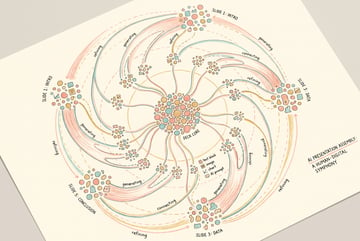
How to Use ChatGPT in PowerPoint: Build, Update, Polish, and Understand Slides
OpenAI's free ChatGPT add-in for PowerPoint lets you build full decks from files, add slides, and refine copy without leaving the app. Here's how.
How to Build a Portable AI Agent Stack That Avoids Anthropic Lock-In
Anthropic is drifting toward enterprise developers. Here are four steps to build a portable AI operating system that works across any model or platform.

How to Use AI to Prove Your Value at Work When Everyone Looks Productive
When AI makes polished outputs easy, judgment becomes the scarce skill. Learn the situation-decision-risk-change framework to show real human contribution.
How to Run Local AI on AMD: ROCm, LM Studio, Ollama, and ComfyUI Setup
AMD's ROCm platform now supports PyTorch, Ollama, LM Studio, and ComfyUI out of the box. Here's how to set up a full local AI stack on AMD hardware.

Seedance 2.0 vs Gemini Omni for AI Short Film Production: Which Wins?
Seedance 2.0 excels at consistent 2D animated characters. Gemini Omni wins at editing real footage. Compare both for short film and content creation workflows.

What Is a Product Agent? The AI That Ships a Whole App, Not Code
A product agent compiles a plain-language spec into a full-stack app—backend, database, auth, deployment. Here's how it differs from coding agents and app builders.
What Is Claude Opus 4.8 Dynamic Workflows? Parallel Sub-Agents Explained
Claude Opus 4.8 dynamic workflows spawn hundreds of parallel sub-agents from a single prompt. Learn how they work, when to use them, and what they cost.

What Is the /deep Research Command in Claude Code? Parallel Research Workflows Explained
Claude Code's /deep research command spawns parallel agents that vote on claims and return a cited report. Learn when and how to use it effectively.