Claude Dreaming Feature: How Anthropic's Self-Improving Agent Memory Works
Claude Dreaming reviews past agent sessions to extract patterns and improve over time. Learn how it works and what it means for proactive AI automation.

What It Means for an AI to “Dream”
Most AI agents forget everything the moment a session ends. You ask a question, get an answer, close the tab — and next time, the agent starts fresh with no memory of what worked, what didn’t, or what patterns appeared across hundreds of previous interactions.
Anthropic’s “Claude Dreaming” feature is designed to change that. It refers to a background process in which Claude reviews past agent sessions to extract patterns, consolidate useful information, and improve its behavior over time — without waiting for humans to explicitly retrain or reconfigure it.
The term “dreaming” is borrowed deliberately from neuroscience. When humans sleep, the brain doesn’t go idle. It replays experiences from the day, identifies patterns, discards noise, and moves important information from short-term to long-term memory. Claude’s dreaming feature attempts to do something structurally similar — running an offline processing phase that transforms raw session history into reusable, refined knowledge.
This matters a lot if you’re building or deploying AI agents for real business workflows. A Claude agent that learns from its past sessions is fundamentally more useful than one that starts from zero every time.
The Memory Problem in Agentic AI
Before getting into how Claude’s dreaming works, it helps to understand why memory is such a hard problem for AI agents in the first place.
One coffee. One working app.
You bring the idea. Remy manages the project.

Large language models like Claude operate within a context window — a fixed amount of text they can “see” at any given moment. Everything the model knows during a session is contained in that window: the system prompt, conversation history, tool outputs, retrieved documents, and so on.
When the session ends, that context is gone. Nothing persists by default.
This creates real problems for agents doing complex, multi-step work over time. Consider:
- An agent that handles customer support tickets needs to remember how it handled similar issues before.
- An agent that researches topics for a team should build on previous research rather than starting over.
- An agent running automated workflows should learn which approaches produce better results and adapt.
Without persistent memory, every session is essentially the agent’s first day on the job.
The Three Types of Agent Memory
There are generally three approaches teams use to give agents longer-term memory:
- In-context memory — Stuffing relevant history directly into the prompt. Works fine for short interactions; breaks down when history grows large.
- External memory stores — Using vector databases, key-value stores, or structured data layers to retrieve relevant past information. More scalable, but requires explicit retrieval logic.
- Learned heuristics — Distilling past experience into generalizable rules or preferences that shape future behavior. This is the hardest to implement and the most valuable.
Claude’s dreaming feature primarily operates at the third level. It’s not just storing conversation logs — it’s extracting what those logs mean and building a more capable, context-aware agent over time.
How the Claude Dreaming Feature Actually Works
The dreaming process runs as a background operation — typically after a set of sessions have completed, either on a schedule or triggered by certain conditions.
Here’s a simplified breakdown of how it functions:
Step 1: Session Logging
Every agent interaction generates a session record. This includes inputs, outputs, tool calls, intermediate reasoning steps, and outcomes. In well-structured agent architectures, this data is stored in a retrievable format — a database, a file system, or a dedicated memory layer.
Step 2: Pattern Extraction
During the dreaming phase, Claude reviews a batch of recent session logs. It looks for recurring patterns: types of requests that appeared frequently, approaches that succeeded or failed, edge cases that caused confusion, and gaps in knowledge that slowed the agent down.
This isn’t simple summarization. The agent is effectively doing meta-reasoning — thinking about its own thinking — to find generalizable insights across many individual interactions.
Step 3: Memory Consolidation
The extracted patterns are then stored in a structured memory layer. This might look like:
- Updated preference profiles for specific users or task types
- Refined decision rules (“When X happens, approach it like Y”)
- Curated knowledge snippets that answered recurring questions
- Flagged failure patterns to avoid
The key distinction here is compression. Raw session logs are noisy and unwieldy. The dreaming process distills that noise into high-signal knowledge.
Step 4: Memory Integration at Session Start
When a new agent session begins, Claude pulls from this consolidated memory layer — not the raw logs — to shape its behavior. The result is an agent that arrives at each new session meaningfully better equipped than it was before.
Why “Dreaming” Is an Accurate Analogy
Plans first. Then code.
Remy writes the spec, manages the build, and ships the app.
The sleep-and-dream analogy holds up surprisingly well when you look at the neuroscience.
During slow-wave sleep, the human brain replays recent experiences — often at compressed speeds — to transfer information from the hippocampus (short-term) to the neocortex (long-term). This process is called memory consolidation, and it’s considered essential for learning and skill development.
REM sleep, where most dreaming happens, appears to serve a different function: integrating new memories with older ones, identifying connections across distant experiences, and sometimes generating novel associations (the “creative” side of dreams).
Claude’s dreaming feature maps to both phases:
- The consolidation step (moving session logs to structured memory) parallels slow-wave sleep.
- The pattern extraction step (finding connections across sessions) parallels REM-like integration.
This isn’t just a cute metaphor. The functional logic is similar: offline processing allows the system to learn from experience without being constrained by the real-time demands of active operation.
What This Means for Multi-Agent Systems
The dreaming feature becomes especially important when Claude is operating as part of a multi-agent system — networks of AI agents working together on complex tasks.
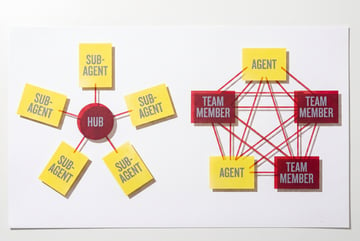
In these architectures, individual agents often specialize: one handles research, one drafts content, one manages scheduling, one interfaces with external APIs. Each agent accumulates its own session history relevant to its function.
With dreaming enabled, each specialized agent can develop deep, task-specific expertise over time. The research agent gets better at knowing where to look. The scheduling agent learns user preferences and common edge cases. The content agent refines its style based on feedback signals.
Across a multi-agent network, this compounds quickly. You’re not just improving one agent — you’re improving an entire pipeline, with each node becoming more capable without requiring explicit retraining.
Memory Sharing Between Agents
One advanced application of the dreaming architecture is selective memory sharing. An orchestrating agent can read consolidated memories from sub-agents and develop a higher-level understanding of system-wide performance patterns.
For example:
- If the research agent consistently struggles with a particular data source, the orchestrator can route those requests differently.
- If the content agent’s output gets revised in the same way repeatedly, the orchestrator can add that preference to future task briefs.
This creates a feedback loop that improves the whole system — not just individual components.
Proactive Behavior: Beyond Reactive Agents
One of the most interesting implications of self-improving agent memory is what it enables beyond just better responses to requests: genuinely proactive AI behavior.
Most AI agents are reactive by design. They wait for input, process it, return output, and stop. The dreaming architecture changes the equation by giving agents a basis for anticipating needs before they’re explicitly stated.
An agent with strong consolidated memory can:
- Recognize that a certain task is likely coming based on historical patterns and pre-prepare relevant context.
- Detect early signals of recurring problems and flag them before they escalate.
- Surface insights from past sessions that are relevant to a current request — without being asked.
This shifts agents from tools that execute instructions to systems that contribute meaningfully to the work itself. That’s a significant capability jump for anyone building serious automation workflows.
How MindStudio Lets You Build This Into Your Own Agents
The Claude dreaming concept describes an architecture. But actually building agents that implement self-improving memory — with session logging, consolidation, and structured retrieval — requires infrastructure most teams don’t have in place.
This is where MindStudio fits in directly.
MindStudio is a no-code platform for building and deploying AI agents. It supports Claude natively alongside 200+ other models, and it gives you the building blocks to implement memory-driven agent architectures without writing infrastructure code.
Specifically, you can build agents in MindStudio that:
- Log session data automatically — capture inputs, outputs, and outcomes in connected data stores like Airtable or Google Sheets.
- Run scheduled background workflows — set up agents that process session logs on a defined schedule, extract key patterns, and write summaries back to a memory store.
- Pull from consolidated memory at session start — have agents query their memory layer at the beginning of each interaction to prime the context with relevant past learnings.
- Connect to 1,000+ integrations — route memory updates to whatever storage system your team uses, from Notion to Salesforce to custom databases.
You can build an agent that does a simplified version of dreaming in well under an hour. A scheduled background agent reviews recent session logs, extracts patterns using Claude, and writes structured summaries back to an Airtable base. The primary agent then queries that base when new sessions start.
For teams building multi-agent workflows, MindStudio also supports chaining agents together — so specialized agents can each maintain their own memory stores, with an orchestrating agent aggregating insights across the network.
You can try MindStudio free at mindstudio.ai.
Practical Limitations to Know About
Claude’s dreaming feature is genuinely useful, but it’s worth being honest about current limitations.
Memory quality depends on session quality. If the sessions being reviewed are low-signal — short, vague, or poorly structured — the dreaming phase won’t have much to work with. Garbage in, garbage out applies here.
Consolidation isn’t always right. The patterns Claude extracts during dreaming are inferences, not facts. In some cases, it may over-generalize from limited examples or identify false patterns. Memory layers should be auditable and correctable by humans.
Latency trade-offs. Running background dreaming processes takes compute time and costs tokens. For high-volume agent deployments, you need to think carefully about when and how often to run consolidation — not every minute of every day.
Context window still matters. Even with excellent consolidated memory, Claude can only work with what fits in its current context window. Very large memory stores need smart retrieval logic to be useful — not every memory should be loaded for every session.
Privacy and data handling. Session logs often contain sensitive information. Any memory architecture needs to account for data retention policies, access controls, and appropriate anonymization.
FAQ
What is Claude Dreaming?
Seven tools to build an app. Or just Remy.
Editor, preview, AI agents, deploy — all in one tab. Nothing to install.
Claude Dreaming is a background processing feature in Anthropic’s Claude agent architecture. It allows Claude to review past agent sessions, extract patterns, and consolidate useful information into structured memory — improving future performance without explicit retraining. The name is a deliberate reference to how biological brains consolidate memories during sleep and dreaming.
How is Claude’s dreaming different from RAG (retrieval-augmented generation)?
RAG retrieves raw documents or data to inform a response. Claude’s dreaming is about processing past experience specifically — reviewing agent session logs and distilling them into generalizable insights and refined heuristics. RAG adds external knowledge; dreaming adds learned behavior from prior operation. The two can complement each other in a complete agent memory architecture.
Can Claude actually improve itself without retraining?
Within the bounds of its architecture, yes. Claude’s dreaming doesn’t change the underlying model weights — it can’t do that at inference time. But it can update the external memory layer that shapes Claude’s behavior in future sessions. This means the system improves even if the model itself stays the same. It’s an important distinction: model improvement requires Anthropic; agent improvement can happen continuously through good memory design.
Is the dreaming feature available to developers building with Claude?
Anthropic makes Claude available via API, and developers can implement dreaming-style architectures on top of it using external memory systems, scheduled workflows, and retrieval logic. The dreaming concept is a framework more than a single API endpoint — you implement the pieces using Claude’s reasoning capabilities and your own infrastructure (or platforms like MindStudio).
What kinds of workflows benefit most from self-improving agent memory?
The biggest gains come from high-frequency, repetitive workflows where patterns emerge over time. Customer support agents, research assistants, sales outreach agents, content production pipelines, and operations automation are all good candidates. One-off or highly varied tasks benefit less from accumulated memory.
How does dreaming relate to reinforcement learning?
There’s a conceptual overlap with experience replay in reinforcement learning — where an agent replays past experiences during offline training to improve performance. But Claude’s dreaming doesn’t use reward signals or gradient updates. It uses Claude’s language reasoning to reflect on past sessions and draw conclusions. It’s closer to deliberate reflection than optimization in the RL sense.
Key Takeaways
- Claude’s dreaming feature runs a background processing phase that reviews past sessions, extracts patterns, and consolidates useful information into structured memory.
- The neuroscience analogy is accurate: offline processing allows the system to learn from experience in a way that real-time operation can’t support.
- In multi-agent architectures, dreaming enables each specialized agent to develop deep task-specific expertise over time, compounding improvements across an entire pipeline.
- Self-improving agent memory is what separates reactive tools from systems that genuinely contribute and adapt.
- Building this architecture is practical today using platforms like MindStudio, which lets you chain Claude agents, log session data, and run scheduled memory consolidation workflows without writing infrastructure code.
- Current limitations — memory quality, inference errors, privacy — are real and worth planning for, but none are blockers for thoughtful implementations.
Other agents ship a demo. Remy ships an app.
Real backend. Real database. Real auth. Real plumbing. Remy has it all.
If you’re building agents that handle recurring tasks and want them to get meaningfully better over time, the dreaming architecture is worth implementing now. MindStudio’s no-code agent builder is a practical starting point — you can build and test a memory-driven Claude agent in under an hour, for free.