What Is NVIDIA Nemotron 3.5 ASR? The Streaming Speech-to-Text Model Explained
NVIDIA Nemotron 3.5 ASR is a 600M streaming model supporting 40 languages with cache-aware architecture. Learn how it works and when to use it.

A New Generation of Real-Time Transcription
Speech recognition has been around for decades, but getting it right in real-world conditions — multiple languages, low latency, production reliability — has always been harder than it looks. NVIDIA Nemotron 3.5 ASR is a 600M parameter streaming automatic speech recognition model that attempts to solve all three problems at once.
If you’re building voice-enabled AI applications, call center automation, live captioning tools, or multilingual transcription workflows, this model deserves a close look. This article explains what NVIDIA Nemotron 3.5 ASR is, how its cache-aware streaming architecture works, what makes it different from other ASR models, and how to evaluate whether it fits your use case.
What NVIDIA Nemotron 3.5 ASR Actually Is
NVIDIA Nemotron 3.5 ASR is an automatic speech recognition model released by NVIDIA as part of their NeMo framework ecosystem. It’s designed to convert spoken audio into text — both in real-time streaming mode and in standard offline batch processing.
The “3.5” refers to its generation within the Nemotron model family, and “ASR” stands for Automatic Speech Recognition. With 600 million parameters, it sits in a middle tier: large enough to handle nuanced speech patterns across 40 languages, but compact enough to be deployable in latency-sensitive production environments.
The model is publicly available through NVIDIA’s NGC model catalog and Hugging Face, making it accessible to developers without needing special NVIDIA agreements or enterprise licenses.
What Problems It’s Built to Solve
- ✕a coding agent
- ✕no-code
- ✕vibe coding
- ✕a faster Cursor
The one that tells the coding agents what to build.

Most ASR models force a choice between quality and speed. Offline models process a complete audio file and return a transcript — accurate, but slow. Streaming models return partial results incrementally but often sacrifice accuracy or struggle with context at chunk boundaries.
Nemotron 3.5 ASR is built to avoid that tradeoff. Its cache-aware streaming architecture maintains context across audio chunks, which means it can produce accurate transcripts in real time without waiting for a full utterance to complete.
The Architecture Behind the Model
Understanding why Nemotron 3.5 ASR performs the way it does requires a quick look at its underlying architecture.
FastConformer as the Foundation
The model is built on FastConformer, a variant of the Conformer architecture that combines convolutional neural networks with self-attention mechanisms. The Conformer design was originally developed to capture both local acoustic patterns (via convolution) and long-range dependencies (via attention) simultaneously.
FastConformer improves on the original by reducing computational overhead, making the model faster without sacrificing the contextual understanding that comes from attention layers. This efficiency matters a lot when you’re processing live audio streams.
Cache-Aware Streaming: How It Works
The defining feature of Nemotron 3.5 ASR is its cache-aware streaming capability. Here’s what that means in practice.
In a standard streaming ASR model, audio arrives in chunks. Each chunk is processed independently, which creates a problem: context at the start and end of each chunk gets cut off. Words that span chunk boundaries can be misrecognized.
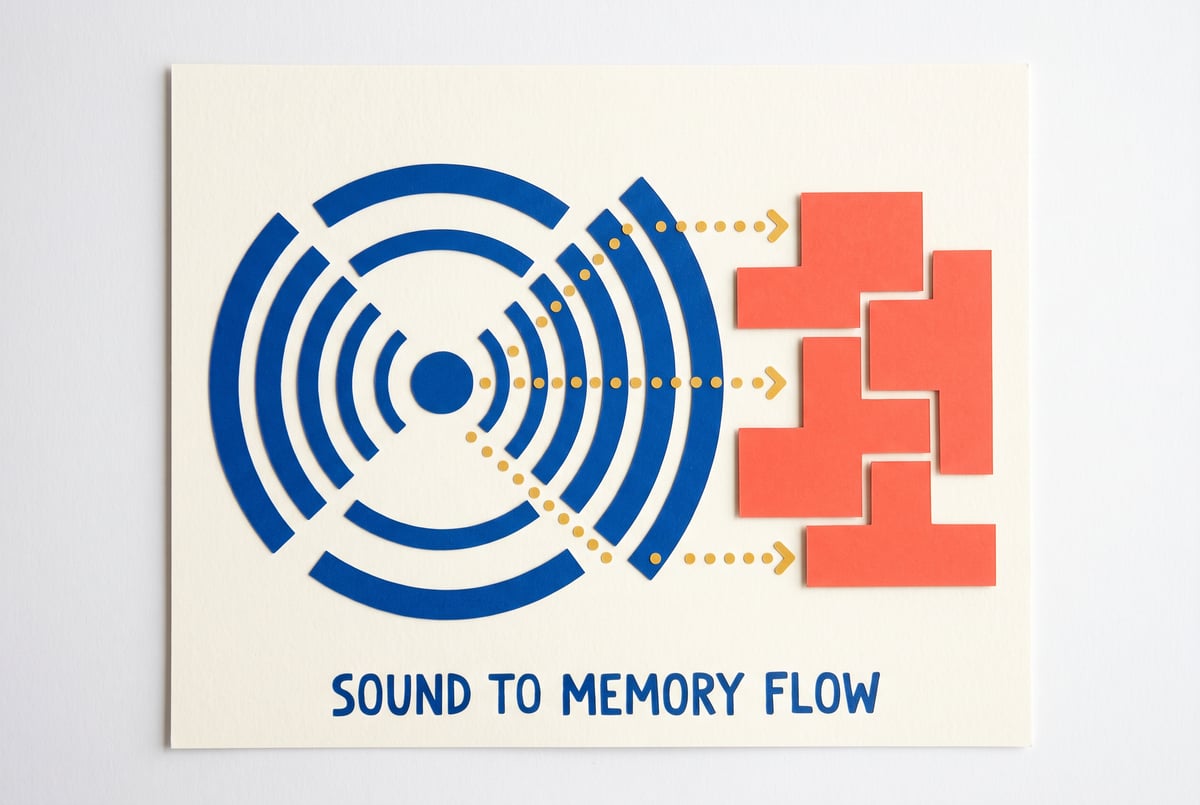
Cache-aware streaming solves this by maintaining a rolling cache of encoded representations from previous chunks. When a new audio chunk arrives, the model processes it alongside cached context from earlier in the conversation. The result is that each chunk benefits from what came before it — the model never loses context just because you divided the audio into pieces.
This approach produces output that’s much closer to what you’d get from processing the full audio at once, while still delivering results with low latency as each chunk completes.
CTC and RNNT Decoding
Nemotron 3.5 ASR supports both CTC (Connectionist Temporal Classification) and RNNT (Recurrent Neural Network Transducer) decoding strategies.
CTC decoding is faster and simpler — it’s well-suited for scenarios where speed matters most and the audio is relatively clean. RNNT decoding is more computationally intensive but handles complex audio better, including overlapping speech and noisy environments. Having both options means you can tune the tradeoff between speed and accuracy based on your deployment context.
Language Support: 40 Languages Explained
One of the most practical aspects of Nemotron 3.5 ASR is its multilingual capability. The model supports 40 languages in a single unified model — you don’t need to load a separate model per language or run language detection as a separate step.
The language coverage includes major world languages across multiple language families, including European languages (English, Spanish, French, German, Italian, Portuguese, Dutch), East and Southeast Asian languages (Mandarin, Japanese, Korean), South Asian languages (Hindi, Bengali, Tamil), Middle Eastern languages (Arabic, Hebrew), and others.


This breadth matters for practical reasons. Building a multilingual customer support system or a global call analytics platform used to require either stitching together multiple single-language models or relying on general-purpose models that weren’t optimized for any one language. A single model handling 40 languages simplifies architecture significantly.
Language Detection vs. Explicit Language Specification
The model supports two modes of operation for language handling. You can either specify the input language explicitly (useful when you know the language in advance), or let the model handle detection automatically. The automatic detection mode adds slight latency but removes the need to pre-classify audio by language — a meaningful advantage for applications where users might switch languages mid-conversation.
Streaming vs. Offline: When to Use Each Mode
Nemotron 3.5 ASR supports both streaming and batch (offline) transcription. Choosing between them depends on your use case.
Streaming Mode
Use streaming when:
- You need real-time or near-real-time transcripts (live captioning, voice interfaces, real-time call monitoring)
- User experience depends on seeing text as it’s spoken
- Latency below 500ms is a requirement
- You’re building conversational AI pipelines where the downstream system needs to respond while the user is still speaking
The cache-aware architecture makes this mode reliable — chunk boundaries don’t degrade quality the way they do in simpler streaming implementations.
Offline (Batch) Mode
Use offline mode when:
- You’re processing recorded audio files (call recordings, podcasts, meeting recordings)
- Accuracy is more important than speed
- You’re running bulk transcription jobs overnight or in a background queue
- The audio is long (full conversations, lectures, multi-hour recordings)
In batch mode, the model processes the full audio context at once, which tends to produce slightly better accuracy on long-form audio than streaming mode does.
How Nemotron 3.5 ASR Compares to Other ASR Models
It’s worth situating Nemotron 3.5 ASR against other commonly used speech recognition options.
vs. Whisper (OpenAI)
OpenAI’s Whisper is probably the most widely known open-weight ASR model. It covers a wide range of languages and performs well on offline transcription tasks. But Whisper was not designed for streaming — it’s an encoder-only model that requires the full audio clip before producing output. Real-time streaming with Whisper requires workarounds that often hurt accuracy at chunk boundaries.
Nemotron 3.5 ASR has a native streaming implementation. If latency matters for your application, it has a structural advantage.
vs. Google Speech-to-Text
Google’s Speech-to-Text API is a hosted service with strong accuracy and streaming support. It’s well-maintained, but it’s a cloud service — every audio byte goes through Google’s infrastructure. For privacy-sensitive applications (healthcare, legal, finance), on-premises deployment matters. Nemotron 3.5 ASR can be self-hosted, which changes the data residency equation.
vs. Azure Cognitive Services Speech
Microsoft’s Azure speech service is another capable hosted option with streaming support. The same considerations apply: strong performance, but cloud-dependent and priced per transaction. Nemotron 3.5 ASR is open-weight, meaning you pay for compute rather than per-API-call — a different cost structure that favors high-volume workloads.
The Self-Hosting Advantage
Because Nemotron 3.5 ASR is an open-weight model available through NVIDIA NGC and Hugging Face, organizations that need control over their data, infrastructure, or cost structure have a genuine alternative to hosted APIs. NVIDIA’s NeMo framework also provides tooling for fine-tuning the model on domain-specific vocabulary — useful for specialized fields like medicine, law, or technical support where standard transcription models often stumble on jargon.
Real-World Use Cases
Nemotron 3.5 ASR’s combination of streaming capability, multilingual support, and open-weight availability makes it a fit for a specific set of applications.
Contact Center Analytics
Transcribing customer calls in real time (or at scale from recordings) is one of the most common enterprise ASR use cases. Nemotron 3.5 ASR can handle the multilingual nature of global support centers and supports the kind of high-volume batch processing these workloads require.
Live Captioning and Accessibility
Real-time captioning for video streams, conference calls, or live events requires low-latency streaming transcription. The cache-aware architecture helps here — captions stay coherent across audio segments rather than producing garbled text at chunk transitions.
Voice-Controlled Interfaces
Applications where users give spoken commands — industrial controls, accessibility tools, voice-driven forms — need quick transcription with reliable accuracy. Streaming mode with RNNT decoding is well-suited for this.
Multilingual Meeting Transcription
Global teams that hold meetings in multiple languages benefit from a single model that handles language switching without manual intervention. Nemotron 3.5 ASR’s automatic language detection supports this use case directly.
Fine-Tuned Domain Models
Organizations with specialized vocabularies (medical transcription, legal dictation, financial services) can use NVIDIA NeMo’s training pipeline to fine-tune Nemotron 3.5 ASR on domain-specific data. This is a significant advantage over black-box API services that offer no customization.
Deploying Nemotron 3.5 ASR
The model is available through two primary channels: NVIDIA NGC and Hugging Face. Both provide model weights and documentation.
Infrastructure Requirements
For inference, NVIDIA recommends GPU hardware — the model is optimized for NVIDIA GPUs, and running it on CPU is significantly slower. For streaming use cases where latency matters, a T4 or A10 GPU is a reasonable baseline. For high-throughput batch processing, larger GPU configurations improve throughput.
NVIDIA’s TensorRT-LLM and Triton Inference Server can be used to optimize and serve the model at production scale. These tools handle batching, model optimization, and concurrent request handling — important for production deployments serving many simultaneous users.
Using the NeMo Framework
The NVIDIA NeMo framework provides Python-based tooling for loading, running, and fine-tuning Nemotron 3.5 ASR. The cache-aware streaming interface is exposed through NeMo’s ASR classes, and the documentation covers both streaming and offline inference patterns.
For teams already working in Python-based ML stacks, the integration is relatively straightforward. The framework also handles the cache state management required for streaming — you don’t need to implement that logic yourself.
How MindStudio Fits Into ASR Workflows
Building a useful voice AI application is rarely just about transcription. The transcript is the starting point — what happens next is usually where the value is created. Summarizing a support call. Extracting action items from a meeting. Routing a spoken request to the right workflow. Analyzing sentiment across hundreds of recorded conversations.

MindStudio is a no-code platform where you can build those downstream workflows without writing the glue code yourself. You bring the transcription output — from Nemotron 3.5 ASR or any other ASR system — and connect it to AI agents that process, analyze, or act on the text.
For example: you could build an agent in MindStudio that receives a meeting transcript, runs it through an LLM to extract decisions and action items, and automatically posts a summary to Slack and creates tasks in Notion. That workflow connects 200+ AI models and 1,000+ integrations in a visual builder — and the average build takes under an hour.
If you’re working on voice-driven automation and need to connect transcription output to business systems, MindStudio removes the integration overhead. You can try MindStudio free at mindstudio.ai and start connecting your speech pipeline to downstream tools without custom code.
For teams building more complex agentic pipelines — where a voice input kicks off multi-step reasoning and action — MindStudio’s AI agent builder supports the full workflow from audio processing output through to final action.
Frequently Asked Questions
What is NVIDIA Nemotron 3.5 ASR?
NVIDIA Nemotron 3.5 ASR is a 600M parameter automatic speech recognition model built by NVIDIA. It supports streaming (real-time) and offline transcription across 40 languages. The model uses a cache-aware FastConformer architecture to maintain context across audio chunks during streaming inference, producing accurate transcripts with low latency. It’s available as an open-weight model through NVIDIA NGC and Hugging Face.
How does cache-aware streaming work in Nemotron 3.5 ASR?
Cache-aware streaming means the model maintains encoded representations from previous audio chunks and uses them as context when processing new incoming audio. This prevents the accuracy degradation that happens in simpler streaming systems where each chunk is processed in isolation. The result is transcription quality in real-time mode that approaches what you’d get from processing the full audio at once.
What languages does Nemotron 3.5 ASR support?
Nemotron 3.5 ASR supports 40 languages in a single unified model. This includes major world languages across multiple language families: European languages like English, Spanish, French, German, and Italian; Asian languages including Mandarin, Japanese, and Korean; South Asian languages like Hindi and Bengali; and others. The model supports both explicit language specification and automatic language detection.
How does Nemotron 3.5 ASR compare to Whisper?
Whisper is strong for offline transcription but was not built for real-time streaming. Nemotron 3.5 ASR has native streaming support with a cache-aware architecture, making it significantly better suited for latency-sensitive applications. For batch transcription of pre-recorded audio, the two are more comparable in terms of use case fit, though the architectures differ. Nemotron 3.5 ASR also supports both CTC and RNNT decoding, giving it more flexibility in production deployments.
Can Nemotron 3.5 ASR be fine-tuned on domain-specific data?
Yes. NVIDIA’s NeMo framework provides the tooling to fine-tune Nemotron 3.5 ASR on custom datasets. This is useful for specialized domains — medical, legal, financial services — where standard models frequently misrecognize domain-specific terms. Fine-tuning on representative domain data can significantly improve accuracy on those vocabularies.
What hardware does Nemotron 3.5 ASR require?
Remy doesn't build the plumbing. It inherits it.
Other agents wire up auth, databases, models, and integrations from scratch every time you ask them to build something.
Remy ships with all of it from MindStudio — so every cycle goes into the app you actually want.
The model is optimized for NVIDIA GPU hardware. For streaming inference with low latency requirements, a T4 or A10 GPU is a reasonable baseline. For high-throughput batch processing, larger GPU configurations improve throughput. CPU-only inference is possible but significantly slower and not recommended for production streaming use cases. NVIDIA’s Triton Inference Server and TensorRT-LLM can optimize deployment for production scale.
Key Takeaways
- NVIDIA Nemotron 3.5 ASR is a 600M parameter ASR model supporting real-time streaming and offline transcription across 40 languages.
- Cache-aware streaming maintains context across audio chunks, solving the accuracy degradation problem common in simpler streaming implementations.
- The FastConformer architecture with both CTC and RNNT decoding options gives flexibility to tune the speed/accuracy tradeoff for different deployment scenarios.
- As an open-weight model, it can be self-hosted — important for data privacy requirements and high-volume workloads where per-API-call pricing becomes expensive.
- Fine-tuning support through NVIDIA NeMo makes it adaptable to specialized domains where generic ASR models fall short.
- For teams building downstream voice workflows, platforms like MindStudio can connect transcription output to AI agents, business tools, and automated processes without custom integration work.
If you’re building voice-enabled applications and need a streaming ASR model that works across languages at production scale, Nemotron 3.5 ASR is a serious option. And if you need to connect what you transcribe to what you do with it, MindStudio is worth exploring — start free and build your first voice workflow in under an hour.