
Insights for AI builders
Tutorials, product updates, and ideas to help you build and ship AI applications faster.
Subscribe via RSS
Hermes Agent vs Custom Claude Code Setup: Which Should You Build?
Hermes is fast to start but hard to scale. A custom Claude Code setup takes longer but gives you full control. Here's how to decide which path to take.

How to Build an AI Second Brain Knowledge Base: Step-by-Step
Learn how to build a personal AI second brain that stores, organizes, and retrieves your knowledge using AI agents and automation workflows.

How to Make AI Work Visible at Scale: Lessons from Shopify's River Agent
Shopify's River agent runs only in public Slack channels. Here's how to apply the same principle to build shared AI taste across your organization.

Local AI vs Cloud AI in 2026: When to Run Models on Your Own Hardware
Open-weight models are 3–6 months behind frontier. Learn when local AI makes sense for cost, privacy, and agentic workloads vs paying for cloud APIs.

How to Build a Modular Skill System in Claude Code for Multiple Clients
Isolated skills break at scale. Learn how to build a modular skill system in Claude Code where one update propagates across every client and workflow.

n8n MCP Server: How to Build and Edit AI Workflows with Claude Code
n8n's MCP server lets Claude Code build, test, and iterate on automation workflows without leaving your terminal. Here's how to set it up and use it.
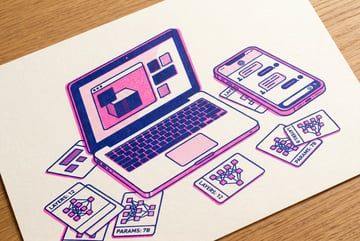
How to Run Open-Weight AI Models Locally with Ollama and LM Studio
Run Qwen 3.6, Gemma, and DeepSeek locally with Ollama and LM Studio. This guide covers setup, quantization, and performance on consumer hardware.

What Is the AI Second Brain? How to Build a Knowledge Base That Agents Can Search
An AI second brain stores your notes, decisions, and context so agents can retrieve them by meaning. Learn the architecture and tools to build one.
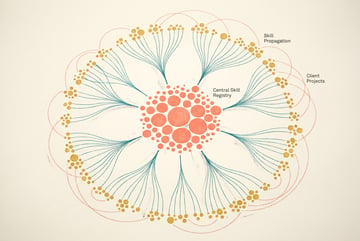
How to Build a Modular Skill System in Claude Code That Scales Across Clients
Isolated skills break at scale. Learn how to build modular skill systems in Claude Code where one update propagates across every workflow automatically.

How Google AI Search Mode Changes Content Strategy for Businesses
Google's AI-first search mode is reshaping how content gets discovered. Learn what it means for SEO, AEO, and how to adapt your content strategy.

What Is Google Gemini Personal Intelligence? How AI Search Connects to Your Data
Gemini Personal Intelligence connects AI search to your Gmail, Photos, and Calendar. Learn how it works and what it means for personal productivity.
Hermes Agent vs Custom Claude Code Setup: Hidden Costs of Off-the-Shelf AI Agents
Hermes is fast to start but slow to scale. Learn the three hidden costs of off-the-shelf agents and when building your own setup makes more sense.

Managed Agents Explained: Anthropic vs Google and What It Means for Builders
Anthropic and Google both ship managed agents but with opposite philosophies. Learn the key differences and which approach fits your use case.

Remy Adds You.com Web Intelligence to Full-Stack Apps
Remy now compiles You.com-powered search, news, content extraction, research, and financial data into the full-stack apps you build from a plain-language spec.

How to Use Voice Agents for Business: ElevenLabs, RAG, and Calendar Booking
Voice agents are finally production-ready. Learn how to build a voice agent that handles customer questions, books appointments, and integrates with your CRM.

What Is an AI Operating System? How to Build One for Your Business with Claude Code
An AI operating system gives your agents shared identity, memory, and skills. Learn the 9 components and how to build one with Claude Code today.

What Is Gemini 3.5 Flash? Google's Fastest Frontier Model for Agentic Workflows
Gemini 3.5 Flash delivers pro-level intelligence at 2-3x the speed of competitors. Learn its pricing, benchmarks, and best use cases for AI agents.

What Is Gemini Spark? Google's 24/7 Cloud-Based AI Agent That Runs Without You
Gemini Spark is Google's always-on AI agent that connects to Gmail, Calendar, and Drive to take actions on your behalf. Here's what it can do.

What Is Google Gemini Omni? The Any-Input-to-Video AI Model Explained
Gemini Omni takes any input—text, images, video, audio—and generates or edits video output. Learn how it works and how to use it for content creation.

What Is the AI Adoption Gap? Why 85% of Employees Can Use AI but Only 25% Do
IBM's 2026 CEO study reveals a 61-point gap between AI capability and actual usage. Learn what's causing it and how AI consultants can close it for businesses.
How to Build an AI Consulting Business from Zero: The Ladder Framework
Start selling AI consulting hours before pitching projects or retainers. This step-by-step ladder framework helps you land your first 10 clients fast.

What Is the AI Infrastructure Constraint? Why Microsoft Is Spending $190 Billion on Capex
AI isn't software anymore—it's an industrial factory. Learn why high-bandwidth memory, packaging, and power are the real bottlenecks behind every AI product.

How to Forecast AI Token Usage for Your Business: Beyond Seats and Licenses
Forecasting AI by users or seats will leave you underprepared. Learn to forecast by tokens per workflow, agent loops, and concurrency to avoid capacity shocks.

Gemini Omni vs Seedance 2.0: Which AI Video Model Is Better for Content Creation?
Compare Gemini Omni and Seedance 2.0 on video editing, style transfer, world knowledge grounding, and pricing to find the right model for your workflow.