
Insights for AI builders
Tutorials, product updates, and ideas to help you build and ship AI applications faster.
Subscribe via RSS
Edge0-35B-A3B: A 35B MoE Model That Runs in 3GB of RAM
Edge0-35B-A3B streams MoE experts from SSD to disk to run a 35B parameter model in under 3 GiB of active memory at 15 tokens per second.

Fix GPU Thermal Paste Pump-Out: A Repad Guide for 3090/4090 Rigs
Diagnose GPU throttling from thermal paste pump-out and learn how to repad and repaste a GPU to lower temperatures on multi-GPU AI rigs.

Meta Muse Explained: What the New Personal AI Agent Actually Does
Meta's Muse agent connects to email, calendar, Facebook, and Instagram to act on your behalf. Here's how it works and what its privacy setup looks like.

NeoHorse-1-9B: Agentic Post-Training on Qwen3.5-9B Explained
NeoHorse-1-9B fine-tunes Qwen3.5-9B with a routing harness for agentic post-training, gaining +3.44 macro average across ten benchmarks.

Build Model-Agnostic AI Agent Skills That Survive Any Harness Swap
Learn how to build portable AI agent skills and context files that work across Claude Code, Codex, and other harnesses without vendor lock-in.
What Could Stop AI Recursive Self-Improvement by 2036?
AI researchers debate whether generalization limits, objective-specification problems, or bottlenecks could delay recursive self-improvement past 2036.
YuE2: How to Run This Open-Source Music Generation Model Locally
YuE2 is an open-weight 3B music model that reportedly outscores Suno V6 on benchmarks. Here's how to run it locally and what quality to expect.

Claude Opus 5 Prompting: Why Your Old Habits Now Hurt Output
Anthropic's new guidance for Claude Opus 5 and Fable 5.1 flips old prompting rules. Here's what to remove and what to add instead.

Turn Real Video Into Animated Style With AI: A Practical Workflow
A step-by-step look at converting recorded footage into stylized animated video using image style transfer, Higsfield Genjutsu, and an AI agent pipeline.

Is Ling-3.0-Flash-VL Free? API and Licensing Explained
Ling-3.0-Flash-VL is free via InclusionAI's API right now and MIT-licensed for local use. Here's what that actually means for builders.

Ling-3.0-Flash-VL: A Free Vision Model Built on Kimi's Attention Tricks
Ling-3.0-Flash-VL is InclusionAI's free 124B MoE vision model with 5.5B active params. Here's how it works and how it performs.

MiniCPM 5 2B: A Small Tool-Calling Model Built for Sub-Agents
MiniCPM 5 2B targets tool calling and sub-agent workloads. Here's how it benchmarks against 4B models and runs locally via llama.cpp and SGLang.

MiniCPM5-2B: A 2B Open Model That Beats 4B Rivals
MiniCPM5-2B is a 2B-parameter open model from OpenBMB that claims SOTA in its size class and beats larger 4B models on coding and agents.

OUI-1: The Diffusion Model That Builds UI Screens in One Second
OUI-1 is a 4B diffusion model that generates full UI screens in about a second. Here's what it is and how to run it locally with vLLM.

RunPod Serverless Explained: Pay-Per-Second GPU API Deployment
How RunPod Serverless turns any Hugging Face model into an autoscaling API, billed per second, with scale-to-zero and flash boot cold starts.
Securing AI-Generated Code: Why Deterministic Gates Beat Agent Review
AI coding agents miss security flaws constantly. Here's how deterministic gates using tools like SonarQube catch vulnerabilities before pull requests open.
Can AI Actually Detect AI-Generated Video? We Tested It
A hands-on test of Gemini and Sightengine against known AI videos shows current AI detection tools are inconsistent and often wrong.

Building an AI Video Slop Detector: One Dev's Messy Real Attempt
A build log of an attempt to create an AI video slop detector with ChatGPT, Codex, Gemini, and Sightengine, and why detection is still unreliable.
The Anthropic Whistleblower Post: Genuine Warning or Funded Campaign?
A viral Anthropic resignation post sparked calls for AI laws within minutes. Here's the funding and timing evidence raising questions about coordination.
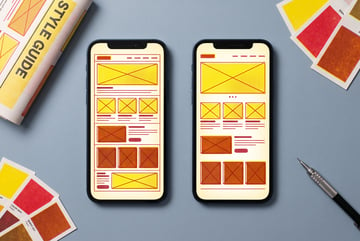
Claude Fable 5.1 vs Fable 5: Is the Upgrade Worth It for Site Building?
Blind benchmark testing compares Claude's Fable 5.1 to Fable 5 on spacing, visual polish, and functionality in one-shot website generation.

DeepSeek V4.1 Flash: Hands-On Coding and Reasoning Test
DeepSeek V4.1 Flash faces a 3D rigging build, an air-traffic dashboard bug hunt, and a physics trap in real hands-on testing.

DeepSeek V4.1 Flash Specs: KV Cache Compression Explained
DeepSeek V4.1 Flash's model card breaks down its 552B MoE design, 1M context window, and 890-byte KV cache per token in detail.

GPT Image 2.5: Flare vs Sunburst, Pricing, and Where You Can Use It
GPT Image 2.5 comes in two versions, Flare and Sunburst. Here's where each is available, how quality settings work, and what's still unclear.

GPT Image 2.5 Review: OpenAI's Flare and Sunburst Models Tested
A hands-on look at OpenAI's GPT Image 2.5, testing prompt accuracy, editing, noise issues, and how Astra integration changes image workflows.