
Insights for AI builders
Tutorials, product updates, and ideas to help you build and ship AI applications faster.
Subscribe via RSS
How to Turn GPT-6 Astra Into a 24/7 Stock Trading Bot
A practical guide to setting up GPT-6 Astra with the Alpaca API and scheduled tasks to research, watch, and trade stocks automatically.

Hi-4 Preview Hands-On: Coding, 3D Games, and Document Audits
Hands-on tests of Tencent's Hi-4 Preview model tackling a platformer, a 3D racing game, and a 24-claim expense audit in one shot.
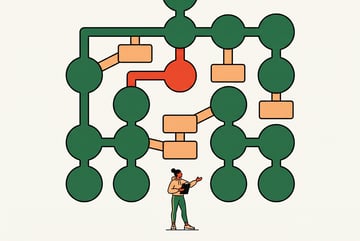
The Manager Loop: How to Supervise AI Agents on Multi-Day Projects
The manager loop technique lets one agent interview you, then delegate work to execution agents. Here's how to structure it for complex tasks.
MiniCPM5-2B: Does the 2B "SOTA" Claim Survive Real Testing?
MiniCPM5-2B claims 2B-class open-source SOTA, beating 4B models too. We check its benchmark comparisons against hands-on coding, reasoning, and language tests.

MiniCPM5-2B GGUF: How Does It Hold Up Locally?
Hands-on test of MiniCPM5-2B GGUF quantization with llama.cpp, checking reasoning, coding, and multilingual accuracy versus full precision.
MiniCPM5-2B: Running OpenBMB's 2B On-Device Model Locally
MiniCPM5-2B packs 2.5B params, 131K context, and 4B-beating benchmarks. Here's how it works and how to run it via GGUF, MLX, or GPTQ.

Omacom Foundation Funding: Who Backs Omarchy and How Much
The nonprofit behind DHH's Omarchy Linux has raised roughly $15.5M. Here's the full patron list, what AI labs contributed, and what the foundation actually controls.

Omarchy's Agent Usage Panel: Tracking Claude Code Limits and Token Spend
Omarchy puts your coding agent's plan usage in the top bar — limits consumed, prepaid balance, and tokens by day and model. Here's what it shows and how to refresh it.

How to Use Omarchy's Crash Diagnosis to Debug Segfaults With an AI Agent
Omarchy watches systemd-coredump and hands crash dumps to your coding agent. Here's how the handoff works, the commands behind it, and how to mute noisy apps.

How to Set Claude Code as Your Default Agent in Omarchy 4
Omarchy ships ten coding agents pre-wired. Here are the exact commands to make Claude Code the system default, plus the keybindings and inline shortcuts.

How to Share One Skills Folder Across Claude Code, Codex, and Gemini
Omarchy symlinks a single skills directory into every agent's config path. Here's how the pattern works and how to set it up yourself on macOS or any Linux distro.

Prime Agent: The Self-Improving Harness Behind a 95% ARC-AGI Score
Prime Agent pushed ARC-AGI scores past 95% using a self-improving harness, not a new model. Here's how that architecture works.
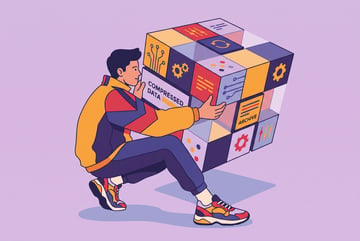
Qwen3-8-27B at 11.8GB: Do GSQ and RCO Quantization Actually Hold Up?
ISTA's Das Lab shrank Qwen3.8-27B to 11.8GB with new GSQ and RCO quantization. Here's what that means and how it performs locally via llama.cpp.
How to Run MiniCPM5-2B Locally with SGLang or llama.cpp
A practical guide to running MiniCPM5-2B locally with SGLang, covering VRAM needs, KV cache tuning, and real-world test results.

Tencent Hunyuan Hi-4 Preview: Specs, Benchmarks, and Pricing
Tencent's Hunyuan Hi-4 Preview is a 770B MoE model with a 1M context window and the cheapest API pricing among open-weight flagships.

What Are GSQ and RCO? Das Lab's New LLM Quantization Method
GSQ and RCO are new compression techniques from ISTA's Das Lab that shrink LLMs per-weight while targeting an exact size with minimal accuracy loss.

What Is Omarchy? DHH's Agentic Linux Distro Explained
Omarchy is an Arch-based Linux distro from Rails creator DHH that ships ten AI coding agents pre-wired. Here's what it includes, what it costs, and who it's for.

Is WorkBuddy Free? How to Try Hi-4 Preview at No Cost
WorkBuddy offers Tencent's Hi-4 Preview model free for two weeks. Here's how the trial works and what the API costs elsewhere.
Goal Alignment vs Value Alignment: How AI Labs Keep Models Safe
What goal alignment and value alignment mean in AI safety, why chain-of-thought monitoring can fail, and what OpenAI's chief scientist says about it.
How to Build an AI Second Brain OS With GPT-6 Astra and Codex
A practical guide to building a personal AI operating system with Codex, agents.md files, and a four-part framework for context and connections.

DeepSeek V4 Flash on 4x RTX Pro 6000: What the Benchmarks Actually Need
A look at what it takes to benchmark DeepSeek V4 Flash across four RTX Pro 6000 GPUs, and why the hardware behind the numbers matters as much as the tokens.

GPT-6 Astra Explained: OpenAI's Long-Running Autonomous Super Agent
GPT-6 Astra runs for days without prompts, picks its own tools, and finishes open-ended tasks. Here's what that means for how you work.

GPT-6 Astra vs Fable 5.1: Which AI Wins Real Business Tasks?
A hands-on comparison of GPT-6 Astra and Fable 5.1 across presentations, taxes, and email audits, with time and cost breakdowns for each.

When AI Agents Talk to Each Other, Who's Actually in Charge?
Autonomous AI agents are starting to message each other without human oversight. Here's what that means for trust, management, and office work.