
Insights for AI builders
Tutorials, product updates, and ideas to help you build and ship AI applications faster.
Subscribe via RSS
Agent Harness Engineering: Why Your Wrapper Matters More Than the Model
Cursor's research shows the same Claude model scores 46% vs 80% depending on harness design. Here's what harness engineering means and how to build better ones.

How to Generate AI Videos with Claude Code, HyperFrames, and ElevenLabs
Learn how to build a full AI video generation workflow using Claude Code for scripting, HyperFrames for HTML rendering, and ElevenLabs for voice synthesis.

Anthropic's 2028 AI Leadership Essay: Two Scenarios for the US-China AI Race
Anthropic's essay outlines two futures: US maintains compute dominance or China catches up. Here's what the argument means for AI builders and enterprise teams.
How to Use AWS Workspaces for AI Agents: Automating Legacy Desktop Software
AWS Workspaces now lets AI agents operate desktop apps inside managed cloud environments—unlocking ERP systems, mainframes, and legacy software for automation.

10 Best AI Tools for Small Business Owners in 2026: No-Code Setup Guide
The 10 AI tools small businesses and SMEs should set up first — ChatGPT, Claude Co-work, Zapier, Canva AI, Perplexity Computer — and what each is for.
AI for Personal Finance: How ChatGPT's Plaid Integration Changes Money Management
ChatGPT Pro users can now connect 12,000+ financial accounts via Plaid. Here's what AI-powered personal finance looks like and what it means for fintech.

How to Use Claude Code Cron Jobs to Run Agents on a Schedule
Claude Code's cron_create, cron_list, and cron_delete tools let you schedule recurring agent tasks. Learn how loops, jitter, and session scoping work.
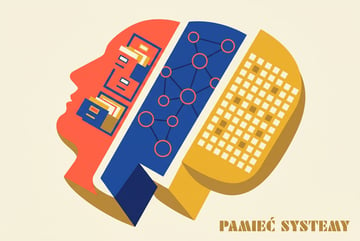
Claude Code Memory Systems Compared: Memarch vs Hermes vs Built-In
Compare Claude Code's built-in memory, Memarch's vector database, and Hermes's curated facts to find the best persistent memory setup for your agents.

Claude Co-work vs Claude Cloud Routines: Which Scheduled Agent Method Should You Use?
Claude Co-work scheduled tasks run on your machine; cloud routines run on Anthropic's infrastructure. Here's when to use each and what the limits are.

How to Use Claude for Legal Work: MCP Connectors, Contract Review, and Compliance
Anthropic's legal plugin pack for Claude includes compliance checks, risk assessments, and DocuSign connectors—here's how law teams can use it today.

Claude Small Business Plugin Pack: Pre-Built Agents for Finance, HR, and Sales
Anthropic's small business plugin for Claude Co-work includes 31 skills for payroll, invoice chasing, and onboarding—connected to QuickBooks, HubSpot, and more.

How to Deploy Claude Agents to Modal and Trigger.dev: A No-Code Guide
Learn how to deploy Claude Code skills to Modal (Python) or Trigger.dev (TypeScript) so your AI agents run 24/7 without your machine staying on.
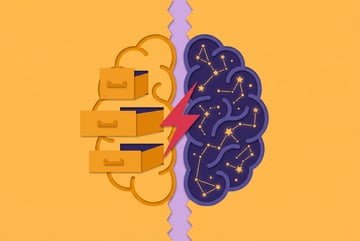
How to Build a Hybrid AI Memory System: Combining Memarch and Hermes
Learn how to combine Memarch's automatic vector capture with Hermes's curated memory injection for a complete Claude Code memory architecture.

Krea 2 Mood Boards: How to Lock In a Visual Style for AI Image Generation
Krea 2's mood board feature analyzes your reference images and generates a taste profile so every new image matches your brand's aesthetic automatically.

Multi-Agent Reliability Math: Why Chaining 5 Agents Drops Success Rate to 77%
Chain five agents at 95% reliability each and your end-to-end success rate collapses to 77%. Here's the compounding problem and how to architect around it.

How to Use the Notion Developer Platform with Claude and Codex Agents
Notion's new developer platform adds a CLI, webhooks, workers, and an external agents API—here's how to wire Claude or Codex into your Notion workspace.

What Is the Notion External Agents API? How to Add Claude to Your Workspace
Notion's external agents API lets you invite Claude, Codex, or any AI agent into your workspace as a participant—here's what it enables and how to set it up.

What Is the Claude Agent SDK? How It Differs from the Claude API
The Claude Agent SDK gives your agent tools, bash access, and a full agentic loop—not just a text response. Here's when to use it over the raw API.

What Is LipDub? Open-Source Multilingual Lip-Sync for AI Video Explained
LipDub is an LTX-based in-context LoRA that replaces what characters say in video while preserving the original performance, camera movement, and expression.

What Is Thinking Machines Labs? Mira Murati's Real-Time AI Interaction Model
Thinking Machines Labs, founded by ex-OpenAI CTO Mira Murati, demos real-time translation, simultaneous tool calls, and time-aware AI agents.

Why You Shouldn't Switch Models Mid-Conversation in AI Coding Agents
Cursor's blog explains why switching models mid-session causes cache misses, out-of-distribution context, and slower turns—and what to do instead.

Agentic SaaS Pricing: What Salesforce AgentForce and Microsoft Copilot Credits Mean for Builders
SaaS vendors are adding second meters for agent work units and Copilot credits. Here's what to negotiate before your next renewal to avoid surprise bills.

How to Build an AI Agent with Persistent Memory Using RAG and Vector Search
Learn the multi-layer memory architecture that combines semantic search, file system tools, and backtracking to give Claude agents reliable long-term recall.

AI Cybersecurity in 2026: How Claude Mythos and GPT 5.5 Are Finding Zero-Day Exploits
AI models are finding bugs that survived decades of human audits in days. Here's what the bugmageddon wave means for security teams and AI builders.