
Insights for AI builders
Tutorials, product updates, and ideas to help you build and ship AI applications faster.
Subscribe via RSS
NVIDIA Distributed AI Data Centers: What Residential GPU Nodes Mean for AI Infrastructure
NVIDIA and Span are testing mini AI data centers mounted on homes. Learn how distributed residential compute could reshape AI infrastructure and access.

How to Build a Portable AI Agent Stack That Avoids Vendor Lock-In
Use agents.md, skill.md, and standard MCP connections to build an AI agent stack that works across Claude Code, Codex, and Cursor without lock-in.
What Is the Slot Machine Method for Claude Code? Why Restarting Beats Correcting
When Claude makes a mistake, arguing makes it worse. The slot machine method says to rewind and re-run instead. Here's why it works and how to do it.

What Is Google Diffusion Gemma? The Text Model That Generates 256 Tokens at Once
Diffusion Gemma uses image generation tech to draft entire paragraphs simultaneously, making it dramatically faster for on-device AI inference.

What Is HeyGen Avatar V? How to Build a Digital Twin from 15 Seconds of Video
HeyGen Avatar V creates a digital twin from a single 15-second clip. Learn how it works, what it can do, and how to use it in an AI content pipeline.

How to Build an AI Content Empire: One Input, 15 Outputs with AI Video Tools
Learn how to turn one PDF or newsletter into YouTube videos, shorts, LinkedIn posts, and multilingual content using AI avatar and video generation tools.

How to Build an AI Digital Twin for Content Creation Using HeyGen
Create a digital avatar from 15 seconds of video, then use it to publish scripts, change outfits, and deliver content in 15+ languages without re-filming.

How to Build an AI Film Production Workflow with Claude Code and MCP
Learn how to use Claude Code as a production office for AI filmmaking—story breakdowns, character references, scene generation, and asset tracking via MCP.

AI Model Routing in 2026: When to Use Fable 5, Opus, Sonnet, and Haiku
Not every task needs your most expensive model. Learn how to route tasks across Claude Fable 5, Opus, Sonnet, and Haiku to cut costs without losing quality.

AI Scaling Laws Are Breaking Down: What It Means for AI Builders
New research shows bigger AI models don't reliably improve analogical reasoning. Here's what the scaling law breakdown means for your AI stack.
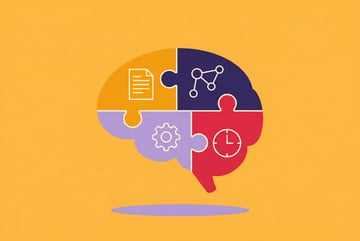
How to Build an AI Second Brain with the Four C's Framework: Context, Connections, Capabilities, Cadence
The Four C's framework gives you a repeatable system for building an AI operating system that knows your business and automates work while you sleep.

What Is Apple's AI Strategy? How WWDC 2026 Changes the AI Landscape for Builders
Apple is turning AI into part of the operating system, not a chatbot tab. Here's what WWDC 2026's announcements mean for AI builders and enterprise teams.

7 Apps Your Operations Team Can Build This Quarter—No Engineers
Vendor SLAs, onboarding checklists, incident logs—the internal tools ops keeps faking in spreadsheets. Here are seven your team can build this quarter.

How to Build a Brainstorm-First AI Workflow: Separate Ideation from Execution
Instead of asking AI for one answer, ask for five options first. This brainstorm-first technique consistently produces better outputs across any AI task.

Buy the Commodity, Build What's Yours
Buy SaaS for the undifferentiated work—payroll, accounting, the system of record. Build the workflows that are core to how your org actually operates.

Claude Fable 5 vs GPT 5.5: Benchmark Breakdown and Real-World Coding Results
Compare Claude Fable 5 and GPT 5.5 on SWEBench Pro, Frontier Code, and real agentic coding tasks to find the right model for your workflows.

Decentralize the Building. Centralize the Seeing.
The two motions look contradictory: push building to the edges, pull visibility to the center. They only conflict when every tool is a separate island.

Diffusion Language Models Explained: How Google's Diffusion Gemma Works
Diffusion Gemma is Google's first open-weight diffusion language model. Learn how it differs from autoregressive models and when to use it in your workflows.

Your Best Engineers Should Architect Substrates, Not CRUD Apps
When non-engineers build the long tail of internal tools, scarce engineering talent moves up: design the governed substrate, set patterns, review what ships.

Fragmented Tools Make Your Org Illegible to Its Own Leadership
Run on dozens of disconnected tools and leadership can't see across them—can't answer cross-cutting questions, govern, or steer. The org goes blind to itself.

How to Use Claude Fable 5 for Complex Agentic Workflows: Tips and Best Practices
Claude Fable 5 excels at long, complex tasks but burns tokens fast. Learn how to set effort levels, manage costs, and get the most out of this model.

Your Processes Change Faster Than Your Software Can
In most orgs, the business learns faster than its tools can be rebuilt, so understanding outpaces software and the company slows to the speed of its backlog.

The Compliance Case for Letting Everyone Build
Compliance teams treat citizen development as a risk. On a governed substrate it delivers a better audit trail and access control than the status quo.

What Is Analogical Reasoning in AI? Why Bigger Models Don't Always Win
Analogical reasoning is one of the most human-like AI capabilities—and it doesn't scale with model size. Here's what the research shows and why it matters.