
Insights for AI builders
Tutorials, product updates, and ideas to help you build and ship AI applications faster.
Subscribe via RSS
What Is Software 3.0? How Prompting Replaced Programming
Software 3.0 is the era where prompts and context windows replace code. Learn what this means for how you build AI agents and automate workflows.

5 Autonomous Tasks the Hermes Agent Handles Better Than OpenClaw — With Real Output Examples
Hermes found mispriced supercars, generated plumber leads with pitch angles, and surfaced a Kimi K2 story most outlets missed.

500% More Merged PRs: 4 Lessons from OpenAI's Symphony Agentic Coding Experiment
OpenAI's internal teams saw 500% more landed pull requests with Symphony. Here are 4 structural lessons about running agents at scale on real codebases.

9 Video Testimonials Cut Google Ads Cost Per Conversion from $200 to $30 — The Landing Page Data Behind the Drop
Adding 9 video testimonials to a landing page dropped Google Ads CPC from $200 to $30. Page speed data shows 4-second load kills 80% of conversions vs.

AlphaQubit: How Google DeepMind's AI System Solved the Error Correction Problem Blocking Fault-Tolerant Quantum Computers
AlphaQubit is an AI error decoder that identifies quantum computing errors with state-of-the-art accuracy — directly accelerating the 2029 cryptography threat.

Andrej Karpathy Said 'The Tokenizer Must Go' — DeepSeek's Vision Architecture Is Starting to Prove Him Right
Karpathy called pixels better inputs than text tokens after DeepSeek's OCR paper. Their new visual primitives model takes that idea further with 7,000x…

Anthropic's $50B Raise at a Near-$1T Implied Valuation: Why Secondary Shares Now Trade Above OpenAI
Anthropic confirmed a $50B raise. On secondary markets, Anthropic shares are now trading above OpenAI — with some trades implying a $1 trillion valuation.

Atlassian's MCP Server Is Now GA: How Claude Reads and Writes Jira, Confluence, and Compass via OAuth
Atlassian's remote MCP server went GA in February 2026 with Claude as first partner. It searches, summarizes, and creates issues across Jira, Confluence

Big Tech Cloud Earnings Week: 5 Numbers That Prove AI Infrastructure Has Hit Escape Velocity
Google Cloud +63%, Azure +40%, AWS +28%. OpenAI's CFO called token demand 'a vertical wall.' Here's what the Q1 2026 numbers actually mean.

Bitcoin vs. Ethereum in the Quantum Threat: Why One Can Migrate and One Faces a Constitutional Crisis
Ethereum has Vitalik and active governance to migrate from quantum-vulnerable cryptography. Bitcoin does not — and Satoshi's wallet could be the first casualty.

Why a 1998 Mozilla Bug Tracker Accidentally Designed the Perfect AI Agent Substrate
Bugzilla's 1998 primitives — durable state, state machine, ownership, audit history — are exactly what AI agents need. Jira and Linear inherited them all.

Claude Code Context Mode Compresses 315KB Sessions to 5KB — Here's How to Install It
Context Mode routes tool calls through a sandbox and shrinks a 56KB Playwright snapshot to 299 bytes. Two commands to install.

Claude Code's Landing Page Generator Skill: Build a City × Service Matrix for SEO Without Writing a Single Page Manually
Use Claude Code's /landing-page-generator skill to build a city × service matrix — tree trimming Toronto, tree trimming Vancouver
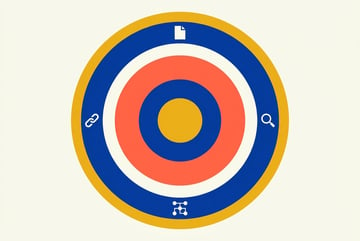
Claude Code Memory Levels Explained: 6 Layers from claude.md to Cross-Tool Shared Memory
Claude Code has 6 distinct memory levels. Here's what each one does, when to use it, and which skills unlock the higher tiers.

Claude Code /ultra review: 5 Things You Need to Know Before Running It ($5–$20 Per Run)
Ultra review spins parallel reviewer agents but costs $5–$20 per run and requires a Claude account, not just an API key. What to know first.

ClaudeMem vs Context Mode: Which Claude Code Memory Plugin Should You Use?
Compare ClaudeMem and Context Mode for Claude Code—one handles cross-session memory, the other prevents context rot. Here's when to use each.

DeepSeek's 'Thinking with Visual Primitives': 5 Technical Breakthroughs in the Paper That Briefly Disappeared
DeepSeek's vision paper was published then pulled. Here are 5 key technical details — including inline bounding-box tokens and a 7,000x compression ratio.

DeepSeek V4 Flash vs Claude Sonnet 4.6: Which Model Is Best for AI Agent Workflows?
Compare DeepSeek V4 Flash and Claude Sonnet 4.6 on cost, speed, and quality for agentic coding, automation, and multi-step workflows.

DeepSeek Vision's 7,000x Image Compression Pipeline: From 756px Input to 81 KV Cache Entries
DeepSeek's vision model compresses a 756x756 image through four stages down to 81 KV cache entries — a ~7,000x total compression ratio. Here's each step.

DeepSeek Vision Beats GPT-5.4 by 17 Points on Maze Navigation — The Topological Reasoning Benchmark Explained
On maze navigation, DeepSeek's vision model scores 67% vs. GPT-5.4's 50% — a 17-point gap driven by inline bounding-box spatial reasoning.

DeepSeek Vision vs. Claude Sonnet 4.6 vs. Gemini Flash 3: Which Vision Model Uses 10x Less KV Cache?
DeepSeek's vision model uses ~90 KV cache entries per image vs. ~870 for Sonnet 4.6 and ~1,000 for Gemini Flash 3. Here's what that means for cost.

How to Use Free Claude Code Alternatives: OpenRouter, NVIDIA NIM, and Ollama Setup Guide
Run Claude Code with DeepSeek, GLM, or Gemma models via OpenRouter, NVIDIA NIM, or Ollama to cut costs by up to 99% with the free-claude-code proxy.

Gamma vs ChatGPT vs Claude for Presentations: Which AI Tool Makes Better Slides?
Compare Gamma, ChatGPT, and Claude for AI-generated presentations across design quality, editability, and export options to find the best tool.

Gamma vs. ChatGPT vs. Claude vs. Google Slides: Which AI Presentation Tool Actually Builds a Full Deck?
Google Slides edits one slide at a time. ChatGPT outputs basic PowerPoint. Claude lacks templates. Gamma builds full editable decks with agent-based chat…