What Is Software 3.0? How Prompting Replaced Programming
Software 3.0 is the era where prompts and context windows replace code. Learn what this means for how you build AI agents and automate workflows.
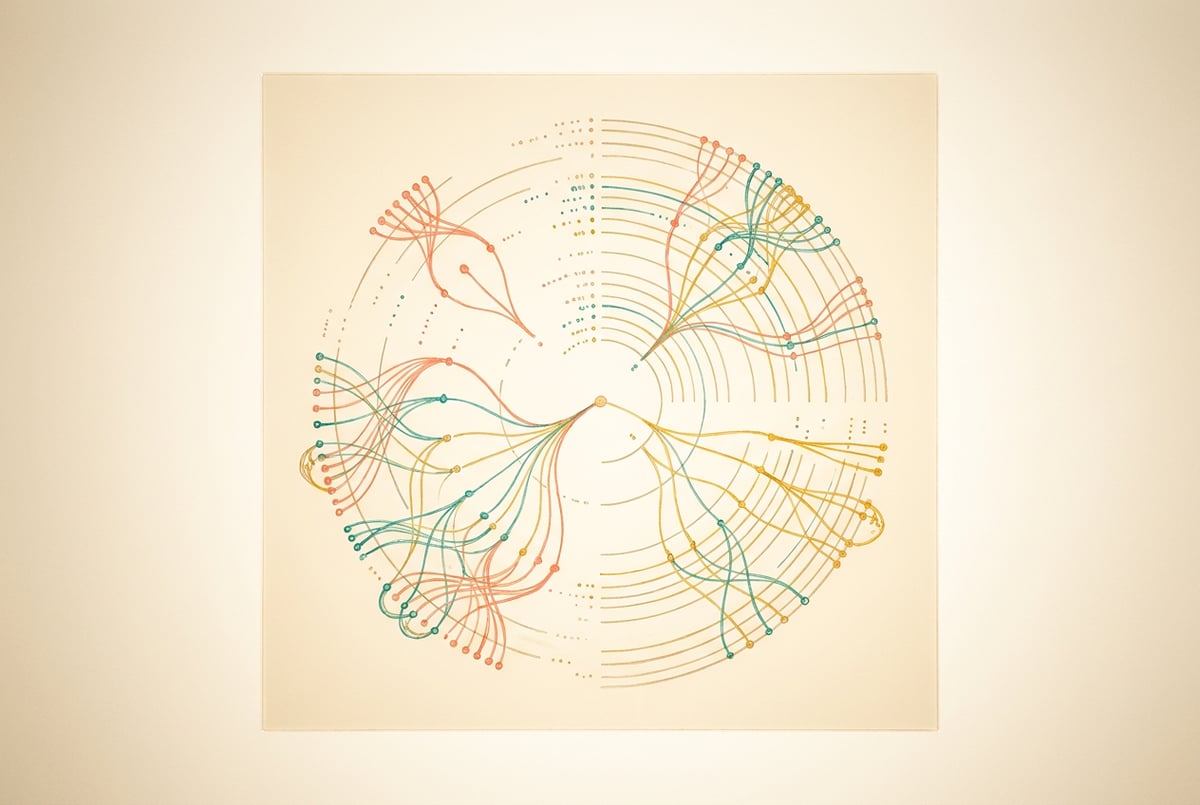
The Three Eras of Software Development
For most of computing history, building software meant writing code. You told the machine exactly what to do, step by step, in a language it could execute. That’s how software worked for decades.
Then something changed. First came machine learning, where instead of writing rules, you trained models on data and let them figure out the rules themselves. Now we’re in a third era — Software 3.0 — where you write a prompt in plain English and an AI model does the rest.
This isn’t just a workflow change. It’s a fundamental shift in what “programming” means. The concept of Software 3.0, popularized by AI researcher Andrej Karpathy, captures something real: for a growing category of tasks, natural language has genuinely replaced code as the primary way humans instruct machines.
Understanding what Software 3.0 actually is — and what it isn’t — matters if you’re building AI agents, automating workflows, or trying to figure out where the industry is heading.
What Software 1.0 and 2.0 Were
To understand Software 3.0, you need the context of what came before.
Software 1.0: Explicit Instructions
Software 1.0 is traditional programming. A developer writes code in Python, Java, C++, or any other language, and the computer executes those instructions exactly. The programmer is in complete control. Every behavior is explicitly defined.
Other agents ship a demo. Remy ships an app.
Real backend. Real database. Real auth. Real plumbing. Remy has it all.

This works well for deterministic tasks — calculations, database lookups, UI rendering, sorting algorithms. If you want a function that adds two numbers, you write a function that adds two numbers. The output is predictable every time.
The limitation is that explicit instruction-writing breaks down fast when the problem is complex or ambiguous. Writing code to recognize a face, translate a sentence, or summarize a document requires thousands of hand-crafted rules that still fall short.
Software 2.0: Learning from Data
Software 2.0, a term Karpathy introduced in a widely read 2017 post, describes the shift to neural networks. Instead of writing rules manually, you define a network architecture and train it on large datasets. The “code” is no longer lines of logic — it’s weights, parameters, millions or billions of numerical values that encode learned behavior.
This approach works remarkably well for tasks that are hard to define explicitly but easy to learn from examples. Image classification, speech recognition, game playing, language translation — all of these became dramatically better under the Software 2.0 model.
But Software 2.0 still required significant technical expertise. You needed to understand model architecture, training pipelines, data engineering, and evaluation frameworks. The interface between humans and models was still largely code.
Software 3.0: Natural Language as the Interface
Software 3.0 is what happens when the interface between human intent and machine behavior becomes plain language.
You don’t train a model. You don’t write a function. You describe what you want, and a large language model (LLM) interprets and executes it. The “program” is your prompt. The “runtime” is the model’s context window.
This is a genuinely new paradigm, and it’s already in widespread use. Every time someone uses ChatGPT to analyze data, Claude to write a contract summary, or Gemini to generate a report, they’re writing Software 3.0.
What Makes Prompting a Form of Programming
Calling prompting “programming” might sound like a stretch. But the analogy holds up more than you’d expect.
Prompts Are Instructions
Traditional code is a set of instructions the machine executes. A prompt is also a set of instructions — it just happens to be written in English (or any other language) rather than Python.
When you write:
“You are a customer support agent for a software company. Your job is to answer user questions clearly and concisely. If you don’t know the answer, say so. Never make up information.”
…you’re defining behavior. You’re setting scope, constraints, tone, and fallback logic. That’s what a function definition does in code.
Context Windows Are the Execution Environment
In Software 1.0, code runs in a specific environment — an operating system, a runtime, a memory space. In Software 3.0, the execution environment is the model’s context window: the full text of your prompt, any conversation history, retrieved documents, tool outputs, and other inputs the model processes at inference time.
The context window is where your “program” runs. What you put in it determines what the model does. This is why prompt engineering matters so much — you’re not just writing a request, you’re configuring the environment in which reasoning happens.
System Prompts Are Source Code
Everyone else built a construction worker.
We built the contractor.
One file at a time.
UI, API, database, deploy.
In most LLM applications, there’s a system prompt that defines the model’s behavior — its role, rules, personality, and constraints. This system prompt is the closest analog to source code in Software 3.0.
It persists across interactions. It shapes every output. It can be versioned, iterated on, and tested. Teams building AI products spend significant effort on their system prompts, just as they’d spend effort on critical code.
How the Shift Changes Who Can Build
One of the most significant practical effects of Software 3.0 is that building useful software no longer requires knowing how to code.
In Software 1.0, you needed to know a programming language, understand data structures, handle errors in code, and manage infrastructure. In Software 3.0, you need to know how to communicate clearly with a model — which is a skill almost anyone can develop.
This has opened up software creation to a much wider group of people:
- A marketing manager can build an AI agent that classifies incoming leads and drafts personalized follow-ups.
- A legal professional can build a tool that reviews contracts against a defined checklist.
- An operations lead can create a workflow that extracts structured data from invoices and routes them for approval.
None of these require traditional programming. They require knowing what you want, understanding how to express it in a prompt, and having a platform that connects the model to the right tools and data.
That said, Software 3.0 doesn’t eliminate the need for technical thinking. It shifts it. Instead of debugging code, you debug prompts. Instead of writing error handlers in Python, you write fallback instructions in English. The skills change, but the rigor doesn’t disappear.
What LLMs Actually Do (and Why It Matters for Building)
To build effectively in Software 3.0, it helps to have a mental model of what LLMs are actually doing.
They’re Probabilistic, Not Deterministic
Traditional code produces the same output for the same input every time. LLMs don’t. They generate probabilistic outputs — statistically likely continuations of whatever text is in the context window. This means the same prompt can produce different outputs across runs.
For some use cases, this variability is fine or even desirable. For others — especially in business workflows where you need consistent, structured output — it requires extra design work. Techniques like few-shot examples, output format constraints, and structured output schemas help manage this.
They Reason Through Text
LLMs don’t “know” facts in the way a database does. They reason through language. When you ask a model to analyze something, it generates a response by predicting what a thoughtful, knowledgeable response to that prompt would look like — based on patterns learned from training data.
This is why how you phrase a prompt matters. More context, clearer instructions, and well-structured examples produce better reasoning. It’s also why retrieval-augmented generation (RAG) — feeding the model relevant documents at inference time — improves performance on knowledge-specific tasks.
The Context Window Is Finite (But Growing)
Every model has a limit on how much text it can process in a single call. Early models had context windows of a few thousand tokens. Modern models like Claude 3.7 and Gemini 2.0 support hundreds of thousands of tokens — enough to hold entire books.
This matters for agent design. Long-running agentic workflows need to manage what’s in the context window at each step. What gets summarized, what gets retrieved, and what gets discarded all affect quality and cost.
Software 3.0 in Practice: What It Looks Like to Build
Building in Software 3.0 looks different depending on what you’re making.
Simple AI Applications
At the most basic level, a Software 3.0 application is a model with a system prompt, a user interface, and maybe some connected data. A customer service bot, a document summarizer, a meeting notes processor — these are all relatively simple compositions of a prompt and a model.
Building these doesn’t require infrastructure expertise. It requires good prompt design and the right tool connections.
Multi-Step Agentic Workflows
More complex Software 3.0 applications use agents — systems where the model doesn’t just respond to a single input but takes a series of actions to complete a task.
An agent might:
- Receive an email from a customer.
- Search a CRM for relevant account history.
- Classify the request type.
- Draft a response using specific product documentation.
- Route the draft to a human reviewer if it exceeds a certain risk level.
Each step involves the model reasoning about what to do next. The workflow is orchestrated by a combination of prompt instructions and tool calls. This is Software 3.0 at its most powerful — and most complex.
Chains and Pipelines
Between simple apps and full agents lies a middle ground: prompt chains and pipelines. You break a complex task into smaller steps, run a model on each, and pass the output of one step into the next.
For example, a content pipeline might: extract key points from a research paper → generate a blog outline → write each section → run a final editing pass. Each step is a separate model call with its own prompt. The output is more reliable because each model call is focused on a narrow task.
The Limits of Software 3.0
Software 3.0 is a real shift, but it’s worth being clear about what it doesn’t solve.
Reliability Is Still a Challenge
LLMs hallucinate. They produce confident-sounding wrong answers. For high-stakes applications — medical, legal, financial — this is a serious constraint. Software 3.0 systems often need verification layers, human review steps, or retrieval-augmented grounding to be production-safe.
This isn’t a reason to avoid Software 3.0, but it is a reason to design carefully. Know where your system needs to be accurate and build in the appropriate checks.
Costs Add Up
Every model call costs money. Simple applications are cheap to run. Complex agentic workflows that make many model calls per task can get expensive quickly. Cost management — batching calls, summarizing context, using cheaper models for simpler steps — is a real part of Software 3.0 engineering.
Security and Prompt Injection
When your software is controlled by natural language, it becomes vulnerable to prompt injection — adversarial inputs that try to override your system prompt or manipulate the model’s behavior. This is an active area of research and a real concern for any Software 3.0 application exposed to untrusted user input.
Not Everything Fits the Paradigm
Some software is still better as Software 1.0. Anything that needs deterministic, verifiable, high-speed computation — financial transaction processing, real-time game physics, database indexing — doesn’t benefit from LLMs. Software 3.0 is powerful for tasks involving language, reasoning, and judgment. It’s not a replacement for all software.
Frequently Asked Questions
What exactly is Software 3.0?
Software 3.0 is a term for the current era of software development in which natural language prompts — rather than traditional code or manually trained neural networks — are the primary way humans define and control program behavior. The concept, associated with AI researcher Andrej Karpathy, describes LLMs as a new kind of runtime where prompts serve as the program.
How is prompting different from programming?
Traditional programming involves writing explicit, deterministic instructions in a formal language that a computer executes exactly. Prompting instructs a probabilistic model using natural language, and the model interprets and executes the intent. Prompting is more flexible and accessible but produces less predictable outputs and requires different design skills.
What is a context window and why does it matter?
A context window is the total amount of text a language model can process in a single call — including your prompt, conversation history, retrieved documents, and tool outputs. It’s effectively the working memory of a Software 3.0 system. What goes into the context window determines what the model can reason about, so managing it well is central to building effective AI agents.
Do you need to know how to code to build in Software 3.0?
Not necessarily. Many Software 3.0 applications can be built entirely through prompt design and no-code tools. However, for complex systems — especially those that need custom logic, data transformations, or integration with proprietary APIs — some programming knowledge is still useful. The floor has dropped significantly, but the ceiling hasn’t disappeared.
What’s the difference between an AI chatbot and a Software 3.0 agent?
A chatbot typically responds to a single input with a single output. An agent can take multi-step actions, use tools, retrieve information, make decisions, and complete tasks autonomously over multiple steps. Agents are the more sophisticated expression of Software 3.0 — they don’t just answer questions, they get things done.
Is Software 3.0 reliable enough for business use?
It depends on the task. For well-scoped applications with appropriate guardrails — clear prompts, structured outputs, human review for high-stakes decisions, and retrieval-augmented grounding — Software 3.0 is already running in production at companies across every industry. For tasks requiring absolute determinism or operating in regulated domains, it requires more careful design and validation.
Key Takeaways
- Software 3.0 is the era where natural language prompts replace code as the primary interface between human intent and machine behavior. LLMs serve as the runtime; the context window is the execution environment.
- The three-era framework — Software 1.0 (explicit code), 2.0 (learned weights), 3.0 (prompted language models) — captures a genuine shift in how software gets built and by whom.
- Prompts are programs. System prompts define behavior, context windows shape reasoning, and multi-step agent workflows can automate complex real-world tasks without traditional code.
- Software 3.0 expands who can build, but doesn’t eliminate the need for careful design. Reliability, cost, and security are real challenges that require thought.
- Platforms like MindStudio are built specifically for this era — letting anyone create AI agents and automated workflows through prompt design and visual configuration rather than code.
Seven tools to build an app. Or just Remy.
Editor, preview, AI agents, deploy — all in one tab. Nothing to install.
If you’re ready to build something in Software 3.0, MindStudio is a good place to start. You can go from idea to working AI agent in an afternoon, without writing a line of code — or with as much code as you want if you’re a developer who prefers it.