
Insights for AI builders
Tutorials, product updates, and ideas to help you build and ship AI applications faster.
Subscribe via RSS
Microsoft's Hybrid Intelligence: How Windows Routes AI Between Local and Cloud
Microsoft's new Windows routing system decides whether coding agent tasks run locally or in the cloud, using on-device models.

OpenAI Dots: What the New Always-On Personal Agents Actually Do
OpenAI's Dots run continuously in the background with their own cloud computer, browser, and app access. Here's what they do and how the launch went.
OpenAI's Math Proofs Spark a Mathematician Backlash
OpenAI's AI-generated proof of the unique games conjecture stunned mathematicians and sparked a "human mathematics" backlash movement.
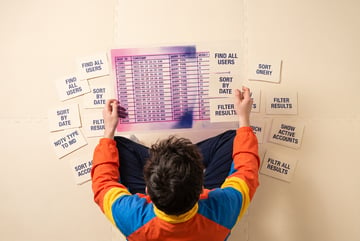
PG-Jev: Query Postgres in Plain English With a Decision Model
PG-Jev lets you filter, rank, and classify Postgres rows using plain English inside SQL. Here's how it works and how to install it.

RTX Spark and Surface Laptop Ultra: Pricing and Specs Explained
Microsoft's RTX Spark-powered Surface laptops start around $2,600, with up to 128GB unified memory for running local AI models.

How to Run Claude Code and Codex Inside Grok Bot's Terminal
Step-by-step guide to installing and authenticating Claude Code or Codex CLI inside Grok Bot's always-on cloud terminal for 24/7 agent access.
Microsoft Brings Llama.cpp to Windows: Run DeepSeek Locally on RTX
Microsoft is adding llama.cpp to Windows ML, letting quantized DeepSeek and Microsoft AI Code models run locally on RTX hardware.

How to Run Humanizer 12B Locally with Llama.cpp
Run Humanizer 12B offline with llama.cpp. GGUF quant sizes, VRAM needs, and what this Gemma fine-tune actually does to AI text.

Runway ML Pricing Explained: How Credits, Resolution, and Length Add Up
How Runway ML's credit system scales with resolution, clip length, and iteration count, plus practical ways to control AI video generation costs.

Tavus Griffin: Did an AI Video Avatar Really Pass the Turing Test?
Tavus says its Griffin model fooled 48% of people on video calls. Here's what the claim means, what full duplex AI is, and how solid the test is.

Underdog Saluki 27B: How Much Does Compression Cost You?
Underdog Saluki 27B shrinks Qwen3.8-27B to under 8GB. Here's what the benchmarks say about tool calling, coding, and math losses.
Underdog Saluki 27B: Tool Calling Gains vs Full-Size Qwen3.8 Losses
Underdog Saluki 27B compresses Qwen3.8-27B to under 8GB. Here's where it beats the full model on tool calling and where it falls short.

Run Underdog Saluki 27B Locally with Llama.cpp: Full Setup Guide
Download, configure, and serve Underdog Saluki 27B, a sub-8GB Qwen3.8-27B GGUF quant, with llama.cpp and tool calling intact.

Underdog Saluki 27B: Run a 27B Tool-Calling Model on 8GB VRAM
Underdog Saluki 27B compresses Qwen3.8-27B into a 7.89GB GGUF that keeps tool-calling intact, runnable on stock llama.cpp.

AI Math Proofs: How Anthropic and OpenAI Results Actually Compare
Anthropic's Claude and OpenAI's internal model both claim math breakthroughs. Here's what's verified, what's hype, and what it means for AI progress.
Claude Haiku 5.5 Pricing: How Much Cheaper Is It Than Haiku 4.5?
Claude Haiku 5.5 costs 10 cents per million input tokens, about 75% less than Haiku 4.5. Here's the full pricing breakdown versus Sonnet 5.5.

Claude Haiku 5.5: Real-World Coding and Agentic Test Results
Claude Haiku 5.5 debugs a real dashboard bug, builds a 3D Blender game, and handles multilingual tests. Here's how it actually performs.

D1-Omni-600M Locally: Testing Liquid AI's Audio-Vision-Text Decision Model
Hands-on test of Liquid AI's D1-Omni-600M decision model running locally, covering text, vision, and audio accuracy plus VRAM usage.
DGX Station vs 8x RTX Pro 6000: Which AI Workstation Wins?
DGX Station's HBM3e vs an 8x RTX Pro 6000 rig's GDDR7, compared on real LLM throughput, video generation, and coding workloads.

Gemini Argon Tops a Leaderboard. Why That Doesn't Settle Anything
Google's Gemini Argon leads a benchmark but has limited availability. Here's why real adoption, not leaderboard rank, decides if a model matters.

How to Build Multimodal RAG with Google's EmbeddingGemma 2
A practical guide to building cross-modal photo, video, audio, and document search with Google's EmbeddingGemma 2 in a free Colab notebook.

Is AI Math Research Proof of AGI? What the Experts Say
Mathematicians and AI researchers debate whether a wave of new AI-generated math proofs counts as AGI, with Yann LeCun pushing back.
Jev Decision Model: A Cheap Filtering Layer for AI Automations
Jev filters emails and news far faster and cheaper than an LLM. Here's how the decision model works and when it actually pays off.

Local AI Hardware vs Cloud API Tokens: Is It Cheaper?
A cost look at running agentic coding jobs on local AI supercomputers like DGX Station vs paying per-token for cloud APIs.