
Insights for AI builders
Tutorials, product updates, and ideas to help you build and ship AI applications faster.
Subscribe via RSS
How to Build a Brand Context Folder for Claude Code: Voice, Visual Identity, and Positioning
A brand context folder gives Claude your voice profile, design tokens, and ICP so every output inherits your identity. Here's how to build one in 30 minutes.
How to Use AI Agent Skills and Plugins in Claude Code and Codex: A Practical Guide
Skills are reusable instruction files; plugins bundle skills, agents, and MCPs. Learn how to install and use both in Claude Code, Codex, and other harnesses.

How to Use the Graphify Skill to Build a Queryable Knowledge Graph for AI Agents
Graphify converts codebases and notes into a queryable knowledge graph that reduces token costs by letting agents query structure instead of raw files.

What Is the AI-Driven SDLC? How Agentic Engineering Shifts the Software Bottleneck
The AI-driven SDLC compresses implementation from weeks to hours but shifts the bottleneck to specification quality and validation. Here's what that means.

What Is GLM 5.2? The Open-Weight Model With Frontier-Level Coding and 1M Token Context
GLM 5.2 is a 744B MoE open-weight model with a 1M token context window, sparse attention, and pricing 10x cheaper than Claude. Here's what sets it apart.
What Is OpenAI's Jalapeno Chip? The Custom AI Inference Processor Explained
OpenAI's Jalapeno is a custom ASIC built for LLM inference, designed in 9 months with AI assistance. Here's what it means for AI speed and cost.
What Is Sakana Fugu Ultra? The Multi-Model Orchestrator That Beats Frontier AI
Sakana Fugu Ultra is an LLM pool that coordinates multiple models to outperform GPT and Claude on coding benchmarks. Here's how it works.

How to Build an AI Agent Loop for Recurring Business Tasks: A Practical Guide
AI agent loops handle recurring jobs with memory so you stop re-prompting the same tasks. Learn how to identify, design, and deploy loops for your workflows.

How to Build an AI Newsletter Digest Workflow with Claude Code, Gmail MCP, and /goal
Use Claude Code skills, Gmail MCP, and the /goal command to automatically scan your inbox for AI news, score stories, and draft LinkedIn posts every morning.

What Is Cursor's Composer Model? How a Coding Tool Became a Frontier AI Lab
Cursor trained Composer 2.5 on Qwen K2.5 with novel RL techniques, competing with GPT 5.5 and Opus. Learn how the SpaceX acquisition changes everything.

G Stack by Garry Tan: How to Turn Your AI Coding Agent Into a Virtual Engineering Team
G Stack gives your AI agent 23 specialist roles and 8 power tools. Learn how to install it in Claude Code or Codex and use it for code review and planning.
GLM 5.2 vs Claude Opus 4.8: Which Model Wins for UI Generation and Agentic Coding?
GLM 5.2 beats Claude Opus 4.8 on design taste and costs up to 10x less. Compare both models on 3D scenes, dashboards, landing pages, and mini games.

How to Use the /goal and /routines Commands in Claude Code for Scheduled Autonomous Workflows
The /goal command keeps Claude running until completion criteria are met. Pair it with /routines to build autonomous daily workflows that run without you.

How to Use Graphify to Build a Queryable Knowledge Graph for Your AI Agent
Graphify turns codebases and notes into a queryable knowledge graph, saving tokens and giving your agent persistent memory. Here's how to install and use it.

How to Run GLM 5.2 in Claude Code Using OpenRouter: A 5-Minute Setup Guide
You can run GLM 5.2 inside Claude Code's harness via OpenRouter in minutes. This guide covers setup, the anthropic_base_url trick, and web search integration.
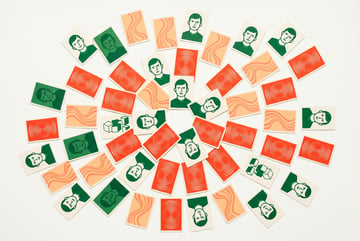
What Is Seedance 2.5's 50-Reference Multimodal Input? How It Solves Consistency in Long AI Videos
Seedance 2.5 accepts 50 multimodal references including images, video, audio, and 3D assets to keep characters and scenes consistent across 30-second clips.

Seedance 2.5 vs Kling Omni Director: What the Next Generation of AI Video Control Looks Like
Seedance 2.5 brings 30-second clips and 50 references while Kling's Omni Director matches camera movements from reference video. Compare what's coming next.

Static Context vs Dynamic Context in AI Agents: How to Manage What Your Agent Knows
Static context loads every session; dynamic context loads on demand. Learn how to balance both for token efficiency and reliable AI agent performance.
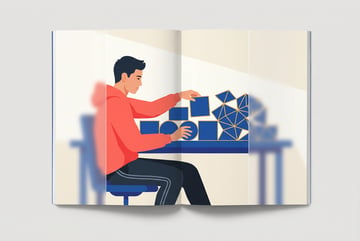
Vibe Coding vs Agentic Engineering: Google's Spectrum Explained
Google's AI coding guide defines a spectrum from vibe coding to agentic engineering. Learn which approach fits your project and when to use each level.

What Is Index Share? How GLM 5.2 Achieves 2.9x Fewer Compute Operations at 1M Token Context
Index Share reuses sparse attention indexers across four layers, cutting compute by 2.9x at 1M token context. Learn how this makes GLM 5.2 affordable to serve.

What Is a Loop of Loops? How to Build AI Agents That Manage Recurring Work
A loop of loops lets recurring AI jobs notice each other, share context, and hand off without you managing every step. Learn the concept and how to apply it.

What Is Seedance 2.5? ByteDance's 30-Second AI Video Model Explained
Seedance 2.5 generates native 30-second clips with 50 multimodal references. Learn what's new, when it launches, and how it compares to Seedance 2.0.
How to Build an AI Newsletter Digest Skill with Claude Code and Gmail MCP
Use Claude Code Ultra Code mode and Gmail MCP to build a skill that scouts your inbox, scores AI news, and drafts LinkedIn posts automatically every morning.
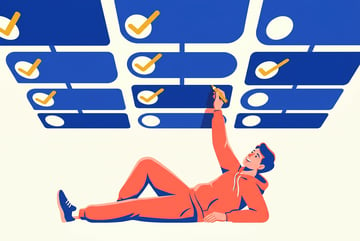
How to Use Claude Code's /goal Command to Run Agents Until Completion
The /goal command in Claude Code lets agents run until measurable conditions are met. Learn how to set verifiable finish lines that prevent mid-task stops.