What Is OpenAI's Jalapeno Chip? The Custom AI Inference Processor Explained
OpenAI's Jalapeno is a custom ASIC built for LLM inference, designed in 9 months with AI assistance. Here's what it means for AI speed and cost.
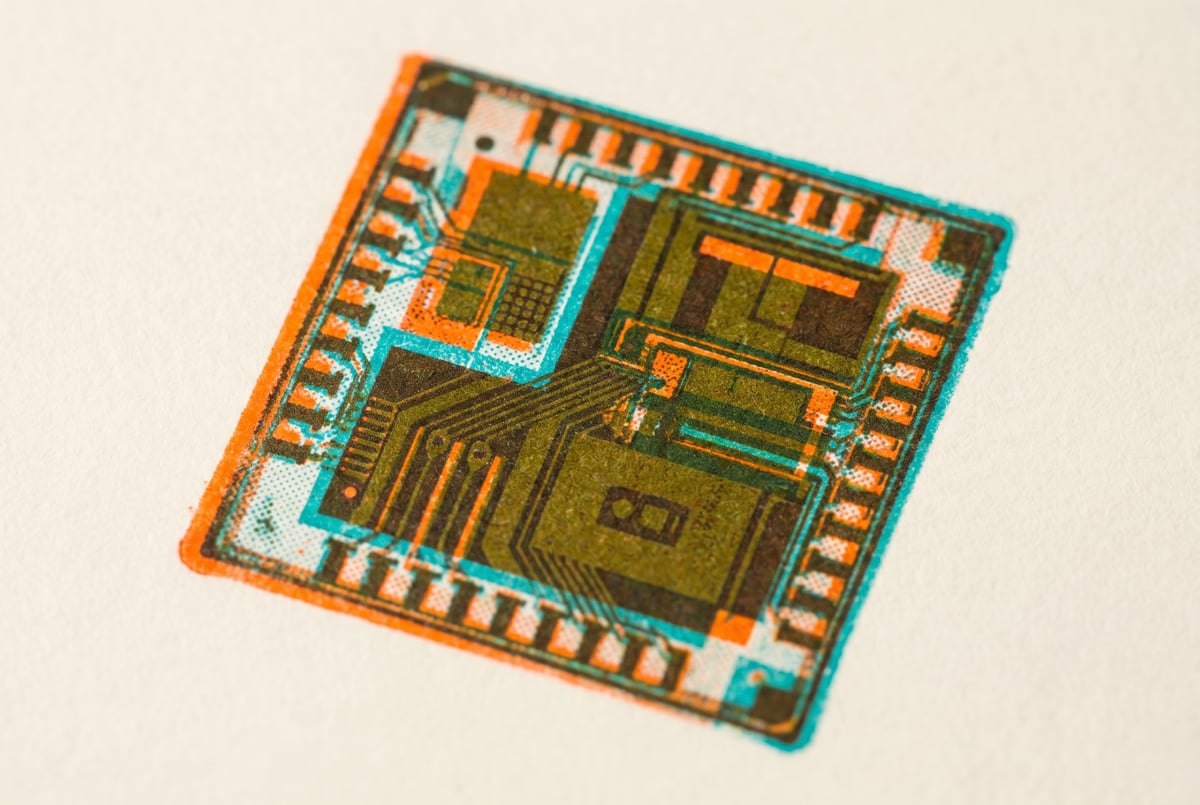
OpenAI Is Building Its Own Silicon — Here’s Why That Matters
OpenAI’s Jalapeno chip is making waves in the AI industry, and not just because of its name. It’s a custom-built ASIC (Application-Specific Integrated Circuit) designed specifically for running large language models — and it reportedly took just nine months to design, with significant help from AI tools. That’s a fraction of the time a typical chip design cycle takes.
If you’ve been following the race to control AI infrastructure, you know this is a big deal. For years, companies running large-scale AI workloads have been almost entirely dependent on Nvidia GPUs. Jalapeno represents OpenAI’s first real move toward owning a piece of that stack.
This article breaks down exactly what the Jalapeno chip is, how it differs from traditional AI hardware, why OpenAI built it, and what it signals for the broader AI industry — including what it means for developers and businesses building AI-powered products.
What Is the Jalapeno Chip?
Jalapeno is OpenAI’s first custom-designed inference chip. It’s an ASIC — a processor built for one specific job — in this case, running (or “inferring”) responses from large language models like GPT-4o and future OpenAI models.
Unlike a general-purpose GPU, which can handle training, inference, graphics, scientific computing, and more, Jalapeno is purpose-built for a single workload: taking a user’s input and generating a model output as fast and cheaply as possible.
ASIC vs. GPU: What’s the Difference?
Built like a system. Not vibe-coded.
Remy manages the project — every layer architected, not stitched together at the last second.

GPUs became the default hardware for AI because they’re highly parallel — they can run thousands of matrix multiplication operations simultaneously, which is exactly what neural networks need during training.
But inference is a different workload from training. When a model is already trained, running it doesn’t require the same kind of brute-force parallel computation. What it needs is:
- Low latency — responses should feel instant
- High throughput — the chip should handle millions of queries simultaneously
- Energy efficiency — at OpenAI’s scale, electricity costs are enormous
- Memory bandwidth — moving model weights in and out of memory is often the bottleneck
An ASIC designed specifically for inference can optimize for all of these without carrying the overhead that makes GPUs more flexible but less efficient per workload. That’s the core bet behind Jalapeno.
Key Technical Specs
Based on available reporting, the Jalapeno chip:
- Is manufactured by TSMC on a 3nm process node — the same advanced process used in Apple’s M3 chips and some of Nvidia’s latest silicon
- Is designed primarily for inference, not model training
- Was developed with AI-assisted design tools, dramatically compressing the engineering timeline
- Is expected to be deployed in OpenAI’s own data centers, not sold to third parties (at least initially)
The 3nm fabrication node is significant. Smaller transistors mean lower power consumption and better performance per watt — both critical when you’re running models at the scale OpenAI operates.
Why Did OpenAI Build a Custom Chip?
The short answer: cost and control.
The Nvidia Dependency Problem
Nvidia’s H100 and H200 GPUs currently dominate AI infrastructure. They’re excellent for training massive models, but they’re also expensive — an H100 can cost $30,000 or more on the open market, and demand still outstrips supply. Companies like OpenAI, Google, Meta, and Amazon are all racing to reduce their dependence on Nvidia for exactly this reason.
Google has been running its own TPUs (Tensor Processing Units) for years. Amazon has Trainium and Inferentia chips for AWS customers. Meta has its own MTIA inference accelerator. OpenAI, despite being one of the most prominent AI companies in the world, had been largely reliant on Nvidia and Microsoft’s Azure infrastructure.
Jalapeno changes that.
Inference Is Where the Money Goes
Here’s something many people outside AI infrastructure miss: the majority of AI compute costs are not in training — they’re in inference.
Training a model like GPT-4 is expensive and happens relatively rarely. But once deployed, that model runs inference millions of times per day, every day. Every time a user sends a message to ChatGPT, an API call hits one of OpenAI’s servers and triggers an inference job.
At the scale OpenAI operates — hundreds of millions of users, billions of API calls — even small improvements in inference efficiency translate to massive cost savings and revenue impact. A chip that runs inference 30% more efficiently could save hundreds of millions of dollars annually.
The Strategic Value of Owning Your Stack
Beyond cost, there’s a deeper strategic reason to build custom silicon: control.
When you design your own chip, you can optimize it for your specific models, your specific workloads, and your specific architecture choices. You’re not constrained by what Nvidia decides to prioritize. You can iterate faster. You can keep proprietary optimizations closer to the metal.
This is why Apple’s transition to its own M-series chips was so impactful — not just for performance, but for how tightly Apple could now integrate hardware and software decisions.
The AI-Assisted Design Story
One of the most interesting details about Jalapeno is how it was built. OpenAI reportedly used its own AI tools extensively throughout the design process, cutting the chip design cycle from what would typically be several years down to roughly nine months.
How AI Accelerates Chip Design
Traditional chip design involves massive teams of engineers spending years on:
- RTL (Register Transfer Level) design — writing the logical architecture of the chip
- Verification — testing that the logic does what it’s supposed to
- Physical design — actually laying out the transistors on silicon
- Timing analysis — making sure signals travel at the right speeds
AI tools have been creeping into chip design for a while. Nvidia and Google have both used machine learning to assist with placement and routing in chip layout. But OpenAI appears to have pushed this further — using LLMs and other AI systems to assist with more of the design pipeline.
The result was a 9-month design cycle. For a chip destined for production at TSMC’s 3nm node, that’s remarkable. It’s also a proof of concept for AI-assisted engineering at a level that goes beyond software code generation.
What This Means for Chip Design More Broadly
If OpenAI can design a competitive inference chip in 9 months with AI assistance, it suggests the barriers to custom silicon are falling. Companies that previously couldn’t afford the time or engineering resources to build custom chips might now be able to.
This could accelerate competition in AI hardware significantly over the next few years — and potentially reduce the cost of AI inference across the board.
How Jalapeno Fits Into OpenAI’s Broader Infrastructure Strategy
Jalapeno isn’t a standalone project — it’s part of a larger push by OpenAI to control more of its infrastructure.
The Stargate Project
In early 2025, OpenAI announced Stargate, a $500 billion infrastructure initiative in partnership with SoftBank, Oracle, and others. The goal is to build out massive AI data center capacity in the United States.
Jalapeno is a natural fit for Stargate infrastructure. If OpenAI is building its own data centers, it makes sense to fill them with its own chips optimized for its own models. The economics become significantly more favorable when you control both ends of the equation.
Working With Broadcom
Reports indicate OpenAI has also been working with Broadcom — one of the leading chip design and manufacturing companies — as a partner in developing its custom silicon. Broadcom has extensive experience in ASIC design and has helped other hyperscalers (including Google with its TPUs) bring custom chips to market.
This partnership suggests Jalapeno is being built with serious production scale in mind, not just as a research project.
Inference-First, Training Later?
Other agents start typing. Remy starts asking.
Scoping, trade-offs, edge cases — the real work. Before a line of code.
Current reporting positions Jalapeno as an inference chip, not a training chip. That’s a deliberate choice. Training chips require different capabilities — primarily enormous GPU clusters running for months at a time, which Nvidia’s hardware still dominates.
But OpenAI may not be stopping at inference. Multiple reports suggest the company has longer-term plans for training accelerators as well. Jalapeno is likely the first step in a multi-generation silicon roadmap.
What This Means for AI Costs and Speed
The practical impact of custom inference chips like Jalapeno shows up in two places: price per token and response latency.
Price Per Token
Every response from a language model costs compute. In the API world, this is expressed as “price per million tokens.” As inference hardware improves, this price drops.
We’ve already seen dramatic price reductions over the past two years as companies optimized their inference pipelines. GPT-4-class models that cost $0.06 per 1K tokens in 2023 now have comparable options at a fraction of the price. Custom inference chips push this further.
For businesses building AI-powered products, cheaper inference means either better margins or the ability to run more powerful models at the same cost.
Response Latency
For real-time applications — chatbots, voice interfaces, AI-assisted writing — latency matters enormously. Users notice the difference between a 200ms response and a 2,000ms response.
Purpose-built inference chips can reduce latency by cutting out the inefficiencies of general-purpose hardware. This directly improves user experience for any product running on OpenAI’s infrastructure.
FAQ
What is OpenAI’s Jalapeno chip?
Jalapeno is OpenAI’s first custom-built ASIC designed specifically for AI inference — running LLMs in production, not training them. It’s manufactured by TSMC on a 3nm process and was designed in approximately nine months with significant AI assistance.
How is Jalapeno different from Nvidia GPUs?
Nvidia GPUs are general-purpose parallel processors that work well for both training and inference. Jalapeno is purpose-built only for inference, which means it can be optimized for lower latency, better energy efficiency, and higher throughput at that specific workload without the overhead of general-purpose flexibility.
Will OpenAI sell the Jalapeno chip to other companies?
Based on current reporting, Jalapeno is intended for OpenAI’s own data center infrastructure — not as a commercial product sold to third parties. This is consistent with how Google uses its TPUs (primarily internal, with some availability through Google Cloud).
How does a custom chip reduce AI inference costs?
Purpose-built chips eliminate the inefficiencies of running inference on hardware designed for many different tasks. They can optimize memory bandwidth, power consumption, and instruction pipelines specifically for transformer-based inference workloads, cutting the cost per token and improving response speed.
What is the Stargate project and how does Jalapeno relate to it?
Stargate is OpenAI’s $500 billion data center initiative announced in early 2025, aimed at building out massive AI infrastructure in the U.S. Jalapeno is expected to play a role in that infrastructure, allowing OpenAI to populate Stargate facilities with chips optimized for its own models rather than relying entirely on third-party hardware.
Did AI actually help design the Jalapeno chip?
- ✕a coding agent
- ✕no-code
- ✕vibe coding
- ✕a faster Cursor
The one that tells the coding agents what to build.
Yes. OpenAI reportedly used its own AI tools as part of the chip design workflow, compressing what would normally be a multi-year process down to roughly nine months. This is an early but notable example of AI accelerating hardware engineering itself.
Key Takeaways
- Jalapeno is OpenAI’s first custom inference ASIC, built specifically to run LLMs efficiently rather than train them.
- It was designed in ~9 months using AI-assisted design tools — a fraction of the typical chip development timeline.
- The primary motivation is cost and control. Inference at OpenAI’s scale costs an enormous amount, and owning the hardware stack means more control over efficiency and pricing.
- It’s part of a larger strategy that includes the Stargate data center initiative and partnerships with companies like Broadcom.
- Custom inference chips like Jalapeno push down the cost per token and improve response latency — benefits that flow through to anyone building on OpenAI’s APIs and models.
- The AI-assisted design story may matter as much as the chip itself. If AI can compress hardware engineering timelines, it signals a wave of custom silicon from more companies, increasing competition and further reducing inference costs.
As inference hardware improves, the best time to build AI-powered products is now — and tools like MindStudio make it possible without needing to manage the infrastructure layer yourself.