
Insights for AI builders
Tutorials, product updates, and ideas to help you build and ship AI applications faster.
Subscribe via RSS
How to Run S1 Mini Locally for Clean Dictation Transcripts
S1 Mini cleans messy speech-to-text output locally on under 2GB VRAM. Here's how installation, styling modes, and VRAM usage actually work.

What Is S1 Mini? The Tiny Model That Cleans Up Dictation Text
S1 Mini is a small local model built to strip filler words and fix self-corrections in speech-to-text output. Here's how it works.
Superlinked Inference Engine (SIE): Run 100+ AI Models on One Server
Superlinked Inference Engine (SIE) is an open-source server that runs embedding, reranking, extraction, and generation models locally on one GPU.

Claude Code Fast Mode: How Its Pricing Can Quietly Wreck Your Budget
Claude Code's Fast mode runs 2.5x faster on Opus but bills on API credits and can break your prompt cache mid-session, spiking costs fast.

Do AI Personas Actually Improve Claude's Output? The Data Says No
A 162-persona test found role-play prompts don't help Claude. Here's what Anthropic's own guidance says to write instead.

Why Claude Code Sub-Agents Cost 7x More Tokens (And When to Use Them)
Anthropic's docs confirm Claude Code sub-agents can burn 7x more tokens than a normal session. Here's why, and when they're still worth it.

ScrollCraft: The Free Claude Skill That Fixes Boring AI Websites
ScrollCraft is a free Claude Skill that turns basic Claude-built sites into scroll-animated, premium-feeling pages. Here's how it works.

GLM 5.3 Free Tokens on Zcode: How to Claim 100 Million Tokens
ZAI's Zcode weekend gives new users 100M free GLM 5.3 tokens, capped at 50,000 packs. Here's the eligibility, deadline, and fine print.

MiniMax H3 Turbo LoRA: Faster Local Video Gen in ComfyUI
MiniMax H3 Turbo LoRA cuts local video generation from 20 steps to 6 in ComfyUI. Here's what it is, what it needs, and how to set it up.

Ornith-1.5's Self-Improvement Loop: How It Trains Without Fixed Tasks
Ornith-1.5 trains by jointly generating tasks, building scaffolds, and running rollouts. Here's how that self-improvement loop actually works.

What Is GLM 5.3 and Zcode? ZAI's Coding Model Explained
GLM 5.3 is ZAI's post-trained coding model, and Zcode is its dedicated agentic dev app. Here's how they work and what sets them apart.

How to Automate Email Triage With ChatGPT or Claude
Set up an AI email triage workflow using Gmail connectors in ChatGPT or Claude, with prompts that sort, draft, and send replies.

ChatGPT vs Claude: Whose Gmail and Drive Connector Wins?
ChatGPT and Claude both added Gmail and Google Drive connectors that send emails and edit docs. Here's a head-to-head look at what each can actually do.

Turn Claude Code Into a One-Person Marketing Team
How to set up Claude Code with Higsfield to generate logos, product shots, and ad creatives from a single branded project folder.

DeepSeek's Files API: Upload Images Once, Reuse Them by ID
DeepSeek's Files API lets you upload an image once and reference it by ID across requests, avoiding repeated uploads and wasted tokens.

DeepSeek V4-Flash Vision: What It Nails and Where It Fails
Hands-on tests of DeepSeek's first vision model show strong chart reading and OCR but real mistakes on handwriting and math symbols.

2-Bit vs FP8 Quantization: What the Escha-W2 Benchmarks Show
Escha-W2 compresses a 27B model to 2-bit and matches FP8 on GPQA, LiveCodeBench, and commonsense tests. Here's what that means for local inference.

How to Run Claude Code for Free Using OpenRouter's Models
A step-by-step guide to routing free models like Stealth Ox Alpha or GLM through OpenRouter into Claude Code, plus the tradeoffs found in testing.

GLM 5.3 Pricing: An $18 Coding Plan Inside Claude Code and Codex
GLM 5.3's coding plan starts at $18/month and plugs into Claude Code and Codex as a second provider. Here's how the setup and tradeoffs work.

How Abliteration Strips AI Safety Refusals Using SVD and LEACE
A technical breakdown of abliteration, the weight-surgery technique combining SVD and LEACE to remove refusal behavior from open-weight LLMs.
Run GLM 5.3 Inside Claude Code and Codex: A Setup Guide
How to configure GLM 5.3 as an alternate model provider inside Claude Code and Codex to cut costs without switching your coding tool.

AI-Designed mRNA Melanoma Vaccine: Phase 3 Trial Explained
An AI-designed mRNA melanoma vaccine, mRNA-4157, showed positive phase 3 results. Here's how machine learning shaped its development.

Why Did OpenAI Pause Its Next Frontier Model?
OpenAI paused reinforcement learning on its next frontier model for safety hardening and red-teaming, pushing back the GPT timeline.
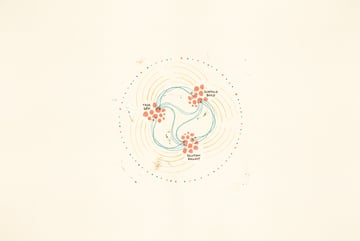
What Is Ornith-1.5-9B? Self-Improving AI Model Explained
Ornith-1.5-9B trains itself by generating tasks, scaffolds, and rollouts. Here's how the 9B model beats larger rivals on coding benchmarks.