
Insights for AI builders
Tutorials, product updates, and ideas to help you build and ship AI applications faster.
Subscribe via RSS
How to Install FreeToken and Serve Qwen 3.6 Locally
A hands-on guide to installing FreeToken, benchmarking your GPU/CPU split, serving Qwen 3.6, and connecting coding agents to it locally.

FreeToken Explained: Run 290B+ MoE Models on One Gaming GPU
FreeToken streams only active experts to your GPU, letting massive MoE models like GLM and DeepSeek run locally without a multi-GPU server rig.

The VAULT Framework: How to Use AI Safely at Work
VAULT is a five-part framework for responsible AI use at work: Verify, Augment, Understand why, Loop humans in, Transparency. Here's how it works.

How to Use Ox Alpha with Open Design for Free AI UI Generation
A step-by-step guide to connecting the free Ox Alpha model to Open Code and Open Design to generate real, exportable HTML/CSS interfaces.

OpenAI's Vision for a Personal AGI: Merging ChatGPT and Codex
OpenAI's Tibo lays out a future where ChatGPT and Codex merge into one voice-first, adaptive personal AGI tailored to each user.

What Is Ox Alpha? The Free Stealth Coding Model, Explained
Ox Alpha is a mystery stealth model on Open Code with a 1M token window, strong benchmarks, and standout front-end UI generation, free for a limited time.

Escha-W2: 2-Bit Quantization That Shrinks a 27B Model to 10GB
Escha-W2 compresses Qwen3.8-27B into 10.15GB via 2-bit quantization, matching FP8 quality while fitting 128k context on one 24GB GPU.

Qwen3.8-27B OBLITERATED: How the V3 Abliterated Model Works
Qwen3.8-27B-OBLITERATED V3 removes refusals via complementary abliteration blending. Here's how it works, its MMLU cost, and GGUF options.

Qwen3.8-27B OBLITERATED: How V3 Abliteration Cuts Refusals, Not IQ
Qwen3.8-27B OBLITERATED removes hard refusals and safety-lecture deflections via V3 abliteration, losing just 2.1pp of MMLU score.

Run Qwen3.8-27B-Escha-W2 on a 24GB GPU with SGLang
How to install and tune Escha-W2, a 2-bit quant of Qwen3.8-27B, on a 24GB consumer GPU using SGLang for long context or high throughput.

How to Run Qwen3.8-27B-Escha-W2 Locally on a 24GB GPU
Guide to running Escha-W2, a 2-bit quantized Qwen3.8-27B, on a 24GB GPU with SGLang, covering VRAM tuning and 128k context setup.

How to Run EVE Preview 4.5B Locally for Document Retrieval
A hands-on guide to installing Tencent's EVE Preview 4.5B visual retriever, testing it on invoices and citations, and building a full RAG pipeline.
Run Qwen3.8-27B-OBLITERATED Locally: GGUF Sizes, VRAM, and Settings
How to run the uncensored Qwen3.8-27B-OBLITERATED model locally: GGUF quant sizes, VRAM needs, and the exact settings that keep it from looping.

How to Run Qwen3.8-27B-OBLITERATED Locally with GGUF Quants
A practical guide to running the uncensored Qwen3.8-27B-OBLITERATED model locally: GGUF quant sizes, VRAM needs, and the exact settings it requires.

Why Did Stripe Pay $7.5 Billion for OpenRouter?
Stripe's $7.5B OpenRouter deal explained: the valuation jump, Stripe's "singularity" letter, and what it signals about AI adoption and startups.

NSA Warning: AI-Generated Cyberattacks Are Already Hitting Infrastructure
NSA, FBI, CISA, DOE and EPA warn AI-generated exploits are actively probing power and water infrastructure. Here's what the advisory actually says.
Claude Code Pricing and Limits: Free Workarounds Explained
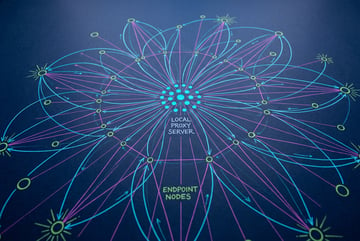
Claude Code's weekly caps and Max plan costs frustrate many users. Here's what the limits mean and how a free proxy tool routes around them.

How to Use OpenAI Codex for Business Automation
A practical guide to setting up OpenAI Codex and applying it to sales, marketing, and operations automation for real business use cases.
Free Claude Code (FCC): Run Claude Code on Free AI Models
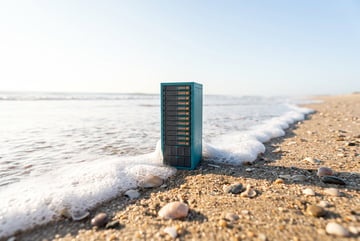
FCC is an open-source local proxy that lets Claude Code, Codex, and other agents run on free or cheap models instead of Anthropic's paid API.

Gemini 3.7 Flash Benchmarks: How Much Better Is It Than 3.6?
Gemini 3.7 Flash beats 3.6 Flash by wide margins on coding and agentic benchmarks just three weeks after launch. Here's the full breakdown.

Gemini 3.7 Flash Pricing: Where to Get It Free or Cheap Right Now
Gemini 3.7 Flash is free in Antigravity and AI Studio, with a limited-time discount on OpenRouter. Here's every access point and price.

Gemini 4 Release Date: What We Know So Far
Google confirms Gemini 4's pre-training run is underway. Here's the leaked timeline, DeepMind leadership shakeup, and what it means.

How to Become a Forward Deployed Engineer Without a CS Degree
A practical guide to breaking into forward deployed engineering from product, ops, or consulting roles, no traditional coding background required.

Ornith-1.5-35B-A3B: A Self-Improving MoE Model for Coding Agents
Ornith-1.5-35B-A3B is a 35B mixture-of-experts model trained via self-improvement loops that beats larger models on coding benchmarks.