
Insights for AI builders
Tutorials, product updates, and ideas to help you build and ship AI applications faster.
Subscribe via RSS
IQuest-Q1 Benchmarks: What the New 320B Coding Model Actually Shows
IQuest-Q1 is a 320B MoE agentic coding model with a 524K context window. Here's what its benchmarks and limitations tell us so far.
Jev AI Explained: 4 Practical Decision-Model Use Cases for Coding
Jev is a fast, cheap decision model for AI coding workflows. Here are four practical use cases: security hooks, game testing, and browser automation.

Ling 3.1 Flash Hands-On: What This Free 560B Model Gets Right and Wrong
Hands-on testing of Ling 3.1 Flash, Ant Group's 560B MoE model, across coding, SQL tuning, SVG design and medical reasoning tasks.

Meta Muse Pricing: Free Tier Tokens and Subscription Plans Explained
Meta Muse pricing breakdown: free tier token limits, weekly allowances, and how paid plans compare to OpenAI's Dots for AI assistant access.

Naive-N0.5-Flash Benchmarks: Coding and AI R&D Scores Explained
Naive-N0.5-Flash benchmark results across coding, agentic, and AI R&D evals, with context on how it stacks up against rival open-weight models.

OpenAI Dots vs Meta Muse: Which Persistent AI Agent Wins?
OpenAI's Dots and Meta's Muse both act as always-on AI agents. Here's how their features, models, and pricing actually compare.

How to Run Ling 3.1 Flash Locally on Rented GPUs
A practical guide to self-hosting Ling 3.1 Flash, inclusion AI's 560B MoE model, including hardware needs and GPU rental options.

IQuest-Q1: Inside the 320B MoE Model Built for Agentic Coding
IQuest-Q1 is a 320B parameter MoE model with 15B active params and 512K context, designed for agentic coding and tool use.
How to Deploy IQuest-Q1 with SGLang or vLLM
A practical guide to serving IQuest-Q1 locally with SGLang or vLLM, covering MTP speculative decoding, Docker setup, and tool-calling.

How to Run Naive-N0.5-Flash Locally with Transformers
A practical guide to running Naive-N0.5-Flash locally: FP8 GPU requirements, the ~315GB weight footprint, and Transformers setup steps.
Naive-N0.5-Flash: Inside the 309B MoE Model With 1M Native Context
Naive-N0.5-Flash pairs a 309B MoE architecture with hybrid SWA-DSA attention for native 1M-token context, built on MiMo-V2.5.
Naive-N0.5-Flash Pricing: Free Weights, Cheap API Tokens
Naive-N0.5-Flash weights are free under MIT license. API pricing runs $0.10/$0.40/$0.01 per million input, output, and cache tokens.
OrcaSAQ2 27B Benchmarks: How a 3-Bit Model Rivals Claude on SWE-bench
OrcaSAQ2 27B hits 70% on SWE-bench Verified and 58.4% on Terminal-Bench 2.1 from a 12.3 GB checkpoint. Here's what the numbers actually mean.
OrcaSAQ2 27B: Run Qwen3.8-27B in 12GB With 3-Bit Quantization
OrcaSAQ2 27B shrinks Qwen3.8-27B from 54GB to 12.3GB using 3-bit mixed-precision quantization, with setup steps for vLLM and MTP decoding.
Audio8 ASR Infinite vs Voxtral and Nemotron: Who Wins on CER/WER?
Audio8 ASR Infinite's CER/WER scores on Aishell and LibriSpeech, compared against Voxtral-Mini-4B-Realtime and Nemotron streaming ASR.

How MiMo-V2.6 Grades Its Own Reasoning to Keep Improving
Xiaomi's MiMo-V2.6 uses groupwise agentic grading and distillation to scale RL past binary rewards. Here's how the method works.

MiMo-V2.6-Flash-RL: Xiaomi's Efficient 309B Omnimodal Model
MiMo-V2.6-Flash-RL is Xiaomi's leaner 309B/15B-active MoE model, trading some benchmark points for speed against its Pro sibling.
How to Run Audio8 ASR Infinite Locally with vLLM or Docker
Step-by-step guide to self-hosting Audio8 ASR Infinite for 24/7 streaming transcription using Docker, vLLM, or Torch inference.

Is Hemmingway-1 Free? License and Commercial Use Explained
Hemmingway-1 is free for non-commercial use under CC BY-NC 4.0. Here's what that license permits, restricts, and how to license it commercially.

MiMo-V2.6-Pro-RL: Xiaomi's 1T-Parameter Agentic Model, Explained
Xiaomi's MiMo-V2.6-Pro-RL is a 1T-parameter MoE model trained with large-scale RL. Here's how it compares to Claude Opus 5 and GPT-5.6.

OrcaSAQ2 27B: 3-Bit Quantization That Barely Loses Fidelity
OrcaSAQ2 27B shrinks Qwen3.8-27B from 54GB to 12.3GB at 3-bit precision, holding perplexity loss to +0.02% for agent tasks.
How to Run OrcaSAQ2 27B on a 16GB GPU
OrcaSAQ2 27B compresses a 54GB model to 12.3GB with near-BF16 fidelity, letting a single 16GB GPU run vLLM agents at up to 90 tok/s.

Audio8 ASR Infinite: Open Streaming Speech Recognition That Never Stops
Audio8 ASR Infinite is an open-weight streaming ASR model built for 24/7 transcription. Here's how its rolling KV cache works and how it benchmarks.
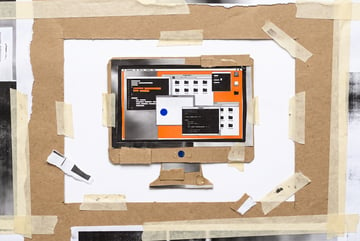
Command Code Desktop App: Install Guide and First Look at Its Workflow
A hands-on look at Command Code's desktop coding agent app: install steps, plan/build workflow, design mode, and how its pricing compares to $200 plans.