
Insights for AI builders
Tutorials, product updates, and ideas to help you build and ship AI applications faster.
Subscribe via RSS
How to Run Alibaba's RADAR Medical AI Model Locally for CT Scans
Alibaba DAMO's open-weight RADAR model flags 146 conditions from abdominal CT scans. Here's how it works and how to install it on your own GPU.

Needle 3: Running a Tiny On-Device Tool-Calling AI Model
Needle 3 packs tool calling, extraction and embeddings into an 8-29MB file. Here's how the model works and how to deploy it on-device.

Needle 3: The 8-29MB Model Built for On-Device Tool Calling
Needle 3 is an 8-29MB foundation model for on-device tool calling and structured extraction. Here's how its architecture works and how to deploy it.

How to Build Codex Skills: A Step-by-Step Guide
A practical guide to writing Codex skill.md files, from reverse-engineering outputs to verification loops that make agents reliable.
CUA S1 Forms: Run a 706K-Parameter GUI Form-Filling Model Locally
CUA S1 Forms is a 2.8MB model that fills GUI forms in one forward pass. Here's how it works and how to install it on your own machine.

12 Jev Use Cases Tested: Where This Decision-Only AI Actually Fits
Jev is a decision-only AI model built for classification at scale. Here's how it performed across 12 real automation tests against GPT and Claude.
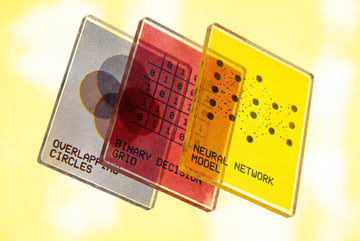
Jev vs BERT and Zero-Shot NLI: What the Benchmarks Actually Show
Benchmark data compares Jev, trained BERT-style classifiers, and zero-shot NLI pipelines on Banking77, Yelp, emotion, and phishing datasets.

Needle 3 Benchmarks: How a Tiny Model Beats 10x Larger LLMs
Needle 3 packs tool-calling and extraction into an 8-29 MB file. Here's what its benchmarks against much larger models actually show.

Needle 3 Benchmarks: A Tiny Model Beating 10x Larger Rivals
Needle 3 packs tool calling and extraction into a sub-30MB file. Here's how its benchmarks stack up against models 10x its size.

Parallel Constrained Decoding: 7x Faster JSON on Apple Silicon
Parallel constrained decoding cuts structured JSON extraction latency up to 7x on Apple Silicon by scoring schema fields at once, not token by token.
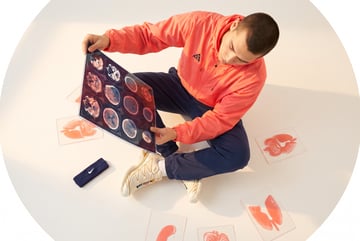
What Is RADAR? Alibaba's Open Cancer-Screening AI Explained
RADAR is Alibaba DAMO's open medical AI that scans CT images for 146 conditions. Here's how it works and what its clinical results showed.
AI Chatbots Are Becoming Agent Teams You Manage, Not Just Chat With
Grokbot, Claude, and Meta's agents signal a shift from single chatbots to orchestrated AI teams. Here's what that means for how you'll work.

Anthropic's 'Pace the Frontier' Plan, Explained
Dario Amodei's plan to pace frontier AI got instant reactions from Altman, Hassabis, Nadella, Zuckerberg, and Trump. Here's what it actually says.

Claude Code Mods and agents.md: What's New and Why It Matters
Claude Code now reads agents.md files and supports "mods," a plugin system for customizing the coding harness itself. Here's how both work.

Claude Projects Threads: How Anthropic's New Agentic Coordinator Works
Anthropic rebuilt Claude Projects into a coordinator that delegates work to cloud threads and sub-agents, with shared memory and RAG retrieval.

Claude Projects: Who Gets Access, and What's Still Missing
Claude's redesigned Projects feature is rolling out to select Pro and Max users first. Here's who qualifies and what's excluded for now.

Claude's Projects Redesign and Co-work Merger: Who Actually Has Access
Anthropic is merging Claude Co-work into Chat and rebuilding Projects around conversations, but the rollout is staggered and most users are locked out.
RTX 3090 Hits $1,400: What It Means for Local LLM Builders in 2026
Used RTX 3090 prices climbed to $1,400 while 3060s hold near $300. Here's what that price gap means for local LLM builds right now.

Inclusion AI's Ming Realtime Model: Full-Duplex Voice AI, Tested Locally
Inclusion AI's Ming realtime model claims full-duplex voice and vision understanding. Here's how it runs locally, its VRAM needs, and how it performs.

Jev AI Tested: Voice Computer Control, Minecraft, and Robot Arms
Hands-on tests of Jev show voice-controlled computer use, mixed Minecraft results, and a working robot arm demo. Here's what actually happened.

How to Build a One-Person Business Using Claude: Dario's 3 Filters
Anthropic's CEO says a solo founder could build a billion-dollar business with Claude. Here's the three-filter framework, explained with a real example.

How Hacktron Used Claude to Hack OpenAI Through an ImageMagick Bug
Hacktron used Anthropic's Claude Opus models to chain forum, SSO and image-processing flaws into a breach of OpenAI's internal systems.

Qwen 3.8 27B Swift vs Original: Does It Really Think Less?
A fine-tune claims to fix Qwen 3.8 27B's overthinking. A real coding benchmark shows more tokens, more tool calls, but a faster finish.

Violoop: The Hardware AI Agent That Tricks Your Mac Into Trusting It
Violoop is a USB device that poses as a keyboard so an AI agent can click macOS permission dialogues software agents are blocked from touching.