
Insights for AI builders
Tutorials, product updates, and ideas to help you build and ship AI applications faster.
Subscribe via RSS
Agnes-3.0-Flash Preview: Specs and Benchmarks of the Open Model
Agnes-3.0-Flash Preview is a 33B open-weight multimodal model with 262K context, hybrid attention, and tool calling. Full specs inside.
How to Turn Your AI Second Brain Into a Team Knowledge Base
A practical architecture for scaling a personal AI second brain into a shared team knowledge base with permissions, retrieval, and MCP.
Convert a Custom GPT to MindStudio
There's no one-click importer, so converting a Custom GPT is a manual rebuild. Here's how every GPT feature maps onto a MindStudio block.
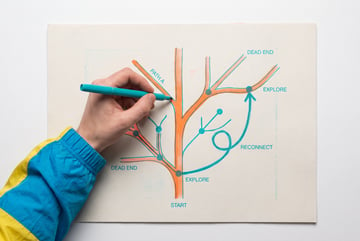
What Is Dream RSI? Google's Recursive Self-Improvement, Explained
Google's Dream RSI paper simulates past AI research to find better discovery paths almost for free. Here's how the mechanism actually works.
Parallel Constrained Decoding: Faster Structured JSON on Apple Silicon
An MLX engine for Apple Silicon evaluates JSON schema fields in parallel, cutting structured extraction latency 5.6x to 7x with guaranteed valid syntax.
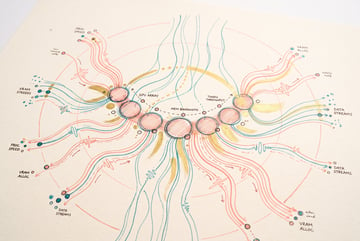
8x RTX Pro 6000 Workstation: Camino Grando Benchmarks Explained
Real benchmark numbers from an 8x RTX Pro 6000 Camino Grando workstation: tokens/sec, prompt processing, power draw across GLM, Qwen, and DeepSeek models.

Suno V6 Pricing: New Download Caps Explained
Suno V6 caps downloads at 20/month free, 60/month on Premier. Here's what changed in Suno's terms of service and why it matters.

Suno V6 vs YuE2: Which AI Music Generator Should You Use?
Suno V6's polish against YuE2's free, local generation. A genre-by-genre look at quality, cost, and control to help you pick.

Tencent's Sherry Quantization: How a 1.5TB Model Shrank to 214GB
Tencent's Angel Slim toolkit uses ternary Sherry quantization to compress a 770B model 7x, from 1.5TB to 214GB, with barely any quality loss.

Union Alpha Stealth Model: Coding, Vision, and Reasoning Tested
A hands-on look at the mystery Union Alpha stealth model, tested on real debugging, image reasoning, and cost-to-performance benchmarks.

How to Run YuE2 Locally for Free AI Music Generation
Install YuE2, an open-source AI music generator, on your own GPU using Pinocchio. Runs on just 4.5GB VRAM, no coding required.

Best Local AI GPU Prices Right Now: RTX 5090, 4090, 3090 and More
A price-per-GB and price-per-bandwidth breakdown of the best and worst GPUs for local AI right now, from RTX 5090s to V100s.

Freebuff: Free AI Coding Agents Funded by Ads, No Credit Card Needed
Freebuff gives free access to GLM, DeepSeek, and GPT-based coding agents by showing ads instead of charging subscriptions. Here's how it works.
How to Use a GPU Price Tracker to Find Local AI Deals
A guide to using a GPU price-tracking spreadsheet that compares MSRP deltas, price-per-VRAM and bandwidth across 17+ GPUs for local AI.

How to Set Up Grok Bots to Manage Your Email Inbox
Learn to configure Grok bots that auto-label your inbox and get their own email address using Agent Mail webhooks for automated routines.

How to Set Up Flodesk for Email Marketing and Digital Sales
A practical walkthrough of setting up Flodesk: branding, sign-up forms, welcome workflows, checkout pages, and pricing tiers explained.

OnSpace AI: Build a Mobile App Without Code, End to End
OnSpace AI lets you build, test and publish AI-powered mobile apps by chatting in plain English. Here's how the workflow actually works.

OnSpace AI Pricing: How Credits Work and Where to Get 500 Free
OnSpace AI runs on a credit-based pricing model. Here's how credits work, what they pay for, and how to redeem 500 free credits.

Serena MCP Server: Give Your AI Coding Agent Real IDE Understanding
Learn how Serena MCP gives AI coding agents like Hermes and Claude Code real code understanding via LSP, and how to set it up locally.

RLCD vs RLHF: What Is Typesafe's Jeff Model Actually Claiming?
Typesafe says RLHF bakes overconfidence into AI models. Its RLCD method and Jeff model claim calibrated confidence instead. Here's what that means.

Why Your AI Agent's Harness Matters More Than the Model for Cost
A benchmark shows agent harness choice, not model choice, cuts token costs by up to 75% versus Claude managed agents on identical tasks.

Is AI Computer Use Safe? What Prompt Injection Risk Really Looks Like
Do frontier models like Claude and GPT-6 resist prompt injection during computer-use automation? Here's what current evidence and practice suggest.

Antigravity's Boost Mode: Multi-Agent Coding for Gemini 3.8 Flash
A practical look at Google Antigravity's /boost command, a multi-agent workflow for Gemini 3.8 Flash built for hard bugs and messy refactors.

Antigravity Boost Mode: Pricing, Quota, and Plan Requirements
Boost mode in Google Antigravity needs a paid plan and draws down quota. Here's how it works with Gemini 3.8 Flash and what it costs.