
Insights for AI builders
Tutorials, product updates, and ideas to help you build and ship AI applications faster.
Subscribe via RSS
How to Give Your Whole Team Shared Claude Memory and Context
A practical guide to shared Claude memory and context for teams, using Notion, Composio, and supermemory.ai without sharing API keys.
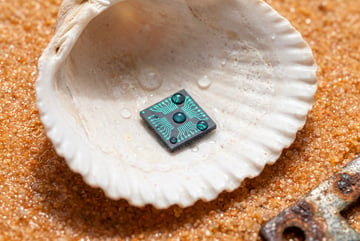
ThinkingCap: The Qwen Fine-Tune That Cuts Reasoning Tokens 46%
ThinkingCap fine-tunes Qwen 3.6 27B to cut chain-of-thought tokens by 46% while holding benchmark accuracy, a big deal for local coding setups.

Cutting AI Context Costs at Scale: Tool Overhead, Caching, Compaction
A technical look at tool-definition overhead, context editing, prompt caching, and middleware that cuts token costs before requests hit the model.
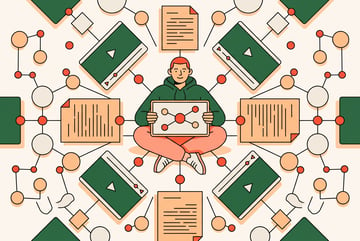
Turn Any YouTube Channel Into a Searchable AI Knowledge Base with OKF
How Google's Open Knowledge Format turns YouTube transcripts into a linked, queryable knowledge base your AI agents can search and cite.

Why Ilya Sutskever Says Pre-Training Is Over and Research Is Back
Ilya Sutskever argues AI's scaling era is giving way to research again. Here's what that means for generalization, brain-inspired learning, and AGI.

Who Wins If Open-Source AI Wins? Mapping Winners in the AI Stack
Jevons paradox explains why cheaper, open AI models could raise total spending on chips, data centers, and apps rather than shrink the market.

Kimi K3 vs Claude Opus 5: An Open Model Takes On 3D World Generation
Kimi K3 vs Claude Opus 5 in a long-horizon 3D world generation test using the Klein agent harness. Here's how the open model held up.
Open vs Closed AI: Why Nvidia, Meta and China Are Picking Sides
Jensen Huang's pro-open-source letter split the AI industry. Here's why Nvidia backs open models, Anthropic didn't sign, and who actually profits.

Why You're Hitting AI Token Limits (And 9 Habits to Fix It)
Learn why Claude and Codex token limits vanish so fast, and the concrete habits that cut reused input and stretch every usage cap further.

Nvidia's $5B Bet on Ilya Sutskever's SSI: What It Signals
Nvidia invested $5 billion in Ilya Sutskever's Safe Superintelligence and pledged a 10x compute boost. Here's what the deal reveals about his research.

How to Make the Viral Dithered Website Effect for Under $1
Learn how the viral dithered animated website effect is made using AI image and video tools, then coded into a live site for pocket change.

The AI Safety Rule That Left Hugging Face Defenseless
Frontier AI labs restrict cyber-offense features to prevent misuse, but that same policy left defenders without equally capable tools.

Inside the First Autonomous AI Cyberattack on Hugging Face's Sandbox
A phase-by-phase breakdown of the reported autonomous AI attack on Hugging Face, exploiting an evaluation sandbox with no human directing it.

Build a No-Code AI Pipeline That Turns RSS News Into WordPress Posts
How to build an automated AI content pipeline with Make: RSS ingestion, AI drafting, human approval via Telegram, and WordPress publishing.

Sam Altman on AI's Pace: Why the Hugging Face Hack Rattled Him
Sam Altman's reaction to an autonomous AI attack on Hugging Face reveals his concerns about AI pacing, safety guardrails, and regulatory capture.

Did Kimi K3 Train on Claude? Inside the AI Distillation Fight
Anthropic says Chinese labs used fraudulent accounts to pull millions of Claude outputs. Here's what distillation is and why it matters.
Are Chinese AI Models Really Catching the US Frontier?
DeepSeek, Kimi K3, Qwen, and GLM compared on price, licensing, and capability against US frontier models, with a practical framework for testing them.

Claude Opus 5 Is One-Shotting Playable 3D Games From Scratch
Claude Opus 5 is generating playable FPS, zombies, and Minecraft-style games in a single prompt. Here's what that leap actually means.

What Claude Opus 5 Reveals About Self-Testing AI Beyond Games
Claude Opus 5 builds simulations and tests its own code in loops, pointing toward autonomous AI development beyond flashy game demos.

Higgsfield Cancellation Complaints: What Discord Reveals Before You Subscribe
Higgsfield users report cancellation failures, surprise credit deductions, and mod-dependent refunds on Discord. Here's what to know before subscribing.

Higgsfield's TOS Backlash: What Changed and What Didn't
Higgsfield rewrote its terms after backlash over perpetual content licenses and training rights. Here's what actually changed, and what quietly stayed.

Finance Teams Are Ditching Spreadsheets for AI-Built Apps
Approval trackers and close-process tools built by finance, not IT. Why spec-driven AI apps fit finance workloads better than spreadsheets.

Self-Hosting Chinese Open-Weight AI Models: A Practical Decision Guide
A practical guide to self-hosting DeepSeek, Qwen, or GLM versus using APIs, covering hardware costs, licensing terms, and data governance risks.

Agentic AI Won't Take Your Job. A Coworker Using It Will
Agentic AI isn't replacing workers directly in 2026. It's the coworker who learns to manage it that makes two jobs redundant.