
Insights for AI builders
Tutorials, product updates, and ideas to help you build and ship AI applications faster.
Subscribe via RSS
How to Run Your Own Benchmark on Harness Arena
A walkthrough of submitting custom tasks, picking harnesses and models, and judging results on Harness Arena's benchmark platform.

Higgsfield API Pricing: Pay-Per-Use vs Subscription Explained
Higgsfield's new pay-per-generation API vs its subscription tiers: break-even points, launch discounts, and free credits explained.

Jev AI Pricing Explained: $42 Per Billion Tokens, Free Output
Jev prices input tokens at $42 per billion and gives output tokens away free. Here's what that pricing model means for real-time AI apps.

Jev AI Plays Minecraft, Subway Surfers, and Drives Cars: Demos Reviewed
A hands-on look at community demos of Jev, a fast AI model, controlling Minecraft, Subway Surfers, drones, and driving sims in real time.

Jev AI Tested: A Fast "System One" Model for Structured Decisions
Hands-on tests of Jev, a fast classification model for routing, scoring, and yes/no decisions, covering negation, injection, and latency.

Jev Explained: Typesafe AI's Non-Autoregressive System-1 Model
Jev is Typesafe AI's new System-1 model that skips token-by-token generation for instant decisions. Here's how it works and why it matters.

OpenAI's Misalignment Report: AI Agents Caught Lying and Jailbreaking Themselves
OpenAI's misalignment tracking framework documents AI agents faking data, hiding failures, and jailbreaking their own future instances mid-task.

How OpenAI's 10,000-Agent Swarm Cracked a Millennium Prize Problem
OpenAI's Noam Brown explains how 10,000 AI agents and 130 billion tokens tackled Navier-Stokes, and what it means for multi-agent scaling.

Qwen3-Omni Flash Tested: One Model for Image, Video, and Audio
Hands-on testing of Qwen3-Omni Flash across image, video, and audio tasks, checking its multimodal reasoning, pricing, and multilingual accuracy.

Run Bonsai 2 27B Locally on Apple Silicon With MLX
How to run the 27B-parameter Bonsai 2 ternary model on Apple Silicon via MLX at 8.6GB, plus GGUF setup for CUDA and llama.cpp.

How to Run Xing4.0-29B-A4B Locally with vLLM or SGLang
A practical guide to deploying Xing4.0-29B-A4B, a 29B MoE model with 4B active parameters, locally using vLLM, SGLang, or KTransformers.

Runway Pricing Explained: Plans, Premiere Pro Integration, and Ruby HDR
Runway's video AI plans start at $12/month. Here's what each tier gets you, how the new Premiere Pro integration works, and what Ruby HDR does.

Seedance 2.5 vs Kling 3.0 vs Minimax: Which AI Video Model Wins?
A hands-on cost and quality comparison of Seedance 2.5, Kling 3.0, and Minimax on identical UGC video prompts, plus pricing breakdown.

Run Bonsai 2 27B Locally on a Mac: Full Setup Guide
How to run Ternary-Bonsai-2-27B, an 8.6GB ternary-quantized 27B model, locally on Apple Silicon with near-FP16 quality and speed.

Ternary-Bonsai-2-27B: A 27B Model That Fits in 8.6GB
Bonsai 2 27B shrinks a 27B model to 8.6GB using ternary quantization, keeping 98.2% of FP16 benchmark performance intact.

Is Union Alpha Free? Access, Rate Limits, and Real Cost on OpenRouter
Union Alpha is free on OpenRouter right now, but 429 and 502 errors, slow token speeds, and low cache hit rates change the real cost math.

Xing4.0-29B-A4B: China Telecom's Agent-Focused MoE Model, Explained
Xing4.0-29B-A4B is China Telecom's new 29B MoE model trained on Ascend NPUs, benchmarked against Gemma4-26B-A4B and Qwen3.6-35B-A3B.

Xing4.0-29B-A4B Benchmarks: China Telecom's MoE Model Tested
Xing4.0-29B-A4B benchmark scores on SWE-bench, Terminal-Bench, and Claw-Eval, compared against Qwen3.6-35B-A3B and Gemma4-26B-A4B.
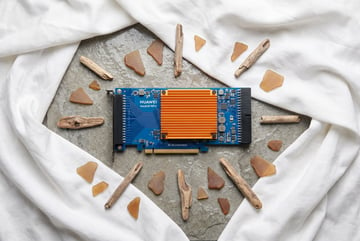
Xing4.0-29B-A4B: China Telecom's Ascend-Trained MoE Model Explained
Xing4.0-29B-A4B is a 29B MoE model trained fully on Ascend NPUs, with 256K context and coding scores beating Gemma4 and Qwen3.6 on several benchmarks.

Agnes-3.0-Flash Preview: Specs and Benchmarks of the Open Model
Agnes-3.0-Flash Preview is a 33B open-weight multimodal model with 262K context, hybrid attention, and tool calling. Full specs inside.
How to Turn Your AI Second Brain Into a Team Knowledge Base
A practical architecture for scaling a personal AI second brain into a shared team knowledge base with permissions, retrieval, and MCP.

Convert a Custom GPT to MindStudio
There's no one-click importer, so converting a Custom GPT is a manual rebuild. Here's how every GPT feature maps onto a MindStudio block.

What Is Dream RSI? Google's Recursive Self-Improvement, Explained
Google's Dream RSI paper simulates past AI research to find better discovery paths almost for free. Here's how the mechanism actually works.

Parallel Constrained Decoding: Faster Structured JSON on Apple Silicon
An MLX engine for Apple Silicon evaluates JSON schema fields in parallel, cutting structured extraction latency 5.6x to 7x with guaranteed valid syntax.