
Insights for AI builders
Tutorials, product updates, and ideas to help you build and ship AI applications faster.
Subscribe via RSS
OpenAI Dots vs Meta Muse: Which Persistent AI Agent Wins?
OpenAI's Dots and Meta's Muse both act as always-on AI agents. Here's how their features, models, and pricing actually compare.

How to Run Ling 3.1 Flash Locally on Rented GPUs
A practical guide to self-hosting Ling 3.1 Flash, inclusion AI's 560B MoE model, including hardware needs and GPU rental options.

IQuest-Q1: Inside the 320B MoE Model Built for Agentic Coding
IQuest-Q1 is a 320B parameter MoE model with 15B active params and 512K context, designed for agentic coding and tool use.
How to Deploy IQuest-Q1 with SGLang or vLLM
A practical guide to serving IQuest-Q1 locally with SGLang or vLLM, covering MTP speculative decoding, Docker setup, and tool-calling.

How to Run Naive-N0.5-Flash Locally with Transformers
A practical guide to running Naive-N0.5-Flash locally: FP8 GPU requirements, the ~315GB weight footprint, and Transformers setup steps.
Naive-N0.5-Flash: Inside the 309B MoE Model With 1M Native Context
Naive-N0.5-Flash pairs a 309B MoE architecture with hybrid SWA-DSA attention for native 1M-token context, built on MiMo-V2.5.
Naive-N0.5-Flash Pricing: Free Weights, Cheap API Tokens
Naive-N0.5-Flash weights are free under MIT license. API pricing runs $0.10/$0.40/$0.01 per million input, output, and cache tokens.

OrcaSAQ2 27B Benchmarks: How a 3-Bit Model Rivals Claude on SWE-bench
OrcaSAQ2 27B hits 70% on SWE-bench Verified and 58.4% on Terminal-Bench 2.1 from a 12.3 GB checkpoint. Here's what the numbers actually mean.
OrcaSAQ2 27B: Run Qwen3.8-27B in 12GB With 3-Bit Quantization
OrcaSAQ2 27B shrinks Qwen3.8-27B from 54GB to 12.3GB using 3-bit mixed-precision quantization, with setup steps for vLLM and MTP decoding.
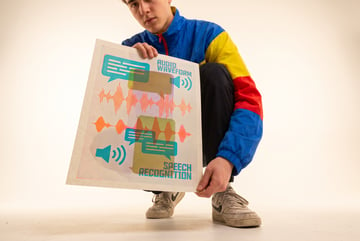
Audio8 ASR Infinite vs Voxtral and Nemotron: Who Wins on CER/WER?
Audio8 ASR Infinite's CER/WER scores on Aishell and LibriSpeech, compared against Voxtral-Mini-4B-Realtime and Nemotron streaming ASR.

How MiMo-V2.6 Grades Its Own Reasoning to Keep Improving
Xiaomi's MiMo-V2.6 uses groupwise agentic grading and distillation to scale RL past binary rewards. Here's how the method works.

MiMo-V2.6-Flash-RL: Xiaomi's Efficient 309B Omnimodal Model
MiMo-V2.6-Flash-RL is Xiaomi's leaner 309B/15B-active MoE model, trading some benchmark points for speed against its Pro sibling.

How to Run Audio8 ASR Infinite Locally with vLLM or Docker
Step-by-step guide to self-hosting Audio8 ASR Infinite for 24/7 streaming transcription using Docker, vLLM, or Torch inference.

Is Hemmingway-1 Free? License and Commercial Use Explained
Hemmingway-1 is free for non-commercial use under CC BY-NC 4.0. Here's what that license permits, restricts, and how to license it commercially.

MiMo-V2.6-Pro-RL: Xiaomi's 1T-Parameter Agentic Model, Explained
Xiaomi's MiMo-V2.6-Pro-RL is a 1T-parameter MoE model trained with large-scale RL. Here's how it compares to Claude Opus 5 and GPT-5.6.

OrcaSAQ2 27B: 3-Bit Quantization That Barely Loses Fidelity
OrcaSAQ2 27B shrinks Qwen3.8-27B from 54GB to 12.3GB at 3-bit precision, holding perplexity loss to +0.02% for agent tasks.
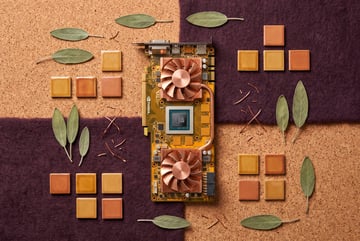
How to Run OrcaSAQ2 27B on a 16GB GPU
OrcaSAQ2 27B compresses a 54GB model to 12.3GB with near-BF16 fidelity, letting a single 16GB GPU run vLLM agents at up to 90 tok/s.

Audio8 ASR Infinite: Open Streaming Speech Recognition That Never Stops
Audio8 ASR Infinite is an open-weight streaming ASR model built for 24/7 transcription. Here's how its rolling KV cache works and how it benchmarks.
Command Code Desktop App: Install Guide and First Look at Its Workflow
A hands-on look at Command Code's desktop coding agent app: install steps, plan/build workflow, design mode, and how its pricing compares to $200 plans.

Command Code Pricing: Go and Goat Plans vs $200 Codex/Claude
Command Code's $1 Go and $10 Goat plans explained: credit allowances, per-model limits, and how they stack up against $200 coding subscriptions.

GPT-6 Sol vs Claude Opus 5.5: Pricing Per Million Tokens Compared
GPT-6 Sol and Claude Opus 5.5 both launched September 22. Here's how their per-million-token pricing and benchmarks stack up.

Opus 5.5 vs GPT-6 Astra: What Each Task Actually Costs on the API
Real dollar costs and run times for Opus 5.5 and GPT-6 Astra across identical tasks, from website builds to video edits, using actual API billing.

Claude Opus 5.5 vs GPT-6 Astra: Which Wins on Real Tasks?
A 12-task hands-on comparison of Opus 5.5 and GPT-6 Astra on websites, video edits, decks, and cost per run, judged head to head.

Who Gets Credit When AI Solves a Math Problem Nobody Could?
AI models are solving open math problems, sparking fights over attribution, authorship, and whether humans still need to understand the proofs.