What Is FLUX 1.1 Pro Ultra? High-Resolution AI Image Generation Explained
FLUX 1.1 Pro Ultra is built for ultra-high-resolution AI images. Discover its capabilities, best use cases, and how it compares to standard FLUX models.
What Is FLUX 1.1 Pro Ultra? High-Resolution AI Image Generation Explained
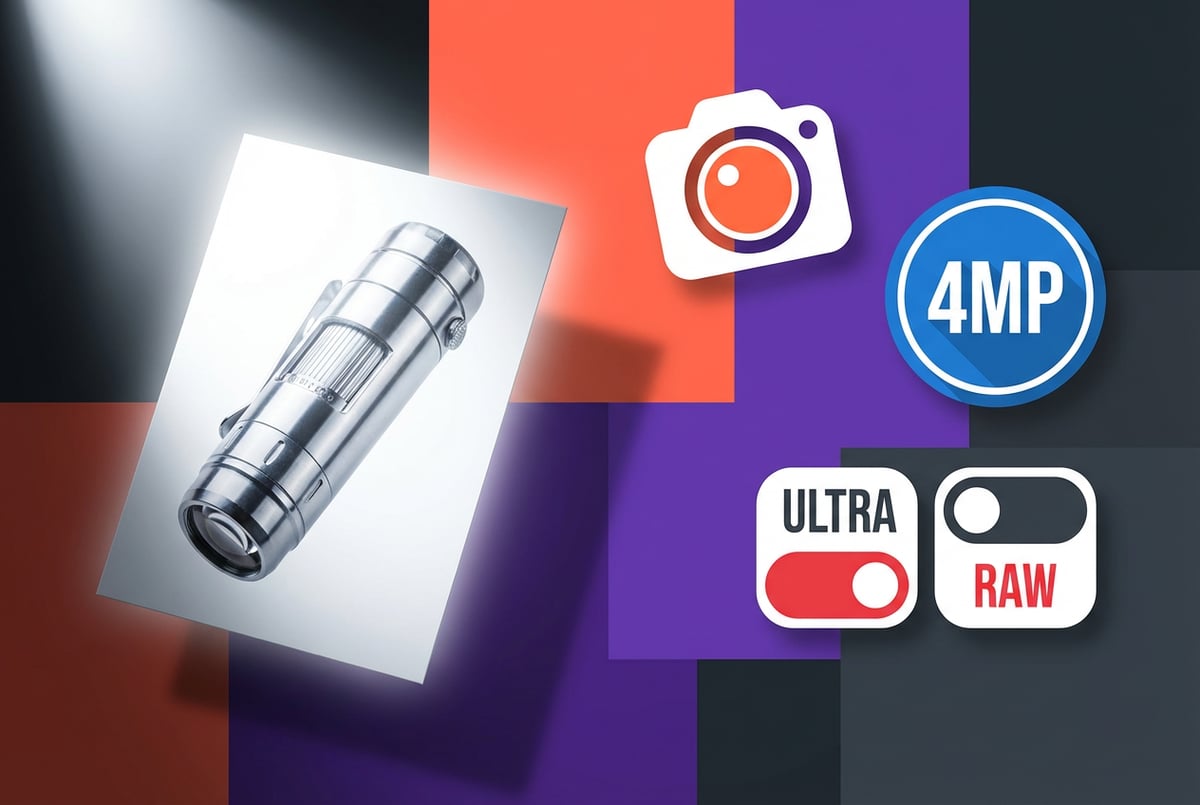
FLUX 1.1 Pro Ultra is a high-resolution AI image generation model that creates images up to 4 megapixels. It’s the premium version of Black Forest Labs’ FLUX lineup, designed for professional workflows where image quality and resolution matter.
If you’ve worked with AI image generators before, you know the trade-off: higher resolution usually means slower generation or lower quality. FLUX 1.1 Pro Ultra addresses this by delivering 4MP images in about 10 seconds. That’s four times the resolution of standard FLUX models without the typical slowdown.
Understanding FLUX 1.1 Pro Ultra
Black Forest Labs developed FLUX 1.1 Pro Ultra as the top-tier model in their image generation suite. The company was founded by former Stability AI researchers who worked on Stable Diffusion, so they understand what creators need from these tools.
The model uses a 12-billion parameter transformer architecture. This differs from older diffusion models by using flow matching technology, which creates images more directly. Think of it as a more efficient path from text prompt to final image.
Here’s what sets it apart:
- Native 4MP resolution without upscaling
- 10-second generation time
- Two distinct generation modes
- Strong prompt adherence
- Commercial licensing available
The Two Generation Modes
FLUX 1.1 Pro Ultra offers two modes that serve different creative needs. This isn’t just a settings toggle—each mode uses different processing approaches.
Ultra Mode
Ultra mode produces polished, high-detail images. It’s optimized for situations where you need every pixel sharp and clean. The output looks finished straight from the generator.
Use Ultra mode for:
- Product photography
- Marketing materials
- E-commerce listings
- Print-ready graphics
- Detailed illustrations
The processing applies refinement layers that enhance composition, color accuracy, and overall polish. Images from Ultra mode work well for professional applications where visual quality directly affects results.
Raw Mode
Raw mode takes a different approach. It reduces post-processing to create more natural, authentic-looking images. The output feels less “AI-generated” and more like actual photography.
Raw mode excels at:
- Portrait photography
- Nature scenes
- Lifestyle imagery
- Documentary-style content
- Images requiring post-production
The key benefit is realism. Raw mode produces images with natural lighting, authentic skin tones, and realistic textures. It avoids the overly polished aesthetic that sometimes makes AI images look synthetic.
Technical Architecture
FLUX 1.1 Pro Ultra combines several advanced technologies. Understanding these helps explain why it performs differently than older models.
Rectified Flow Transformer
The core architecture uses rectified flow matching instead of traditional diffusion. Traditional diffusion models add noise to images and then learn to remove it. Flow matching takes a more direct route from noise to target image.
This approach offers several advantages. Generation is faster because the model doesn’t need as many processing steps. Image quality stays consistent because the path from prompt to image is more predictable.
Vision-Language Model Integration
FLUX 1.1 Pro Ultra incorporates a vision-language model based on Mistral-3 architecture. This component handles prompt understanding and contextual reasoning.
When you input a text prompt, the VLM processes it to understand:
- Object relationships
- Spatial positioning
- Lighting requirements
- Style preferences
- Compositional elements
This semantic grounding helps the model create images that match complex prompts more accurately.
Variable Autoencoder
The model uses a custom VAE (variational autoencoder) designed for high-resolution output. This component handles the actual image reconstruction, converting the model’s internal representations into pixel data.
The VAE is optimized for 4MP output, which means it maintains detail and clarity even at higher resolutions. Many AI models struggle with fine details at scale—this VAE addresses that limitation.
Resolution and Performance
FLUX 1.1 Pro Ultra generates images at 2048x2048 pixels natively. That’s 4 megapixels of actual generated content, not upscaled from a lower resolution.
The difference matters for several reasons:
Print Quality: 4MP images work for physical prints without additional processing. You can use them for posters, brochures, or other printed materials.
Detail Preservation: Higher native resolution means fine details like text, textures, and small objects remain clear and readable.
Cropping Flexibility: With more pixels to work with, you can crop images significantly while maintaining usable quality.
Professional Standards: Many design workflows require minimum resolution thresholds. 4MP meets most professional requirements.
Generation Speed
The model averages 10 seconds per image. This is notably fast for high-resolution generation. For context, many competing high-res models take 20-30 seconds or more.
Speed matters in professional workflows. If you’re iterating on designs, testing variations, or producing multiple assets, those seconds add up. Faster generation means more iterations in the same time period.
Prompt Adherence and Control
One coffee. One working app.
You bring the idea. Remy manages the project.

One of FLUX 1.1 Pro Ultra’s strengths is following complex prompts accurately. The model handles multi-element scenes, specific lighting directions, and style constraints reliably.
For example, a prompt like “product shot of a leather bag on marble surface, soft window light from left, shallow depth of field, warm color grade” produces consistent results. Each element—lighting direction, surface material, depth of field—gets rendered as specified.
Text Rendering
The model shows particular strength in generating readable text within images. This is a common pain point with AI image generators. FLUX 1.1 Pro Ultra handles text more reliably than most alternatives.
When creating:
- Product labels
- Signage
- Book covers
- Infographics
- Marketing materials with text
The model maintains letter clarity and proper spacing. Text doesn’t warp or blur as often as with other generators.
Use Cases and Applications
FLUX 1.1 Pro Ultra serves several professional applications where high-resolution images are essential.
Marketing and Advertising
Marketing teams use the model to create campaign visuals without photoshoots. A creative brief can become a finished image in seconds.
This works well for:
- Social media ads
- Email campaigns
- Landing page heroes
- Display advertising
- Concept testing
The speed enables rapid A/B testing. Generate multiple variations, test them, and iterate based on results.
E-commerce
Online retailers use FLUX 1.1 Pro Ultra for product visualization. Instead of photographing products in every context, you can generate lifestyle shots showing products in various settings.
This helps with:
- Lifestyle imagery
- Product in context shots
- Seasonal variations
- Multiple angle views
- Customization previews
Creative Studios
Design agencies and creative studios use the model for client presentations and concept development. It’s faster than traditional mockups but higher quality than sketch-level work.
Applications include:
- Mood boards
- Client pitches
- Concept visualization
- Style exploration
- Creative direction
Publishing and Media
Publishers use FLUX 1.1 Pro Ultra for editorial imagery, book covers, and article illustrations. The high resolution meets print requirements.
Raw mode particularly suits editorial work because images look more authentic and less “stock photography.”
Comparing FLUX Models
Black Forest Labs offers several FLUX variants. Understanding the differences helps choose the right model for each task.
FLUX 1.1 Pro vs FLUX 1.1 Pro Ultra
The standard FLUX 1.1 Pro generates images at 1024x1024 (1MP). It’s faster and cheaper but produces lower-resolution output.
Use standard Pro when:
- Working on web-only content
- Creating thumbnails or previews
- Budget is limited
- Speed is critical
Use Ultra when:
- Print quality matters
- High detail is essential
- Images will be viewed large
- Professional applications require it
FLUX Dev
FLUX Dev is the open-weight research version. It offers high quality but is limited to non-commercial use. Generation is slower than Pro variants.
Dev works for:
- Research projects
- Personal creative work
- Learning and experimentation
- Custom fine-tuning
FLUX Schnell
Schnell prioritizes speed over resolution. It generates images in just a few seconds but at lower quality than Pro models.
Good for:
- Rapid prototyping
- Quick concept testing
- High-volume generation
- Draft-stage work
Pricing and Access
FLUX 1.1 Pro Ultra costs approximately $0.06 per image through most API providers. This pricing is based on megapixel output, which makes the model cost-effective compared to alternatives.
Access options include:
Remy doesn't write the code. It manages the agents who do.
Remy runs the project. The specialists do the work. You work with the PM, not the implementers.
Direct API: Black Forest Labs provides API access for developers integrating the model into applications.
Platform Integrations: Services like Replicate, fal.ai, and others offer FLUX 1.1 Pro Ultra through their platforms.
Workflow Tools: MindStudio includes FLUX 1.1 Pro Ultra alongside other AI models, letting you build automated generation pipelines without managing API keys or infrastructure.
Commercial Licensing
FLUX 1.1 Pro Ultra includes commercial rights. Images generated with the model can be used for business purposes without additional licensing fees.
This differs from some AI models that restrict commercial use or require separate licensing. The commercial-friendly terms make it practical for professional applications.
Integration and Workflows
FLUX 1.1 Pro Ultra integrates into various creative workflows. How you access it depends on your technical setup and needs.
API Integration
Developers can call the model directly through REST APIs. This enables custom applications and automated workflows.
Basic API usage involves:
- Sending text prompts
- Specifying generation parameters
- Selecting Ultra or Raw mode
- Receiving generated images
The API supports additional controls like aspect ratio, safety settings, and image conditioning.
No-Code Platforms
For non-developers, platforms like MindStudio provide visual interfaces for building with FLUX 1.1 Pro Ultra. You can create automated generation pipelines without writing code.
This approach works well for:
- Marketing teams automating content creation
- Agencies managing client workflows
- Creators building content systems
- Teams combining multiple AI models
MindStudio handles the technical complexity—API management, error handling, workflow orchestration—so you can focus on the creative process.
ComfyUI Workflows
Technical users often access FLUX models through ComfyUI, a node-based interface for AI image generation. ComfyUI offers granular control over every parameter.
Setting up FLUX 1.1 Pro Ultra in ComfyUI requires:
- Installing the Black Forest Labs nodes
- Configuring API credentials
- Building custom workflows
- Managing local or cloud resources
Best Practices for FLUX 1.1 Pro Ultra
Getting good results requires understanding how the model processes prompts and what parameters affect output.
Prompt Engineering
FLUX 1.1 Pro Ultra responds well to detailed, structured prompts. Being specific about what you want produces better results than vague descriptions.
Effective prompts include:
Subject definition: Clearly state what the image should show.
Visual details: Specify colors, materials, textures, and styles.
Composition: Describe layout, framing, and perspective.
Lighting: Note light direction, quality, and mood.
Context: Add relevant environmental or background details.
Example prompt: “Close-up product shot of wireless headphones on dark wood surface, soft diffused lighting from upper left, shallow depth of field with blurred background, minimalist composition, cool color temperature”
Mode Selection
Choose between Ultra and Raw based on your end use:
Use Ultra mode when images need to look polished immediately. This works for final deliverables, client presentations, and finished marketing materials.
Use Raw mode when you plan to edit images afterward or want a more natural aesthetic. This suits editorial work, authentic-feeling content, and images that will go through post-production.
Aspect Ratio Considerations
While FLUX 1.1 Pro Ultra defaults to square output, it supports multiple aspect ratios. Consider your intended use when selecting dimensions:
- 1:1 (square) - Social media, profile images
- 16:9 (landscape) - Presentations, web headers
- 9:16 (portrait) - Mobile screens, stories
- 3:2 - Standard photography, prints
- 4:5 - Instagram feed posts
- ✕a coding agent
- ✕no-code
- ✕vibe coding
- ✕a faster Cursor
The one that tells the coding agents what to build.
Iteration Strategy
Don’t expect perfect results on the first try. AI image generation works best as an iterative process:
First pass: Generate several variations with slightly different prompts.
Evaluation: Identify which versions are closest to your goal.
Refinement: Adjust prompts based on what worked and what didn’t.
Final generation: Create the polished version once you’ve dialed in the prompt.
The 10-second generation time makes this iteration practical. You can test multiple approaches quickly.
Hardware and Performance Requirements
FLUX 1.1 Pro Ultra runs on cloud infrastructure through API access, so local hardware requirements are minimal. You don’t need a high-end GPU to use the model.
This differs from running models locally, which requires:
- High VRAM GPUs (24GB+ for full resolution)
- Fast storage (SSD recommended)
- Sufficient system RAM (32GB+)
- Proper cooling for extended generation
API access eliminates these requirements. You pay per generation instead of investing in hardware.
Limitations and Considerations
FLUX 1.1 Pro Ultra is powerful but not perfect. Understanding its limitations helps set appropriate expectations.
Prompt Following Challenges
While the model follows prompts well, complex multi-element scenes can still present challenges. The more elements you specify, the harder it becomes to control each precisely.
For example, a scene with multiple people in specific poses doing particular actions might not render exactly as described. The model balances all requirements and sometimes prioritizes some over others.
Text Generation Limitations
Though better than most models at text rendering, FLUX 1.1 Pro Ultra isn’t foolproof. Complex words, small text, or text at odd angles may still produce errors.
For critical text elements, verify the output carefully or plan to add text in post-production.
Style Consistency
Generating multiple images in exactly the same style can be challenging. Even with identical prompts, subtle variations occur between generations.
For projects requiring multiple consistent images, consider:
- Using image conditioning with a reference
- Fine-tuning the model on your style
- Post-processing for consistency
- Generating many options and selecting matching ones
The “FLUX Aesthetic”
Like most AI models, FLUX has a characteristic aesthetic. Images often have:
- Slightly idealized features
- Polished surfaces
- Controlled lighting
- Commercial photography feel
Raw mode reduces this effect, but some visual signature remains. For truly unique styles, additional processing or fine-tuning may help.
Comparison with Competing Models
FLUX 1.1 Pro Ultra competes with several high-end image generation models. Each has different strengths.
Midjourney
Midjourney excels at artistic imagery and has a strong community. It offers excellent prompt understanding and consistent quality.
FLUX 1.1 Pro Ultra advantages:
- Higher native resolution
- API access for automation
- Faster generation
- More predictable pricing
Midjourney advantages:
- Established aesthetic
- Strong community resources
- Upscaling capabilities
- Variation controls
DALL-E 3
OpenAI’s DALL-E 3 offers strong prompt adherence and safety controls. It integrates with ChatGPT for conversational image generation.
FLUX 1.1 Pro Ultra advantages:
- Higher resolution output
- Faster generation
- Raw mode for realism
- Lower cost per image
DALL-E 3 advantages:
- ChatGPT integration
- Strong safety features
- Conversational refinement
- Established platform
Stable Diffusion Models
Open-source Stable Diffusion models offer maximum flexibility and customization. You can run them locally and modify them freely.
FLUX 1.1 Pro Ultra advantages:
- No setup required
- Consistent performance
- Higher quality outputs
- Faster generation
Stable Diffusion advantages:
- Open source
- Local running
- Free to use
- Community models and extensions
Future Development
Black Forest Labs continues developing the FLUX model family. Recent updates suggest several directions for future improvements.
Multi-Reference Support
Newer FLUX versions introduce multi-reference conditioning. This allows using multiple images to guide generation while maintaining style and subject consistency.
This feature helps with:
- Character consistency
- Brand identity maintenance
- Product visualization
- Style transfer
Enhanced Control
Future versions may include more granular control over image elements like:
- Lighting direction and quality
- Camera settings simulation
- Material properties
- Spatial relationships
Specialized Variants
Black Forest Labs may release domain-specific variants optimized for particular use cases like product photography, portraits, or architectural visualization.
Building Automated Workflows
FLUX 1.1 Pro Ultra’s API access enables automated image generation workflows. These systems create images based on triggers, schedules, or data inputs without manual intervention.
Content Automation
Marketing teams automate visual content creation by connecting FLUX to their content calendars. When a new campaign launches, the system generates relevant images automatically.
This workflow might include:
- Campaign data → prompt generation
- FLUX 1.1 Pro Ultra → image creation
- Brand guidelines → quality checking
- Asset management → storage and distribution
E-commerce Automation
Online stores generate product lifestyle shots automatically when adding new items. Product data feeds into prompt templates that create contextual images.
Example process:
- New product added to catalog
- System extracts product details
- Prompt template fills with product info
- FLUX generates lifestyle images
- Images upload to product pages
Platform Integration
Platforms like MindStudio make this automation accessible without custom development. You can build these workflows through visual interfaces, connecting FLUX to other tools and services.
This matters for teams who need automation but lack engineering resources. Marketing departments, creative agencies, and content teams can build sophisticated workflows without developers.
Security and Safety
FLUX 1.1 Pro Ultra includes safety controls to prevent problematic content generation. These work through several mechanisms.
Content Filtering
The model filters prompts and outputs to block harmful content. This includes:
- Violence and gore
- Illegal content
- Explicit material
- Hate symbols
- Copyrighted characters
Safety Tolerance
API access includes safety tolerance settings. Higher tolerance allows more creative freedom but may permit borderline content. Lower tolerance enforces stricter filtering.
Most professional applications use moderate settings that balance creative flexibility with appropriate content standards.
Usage Monitoring
API providers typically monitor usage patterns to detect abuse. This helps maintain community standards while allowing legitimate creative work.
Training and Model Development
Understanding how FLUX 1.1 Pro Ultra was trained provides insight into its capabilities and limitations.
Training Data
The model trained on curated datasets selected for quality and diversity. This training included:
- Professional photography
- Digital art
- Product imagery
- Illustrations
- Synthetic data
Dataset curation affects what the model generates well. Strong representation in training data leads to better results in that category.
Fine-Tuning Capabilities
Built like a system. Not vibe-coded.
Remy manages the project — every layer architected, not stitched together at the last second.
Organizations can fine-tune FLUX models on their own image collections. This creates specialized versions that understand specific styles, products, or visual languages.
Fine-tuning works for:
- Brand consistency
- Product-specific generation
- Style matching
- Domain specialization
Conclusion
FLUX 1.1 Pro Ultra offers professional-grade AI image generation at 4MP resolution. The combination of high quality, fast generation, and commercial licensing makes it practical for business applications.
The dual-mode approach—Ultra for polished results, Raw for natural realism—addresses different creative needs. This flexibility matters when images serve various purposes across different contexts.
For teams building automated content workflows, FLUX 1.1 Pro Ultra’s API access enables integration with existing systems. Platforms like MindStudio simplify this integration, making high-resolution AI image generation accessible without extensive technical setup.
The model isn’t perfect. Complex scenes can challenge prompt adherence, and the characteristic FLUX aesthetic may not suit every project. But for most professional applications requiring high-resolution AI-generated images, FLUX 1.1 Pro Ultra delivers results that meet commercial standards.
Whether you’re creating marketing materials, product visualizations, editorial imagery, or creative concepts, FLUX 1.1 Pro Ultra provides the resolution and quality professional work demands. The 10-second generation time makes iteration practical, and the $0.06 per image pricing keeps costs predictable.
As AI image generation continues developing, FLUX 1.1 Pro Ultra represents the current state of high-resolution, production-ready AI imagery. It’s not experimental technology—it’s a tool for getting work done.