
Multi-Agent Orchestration
When and how to run multiple AI agents as a team — Paperclip vs OpenClaw architecture, multi-agent companies, agent role design, when single-agent loops are better.

How to Build a Multi-Agent Workflow That Runs Your Business on Autopilot
Multi-agent systems can handle research, content, outreach, and ops simultaneously. Learn the architecture that makes autonomous business workflows work.

Parallel Agentic Development With Git Worktrees: A Practical Playbook
Run multiple Claude Code sessions simultaneously without conflicts. Learn the five-pillar system for parallel agentic development using git worktrees.

What Is Parallel Agentic Development? A Playbook for 10x AI Coding Output
Run multiple Claude Code sessions simultaneously using git worktrees, database branching, and port isolation to ship features in parallel without conflicts.

Parallel Agentic Development: How to Run Multiple Claude Code Sessions at Once
Use Git worktrees, database branching, and isolated environments to run 5+ Claude Code agents in parallel and ship features faster without conflicts.

Claude Code Agent Teams: How to Run Multiple AI Agents in Parallel on the Same Project
Claude Code agent teams let frontend, backend, and testing agents collaborate in real time. Learn when to use teams vs sub-agents and how to configure them.

Claude Code Agent Teams vs Sub-Agents: Which Pattern Should You Use?
Claude Code agent teams let agents communicate directly via a shared task list. Learn when to use teams vs sub-agents and what the token cost difference is.

Claude Code Split-and-Merge Pattern: How Sub-Agents Run in Parallel Within One Session
The split-and-merge pattern lets Claude fan out work to up to 10 sub-agents simultaneously and merge results—all within a single terminal session.

Inside Claude Code's Shared Task List: How Agents Avoid Conflicts
Claude Code's shared task list uses git worktrees and status flags to prevent file conflicts when multiple agents edit a codebase. Here's the mechanic in detail.
When to Use Split-and-Merge in Claude Code (vs. Sequential Chains)
A practical guide to choosing split-and-merge over sequential chains or agent teams in Claude Code, with orchestration patterns and merge strategies.

Claude Code Split-and-Merge: A Deep Dive Into Sub-Agent Parallelism
How Claude Code's split-and-merge pattern uses isolated context windows across 10 sub-agents to handle codebases too large for a single agent to process.
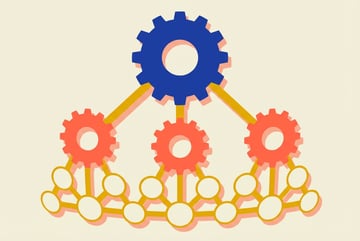
What Is Agent Orchestration? Why It's the Biggest Unsolved Problem in the AI Stack
Scheduling, lifecycle management, supervision hierarchies, and FinOps for agents don't exist yet as managed infrastructure. Here's what's missing.

What Is Agent Sprawl? The Microservices Problem Coming for AI Teams in 2026
Just like microservices sprawl hit engineering teams in 2018, agent sprawl is coming. Here's how to invest in orchestration before it becomes a crisis.
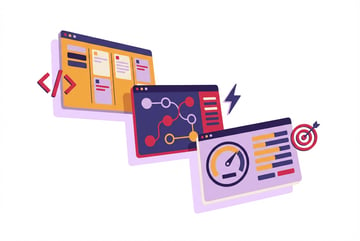
Vibe Kanban vs Paperclip vs Agentic OS Command Center: Which Agent Management Tool Is Right for You?
Vibe Kanban is for developers. Paperclip is for zero-human companies. The Command Center is for business owners managing goals. Here's how they compare.

Vibe Kanban vs Paperclip vs Dispatch: Three Philosophies
Three agent tools, three philosophies — visual board, structured queue, and native sub-agent dispatch. A fit-for-use comparison built around workflow style.

Agent Tools for Team Leads: Vibe Kanban, Paperclip, Dispatch
If you're managing AI agents as a team lead or business owner, here's how Vibe Kanban, Paperclip, and Claude Code Dispatch compare on visibility and control.

Build an AI Marketing Company with Paperclip and Claude Code
Spin up a CEO, marketer, designer, and researcher agent team using Paperclip and Claude Code. A practical setup guide with role definitions and task routing.

Paperclip vs OpenClaw: Which Multi-Agent System Should You Use?
Compare Paperclip and OpenClaw for running autonomous AI agent teams. Key differences in architecture, use cases, cost, and deployment complexity.

Run an AI Engineering Team in Paperclip With Heartbeats
Wire up a CEO, engineer, and QA agent team in Paperclip with heartbeat scheduling so Claude Code keeps building and verifying work autonomously.

How to Use Claude Co-work Projects to Build a Personalized AI News Brief
Learn how to set up a Claude Co-work project with scheduled tasks to get a daily personalized news brief delivered automatically every morning.

What Is Claude Co-work Projects? How to Organize AI Agent Tasks by Context
Claude Co-work's Projects feature lets you separate personal, work, and side-project contexts so your AI agent always has the right information.

What Is Anthropic Claude Code Agent Teams? How Parallel Agents Coordinate in Real Time
Claude Code Agent Teams let multiple AI agents work in parallel and communicate with each other. Learn how they work and when to use them.
GPT-5.4 Mini vs Nano: Which Sub-Agent Model Should You Use?
GPT-5.4 Mini and Nano are built for sub-agent workloads. Compare their speed, cost, and benchmark performance to choose the right model for your pipeline.

How to Use Sub-Agents for Codebase Analysis Without Hitting Context Limits
Delegate codebase research to sub-agents running cheaper models, keep your main agent focused, and get clean summaries back without polluting your context.

What Is the Sub-Agent Era? Why Every AI Lab Is Building Smaller, Faster Models
OpenAI, Google, and Anthropic are all racing to build cheaper, faster models for sub-agent use. Here's what the sub-agent era means for your AI workflows.