
Multi-Agent Orchestration
When and how to run multiple AI agents as a team — Paperclip vs OpenClaw architecture, multi-agent companies, agent role design, when single-agent loops are better.

Agentic Payments Explained: AP2, X42, and How AI Agents Buy Things
AP2 and X42 are competing protocols for AI agent payments. Learn how they differ and what they mean for building commerce-enabled agents.

MCP vs A2A vs AGUI: The Three Core Agent Protocols Compared
MCP handles tools, A2A handles delegation, and AGUI handles human control. Learn how these three protocols form the real agent stack.

Six Agent Protocols Every AI Builder Needs to Know in 2026
MCP, A2A, AGUI, A2UI, AP2, and X42 are shaping how AI agents work. Here's what each protocol does and which ones actually matter.

What Is the A2A Protocol? How AI Agents Delegate to Each Other
Google's Agent-to-Agent protocol lets AI agents discover and delegate tasks across product and company boundaries using agent cards.

What Is AGUI? The Human Control Layer for Long-Running AI Agents
AGUI is an open protocol that lets humans approve, steer, and inspect AI agents mid-task. Learn why it belongs in every agent stack.

Parallel Agent Execution vs Sequential Agents: When to Use Each
Sequential agents waste time on independent tasks. Learn when to run agents in parallel and how platforms like MindStudio support parallel workflow execution.

What Is the Verifier Pattern in Multi-Agent Systems? How Independent Review Catches Bugs
Using the same model to write and verify code preserves biases. The verifier pattern uses a separate agent with no shared context to catch real errors.

Multi-Agent Reliability Math: Why Chaining 5 Agents Drops Success Rate to 77%
Chain five agents at 95% reliability each and your end-to-end success rate collapses to 77%. Here's the compounding problem and how to architect around it.

Multi-Agent Orchestration vs Single Model: Why 100+ Agents Beat One Frontier Model
Microsoft's M-dash uses 100+ models in tandem to outperform Claude Mythos on cybersecurity benchmarks. Here's why orchestration beats brute-force intelligence.

How to Use Meta AI's Contemplating Mode: Spinning Up to 16 Parallel Agents
Meta AI's hidden contemplating mode lets you spin up to 16 parallel reasoning agents. Learn how to activate it and when to use it for complex decisions.

Claude Code Agent Teams: Build a 5-Page Website with 3 Parallel Sub-Agents Running Simultaneously
Claude Code's agent teams let a manager agent delegate to parallel workers. Here's how to set up a 3-agent team that builds a full site faster than a…

Claude in Microsoft Office Uses Sub-Agents That Talk to Each Other — Anthropic Doesn't Advertise This
Claude's Office integration uses sub-agents that communicate across apps — the Word agent literally talks to the Excel agent.

Build a Multi-Agent OS on Claude Code: 6 Components of a Hive Mind That Runs a Business Autonomously
Shared SQLite memory, mission control kanban, Meta Ads CLI, Telegram interface, agent suggestion system — here's the full architecture.

Kimi K2 Runs 300 Sub-Agents Across 4,000 Steps on 4x H100s — The Story Hermes Found That Everyone Missed
Hermes's content ideation agent surfaced Kimi K2: an open-source system orchestrating 300 sub-agents across 4,000 coordinated steps on 4x H100 GPUs.

Mark Kashef's Claude Code Hive Mind: SQLite + Telegram Multi-Agent Council on Zero Cloud Cost
Mark Kashef's hive mind stores all agent conversations, tasks, and scheduled jobs in a free local SQLite DB with a 3D graph view.

How to Use a Smart Orchestrator Model to Direct Cheaper Sub-Agent Models in Claude Code
Use Claude Opus as an orchestrator to plan and review while DeepSeek or Gemma handle heavy lifting—cutting token costs by 5-10x without losing quality.

AI Model Orchestration: How to Use a Smart Model to Direct Cheaper Sub-Agents
Use a frontier model as orchestrator and cheaper models like DeepSeek for heavy lifting. Learn how to build a cost-efficient multi-model agent pipeline.

Cursor's Research on Running 100 Agents in Parallel: Why Flat Agent Teams Fail Without an Issue Tracker
Cursor found that flat agent organizations develop the same coordination failures as flat human orgs. Issue trackers — claiming, status, blockers — solve both.

What Is the Agent Handoff Pattern? How to Design AI Outputs for Downstream Use
The handoff pattern ensures your agent's output can be consumed by other agents or tools. Learn why portable formats like HTML, JSON, and Markdown matter.

How to Build an AI Orchestrator That Delegates to Cheaper Sub-Agent Models
Use a frontier model as orchestrator and cheaper open-weight models for heavy lifting. This hybrid approach cuts costs while maintaining output quality.

How to Use Sub-Agents in Claude Code to Manage Context and Speed Up Research
Sub-agents let Claude Code run parallel research tasks without bloating the main context window. Learn how to use them for faster, cleaner AI workflows.

How to Build a Multi-Agent AI Workflow Without Writing Code
Multi-agent workflows let AI handle complex, parallel tasks autonomously. Learn how to design and deploy them using no-code platforms like MindStudio.

Multi-Agent Orchestration: How to Build Agent Teams That Actually Work
Agent teams let multiple AI agents communicate, share tasks, and coordinate in parallel. Learn the architecture patterns that make them reliable in production.
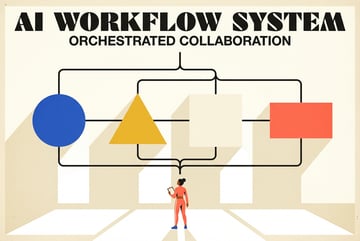
How to Build a Multi-Agent Workflow That Runs Without You
Multi-agent systems let specialized agents handle research, coding, and testing in parallel. Here's how to structure one that actually ships work.