
Claude Code Workflows
Daily-driver tricks, hidden commands, and productivity patterns for power users of Claude Code. Includes /compact, /btw, /simplify, /batch, effort levels, opus plan mode, token hacks, git worktrees, auto mode, buddy easter egg.

Anthropic Dynamic Workflows: What Everyone Gets Wrong About When to Use Them
Dynamic workflows burn tokens fast. Learn exactly when to use them vs sub-agents or /goal, and how to avoid costly mistakes in Claude Code.
What Is Claude Opus 4.8 Ultra Code Mode? Dynamic Workflows vs /goal Explained
Claude Opus 4.8 Ultra Code mode activates dynamic workflows for parallel sub-agents. Learn when to use it vs /goal for agentic tasks.

Claude Code Dynamic Workflows vs /goal vs Agent Teams: A Decision Framework
Dynamic workflows, /goal, and agent teams solve different problems. Here's a clear decision framework for choosing the right pattern for your task.

What Is the Depth vs Width Distinction in Claude Code Agents? /goal vs Workflows
The /goal command loops one agent until criteria are met. Dynamic workflows fan out hundreds of agents in parallel. Learn which pattern fits your task.

Dynamic Workflows vs /goal vs Agent Teams in Claude Code: Which Should You Use?
Claude Code offers dynamic workflows, /goal, and agent teams. Compare all three patterns by cost, parallelism, and use case to pick the right one.
What Is Claude Opus 4.8 Dynamic Workflows? Parallel Sub-Agents Explained
Claude Opus 4.8 dynamic workflows spawn hundreds of parallel sub-agents from a single prompt. Learn how they work, when to use them, and what they cost.

What Is the /deep Research Command in Claude Code? Parallel Research Workflows Explained
Claude Code's /deep research command spawns parallel agents that vote on claims and return a cited report. Learn when and how to use it effectively.
What Is the Ultra Code Mode in Claude Code? X-High Effort Plus Dynamic Workflows
Ultra Code is Claude Code's highest effort mode. It combines extra-high reasoning with automatic dynamic workflow orchestration for massive parallel tasks.

Claude Code Dynamic Workflows vs Agent Teams vs Sub-Agents: Which Should You Use?
Dynamic workflows, agent teams, and sub-agents all run parallel work in Claude Code. Here's how they differ and when to pick each one.

What Is the /goal Command vs Dynamic Workflows in Claude Code? Depth vs Width Explained
Claude Code's /goal command loops until done while dynamic workflows run agents in parallel. Learn which pattern fits your task and budget.
Claude Code Skill Audit with Dynamic Workflows: How to Score and Rank 40+ Skills at Once
Use Claude Code dynamic workflows to audit all your skills in parallel, rank them worst to best, and get actionable fix recommendations fast.

How to Use Claude Code Dynamic Workflows: Spawning Hundreds of Parallel Sub-Agents
Claude Code's dynamic workflows spawn parallel sub-agents for large tasks like code migrations. Learn how to trigger them, what they cost, and when to use them.

How to Use Claude Code Effort Levels: Low, Medium, High, Max, and Ultra Code
Claude Opus 4.8 adds five effort levels. Learn when to use each, how effort affects token spend, and why matching effort to task complexity changes everything.

Claude Opus 4.8 Dynamic Workflows: How to Run Hundreds of Parallel Sub-Agents
Claude Opus 4.8 dynamic workflows let you spawn hundreds of parallel sub-agents for large-scale tasks. Learn how to trigger them and when to use them.

Claude Opus 4.8 Effort Levels Explained: Low, Medium, High, Max, and Ultra Code
Claude Opus 4.8 introduces five effort levels that change how deeply the model reasons. Learn which level to use for each type of task.

How to Build a Modular Skill System in Claude Code for Multiple Clients
Isolated skills break at scale. Learn how to build a modular skill system in Claude Code where one update propagates across every client and workflow.
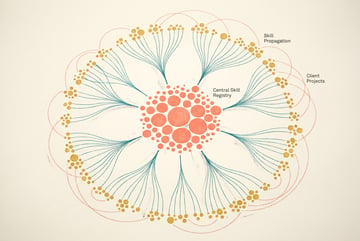
How to Build a Modular Skill System in Claude Code That Scales Across Clients
Isolated skills break at scale. Learn how to build modular skill systems in Claude Code where one update propagates across every workflow automatically.

How to Build a Modular Skill System in Claude Code That Scales Across Multiple Clients
Isolated skills create maintenance nightmares. Learn how to build modular skill systems where one file update propagates across every client and workflow.

How to Build a $1M ARR SaaS with Claude Code: Lessons from a Real Case Study
A real team used Claude Code to build Clarvo, an AI power dialer that hit $1M ARR. Here are the product selection, pricing, and development lessons.

How to Use Claude Code Skills in Large Codebases: Anthropic's 7-Layer AI Strategy
Anthropic's guide to working in large codebases covers global rules, hooks, skills, LSP, MCP, and sub-agents. Here's the 7-layer AI layer explained.

How to Use Workstations in Claude Co-work to Separate Finance, Ops, and Content Contexts
Claude Co-work workstations let you create separate context environments for finance, ops, and content—each with its own claude.md, memory, and brand rules.

How to Use Language Server Protocol (LSP) with Claude Code for Large Codebase Navigation
Give Claude Code the same symbol-level search developers have in their IDE. Here's how to expose an LSP via MCP server for large codebase navigation.
How to Use AI Agents in Large Codebases: Anthropic's 7-Strategy Framework
Anthropic's guide to Claude Code in large codebases covers global rules, hooks, skills, LSP, MCP, sub-agents, and plugins. Here's how to apply each strategy.

How to Use Sub-Agents to Split Exploration from Editing in AI Coding Workflows
Sub-agents handle research and codebase exploration in separate context windows, keeping your primary session clean for editing. Here's how to use them.