
Remy Articles
Browse 91 articles about Remy.

The One Layer of Your AI-Built App You Actually Own
"Open source AI app builder" hides four different things. Here's a taxonomy of what's open across Remy, Bolt, Lovable, and Replit — and what you keep.

Scenarios: How Remy's Agent-Authored Test Cases Work
Remy scenarios are seed scripts the agent writes to put your dev database into a known state. Here's the execution model and the headless protocol.

Manifest, Methods, Tables, Roles, Interfaces, Scenarios: The Remy Vocabulary
A plain-language Remy glossary covering the six core primitives every builder meets: the manifest, methods, tables, roles, interfaces, and scenarios.

What a Full-Stack App Actually Costs When AI Compiles It
AI-compiled apps run $100-500 in tokens to build, once. Here's the full cost breakdown—and what it means for dev-shop and per-seat pricing.

The Vertical Internal-Tool Market Is About to Restructure
As AI compiles custom internal apps for the cost of a lunch, the build-vs-buy line moves — and enterprise software spend reorganizes around owned apps.

What Does 'Full-Stack' Actually Mean in an AI App Builder?
Most AI app builders claim full-stack. Few meet the bar. Here are the five criteria that separate a real backend from a polished demo.

How AI Compiles a Spec Into a Full-Stack App: The Real Pipeline
From markdown spec to deployed app: the parse, generate, compile, migrate, and deploy pipeline that turns annotated prose into production code.

Per-Release Databases and Atomic Deployment: The Rollback Story
Per-release databases mean schema changes apply to a clone, not live data. Rollback is atomic: code, schema, and data revert together in one step.

The Six Sub-Agents Inside Remy: What Does Each One Actually Do?
Remy's six specialist sub-agents—Coding, Design, Roadmap, QA, Architecture, Research—each handle a different part of building your app. Here's what they do.

Remy vs Airtable: Database-First or Spec-First Apps
Airtable starts from a spreadsheet and adds an interface. Remy starts from a plain-language plan and compiles a real app. Here's which shape fits your work.
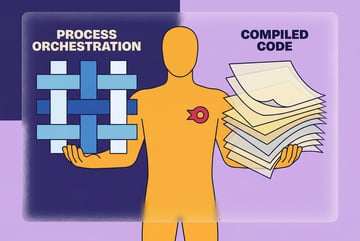
Remy vs Appian: AI Product Agent vs Enterprise Low-Code
Appian is enterprise low-code built on process automation. Remy compiles a plain-language plan into real, ownable code. Here's which one fits which job.

Remy vs Bubble: A Visual Canvas or a Plan You Own
Bubble builds apps on a visual canvas you assemble by hand. Remy compiles a plain-language plan into real code you own. Here's which fits your build.

Remy vs Codex: Two Different Bets on What an AI Builder Is
Codex is a coding agent that edits files and opens PRs in a repo you own. Remy compiles a plain-language spec into a deployed full-stack app. Which to use when.
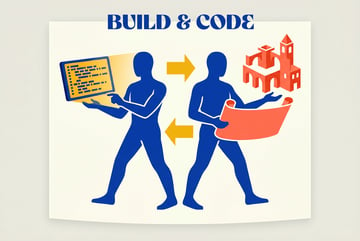
Remy vs Devin: Autonomous Coder or Spec-Driven Product Agent
Devin is an autonomous coding agent that works tasks in a codebase. Remy compiles a plain-language spec into a deployed full-stack app. Which one fits your job.

Remy vs Glide: Compiled Apps or Spreadsheet No-Code
Glide turns a spreadsheet into an app you point and click together. Remy compiles a plain-language plan into a real full-stack app you own. Here's the fit.

Remy vs Make: Visual Scenarios or AI-Compiled Apps?
Make wires apps together on a visual canvas of modules. Remy compiles a full-stack app from a plain-language plan. Here's which job each one is built for.

Remy vs n8n: Wiring Workflows or Compiling a Real App
n8n is open-source automation you can self-host and wire node by node. Remy compiles a full-stack app from a plain-language spec. Which fits which job?

Remy vs OutSystems: Spec-Driven vs Enterprise Low-Code
OutSystems is enterprise low-code with deep governance and compliance. Remy compiles a plain-language plan into real, ownable code. Here's which fits which job.

Remy vs Replit Agent: Full-Stack Builder Showdown
Replit Agent writes and runs code in a sandbox. Remy compiles a plain-language plan into a full stack with per-release databases. Here's which fits your build.

Remy vs Retool: When a Drag-and-Drop Builder Isn't Enough
Retool is the incumbent internal-tools builder. Remy compiles a plain-language plan into real, ownable code. Here's which one fits your team — and your budget.