The Future of AI Agents: Trends and Predictions
Where AI agents are heading. Trends, predictions, and what to expect in AI automation.
The AI Agent Inflection Point
January 2026 marks a turning point. AI agents are no longer experimental tools confined to tech labs. They’re autonomous systems handling customer support tickets, managing supply chains, and making decisions that affect business outcomes. The second half of 2025 saw AI shift from experimental promise to operational reality.
Here’s what changed: OpenAI’s GPT-5.2 achieved a 200.6% gain on reasoning benchmarks that test genuine problem-solving ability, not just pattern matching. That’s not incremental improvement. That’s a leap that enables agents to tackle workflows that previously required human judgment.
But adoption tells a more complex story. While 88% of companies now apply AI in at least one area, only 23% run fully autonomous agent systems. The gap between pilot programs and production deployment remains wide. Most organizations are still figuring out how to integrate agents into existing processes without breaking things.
Model Capabilities Are Accelerating
The competitive pressure among AI providers has compressed release cycles from years to weeks. In November 2025, Google launched Gemini 3 just six days after OpenAI released GPT-5.1. Anthropic’s Claude Opus 4.5 followed shortly after. This isn’t just about bragging rights. Each new model brings capabilities that make agent systems more practical.
Other agents ship a demo. Remy ships an app.
Real backend. Real database. Real auth. Real plumbing. Remy has it all.

Gemini 3 Pro broke the 1500 LMArena Elo barrier and offers a 1 million token context window. Claude 4.5 Sonnet can maintain focus on complex tasks for over 30 hours with 77.2% accuracy on real-world software engineering benchmarks. GPT-5.1 explains its reasoning step-by-step, which matters when you need to understand why an agent made a specific decision.
These models handle different tasks with different strengths. Gemini leads in multimodal understanding. Claude excels at long-context reasoning and coding. GPT-5.1 offers the most balanced and user-friendly experience. Organizations are learning to route tasks to the optimal model rather than standardizing on a single provider.
The practical impact: agents can now reason through tough workflows, maintain context across longer interactions, and handle edge cases that would have failed six months ago. But model capabilities alone don’t solve the deployment challenge.
Multi-Agent Systems Replace Monolithic Approaches
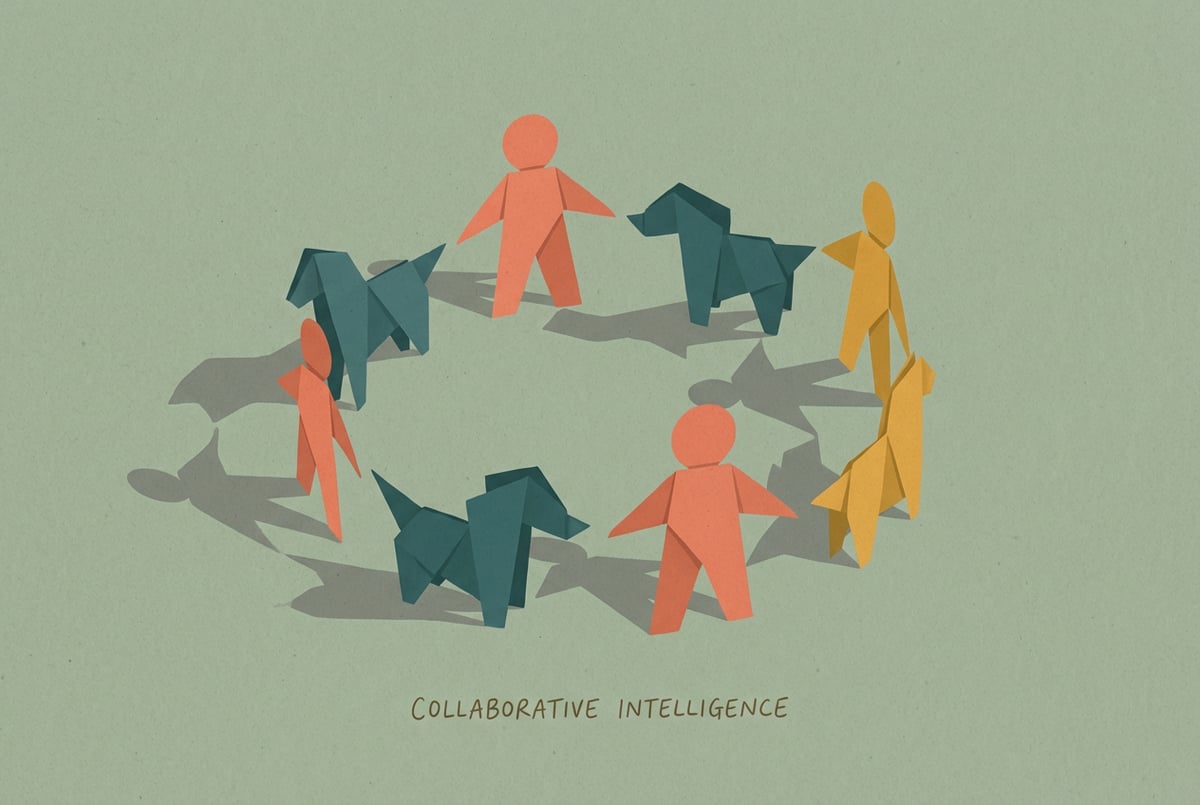
The biggest shift in agent architecture is the move from single agents trying to do everything to teams of specialized agents working together. This mirrors how human teams operate. You don’t hire one person to handle sales, engineering, and customer support. You build a team with domain expertise.
Multi-agent systems work the same way. A researcher agent gathers information. A coding agent implements solutions. An analyst agent validates results. A coordinator orchestrates the workflow. Each agent is fine-tuned for specific capabilities rather than being a jack-of-all-trades.
The numbers back this up. Organizations using multi-agent architectures achieve 45% faster problem resolution and 60% more accurate outcomes compared to single-agent systems. When Anthropic built their multi-agent research system, it outperformed single-agent approaches by up to 90.2% on research tasks.
Why does this work? Token usage explains 80% of performance variance. Multi-agent systems spend tokens more efficiently by allowing parallel exploration and specialized processing. One agent can search while another analyzes while a third drafts recommendations.
But coordination is the hard part. How do agents discover each other? How do they pass information? How do you prevent circular dependencies or infinite loops? That’s where new protocols come in.
Standardized Protocols Enable Agent Communication
Two protocols are establishing the standards for how agents talk to each other: Model Context Protocol (MCP) from Anthropic and Agent-to-Agent Protocol (A2A) from Google.
MCP standardizes how agents connect to external tools, databases, and APIs. Think of it as a universal adapter that lets any agent access any data source without custom integration work. It saw broad adoption throughout 2025 because it solves a real pain point: the endless integration spaghetti that comes with connecting agents to enterprise systems.
A2A focuses on agent-to-agent communication. It lets agents from different vendors discover each other’s capabilities, delegate tasks, and coordinate workflows. Over 50 technology partners including Atlassian, Salesforce, and SAP are contributing to the protocol. The goal is to enable agents to collaborate across siloed systems and applications.
These protocols matter because they prevent lock-in. You’re not stuck with one vendor’s agent ecosystem. You can mix and match agents based on what works best for specific tasks. A sales agent from Salesforce can coordinate with a data analysis agent from your custom build, which can pull information from a knowledge management agent in your documentation system.
The practical impact: organizations can start with one agent for a specific use case, then gradually build out a multi-agent system without ripping and replacing what already works.
Plans first. Then code.
Remy writes the spec, manages the build, and ships the app.
Enterprise Adoption Is Real But Messy
Let’s talk numbers. The AI agent market is projected to grow from $7.8 billion in 2025 to $52.6 billion by 2030. That’s a 46.3% compound annual growth rate. Multi-agent systems specifically are growing even faster at 48.5% annually.
But market projections don’t tell you about implementation reality. Here’s what’s actually happening in enterprises:
Worker access to AI increased by 50% in 2025. The number of companies with 40% or more projects in production is expected to double within six months. But only 34% of companies are truly reimagining their business with AI. The rest are using it at surface level or redesigning a few key processes.
The gap between experimentation and production is the central challenge. Nearly two-thirds of organizations are experimenting with AI agents, but fewer than one in four have successfully scaled them to production. Success requires more than technical excellence. You need governance frameworks, workflow redesign, and cultural adaptation.
The companies that succeed share common patterns. They start with focused use cases that have clear business impact. They measure rigorously. They scale based on proven results. And they redesign workflows rather than just automating existing processes.
The failed implementations follow a pattern too. They try to automate everything at once. They treat agents as a technology problem instead of a business transformation. They don’t invest in training their teams. And they underestimate the governance and security requirements.
Industry Applications Show What Works
Customer service leads AI agent adoption. Gartner predicts agents will autonomously resolve 80% of customer service issues by 2029, leading to a 30% reduction in operational costs. One telecom provider reduced wait times from 4.2 minutes to 3 seconds using AI agents, increasing customer satisfaction by 42% and reducing abandonment rates by 78%.
But the real value isn’t just handling more volume. It’s about handling routine queries so human agents can focus on complex issues that drive revenue and loyalty. Companies report 60-70% of routine queries are now automated, which frees up humans for high-value interactions.
Sales operations is another high-impact area. AI agents can qualify leads, update CRM systems, schedule follow-ups, and analyze deal dynamics. Organizations using AI in sales operations report time savings of 15-25 hours weekly on manual data entry and reconciliation tasks.
Supply chain and logistics applications are delivering massive ROI. AI-powered logistics optimization could save the global shipping industry over $70 billion annually by 2030. Siemens reduced unplanned downtime by 25% using autonomous AI in industrial sensors. The pattern is clear: agents excel at coordinating complex systems with multiple variables.
Healthcare is seeing adoption in clinical documentation, patient intake, and claims processing. Financial services use agents for compliance workflows, fraud detection, and client onboarding. Manufacturing deploys agents for predictive maintenance, quality control, and production optimization.
The vertical AI market is projected to grow at 62.7% annually through 2034. That’s faster than horizontal solutions because domain-specific agents solve real problems with deep expertise. A generic agent might handle 70% of use cases reasonably well. A vertical agent handles 95% of domain-specific tasks exceptionally well.
The Workforce Is Transforming, Not Disappearing
By 2030, AI could automate about 57% of current US work hours. But this isn’t a job loss forecast. It’s a measure of how profoundly work will change. Some roles will shrink, others will grow or shift, and new ones will emerge.
The World Economic Forum projects a net gain of 78 million jobs globally by 2030, with 92 million disappearing but 170 million emerging. The transition will be uneven. Knowledge work, manufacturing, and services will see the fastest changes.
Entry-level hiring in AI-exposed jobs has dropped 13% since large language models started proliferating. But that’s not the full story. Companies report that 64% have already altered their approach to entry-level hiring, focusing on different skills rather than eliminating positions.
Demand for AI fluency has grown sevenfold in two years, faster than any other skill. By 2027, 75% of hiring processes will include certifications and testing for AI proficiency. The key skill isn’t technical AI development. It’s understanding how to work with AI tools to solve domain-specific problems.
Most human skills remain relevant. About 72% of skills are used across both automatable and non-automatable work activities. Digital and information-processing skills are most likely to be affected. Assisting and caring skills are least likely to change.
The nature of managerial work is shifting from supervising people to orchestrating systems where humans, AI agents, and robots collaborate. New roles are emerging: agent product managers, AI evaluation writers, and human-in-the-loop validators.
The companies handling this well view agents as teammates rather than replacements. They upskill junior talent faster because those employees work alongside agents and move up the ladder faster. They’re not stuck in spreadsheets and inboxes all day.
Regulation and Compliance Are Getting Serious
The EU AI Act went into enforcement in late 2025, transforming AI governance from an abstract concept to a concrete procurement requirement. The Act introduces a four-tier risk classification system: prohibited, high-risk, limited-risk, and minimal-risk.
High-risk AI systems face the most detailed compliance requirements. If your agents handle biometrics, critical infrastructure, employment decisions, law enforcement, or justice systems, you’re in this category. The requirements cover risk management, data governance, documentation, human oversight, and ongoing monitoring.
Key compliance deadlines are August 2, 2026 for core requirements and August 2, 2027 for AI systems embedded in regulated products. Organizations need to start preparing now by mapping their AI systems, assessing current practices, and building compliance documentation.
The US introduced 59 AI-related regulations in 2024, double the number from 2023. New York City mandates bias audits on AI hiring systems. California is considering legislation on AI-generated content labeling. The regulatory landscape is fragmented, with different approaches from the EU, China, India, and the US.
- ✕a coding agent
- ✕no-code
- ✕vibe coding
- ✕a faster Cursor
The one that tells the coding agents what to build.
Compliance challenges are substantial. Only one in five companies has a mature governance model for autonomous AI agents. The fundamental issue is that autonomy isn’t just sophisticated automation. Traditional automation follows deterministic workflows. Agent systems are probabilistic. They evaluate situations, consider options, and select actions based on reasoning that’s often non-linear.
Effective compliance focuses on three pillars: adherence to regulation, behavioral safety, and outcome integrity. This requires treating agents as Non-Human Identities with strict access controls, performance reviews, and decommissioning protocols. It means implementing human-in-the-loop workflows for high-stakes decisions. And it demands capturing not just actions, but the entire reasoning process behind those actions.
The winners will be organizations that embed ethics and governance into every AI decision from the start, treating transparency, accountability, and fairness as core business priorities rather than compliance checkboxes.
ROI Is Measurable and Significant
Organizations report returns ranging from 3x to 6x their investment within the first year. The average ROI for AI agent implementations is 312% in the first year, with a median payback period of 4.3 months.
AI agents can reduce interaction costs by up to 90% compared to traditional service models. Implementation costs range from $75,000 to $185,000 for initial setup, with monthly ongoing costs of $6,000 to $17,000. Once deployed, they handle exponentially increasing workloads with minimal incremental cost.
The ROI comes from multiple sources. Direct cost savings from reduced headcount or increased efficiency account for 42% of reported benefits. Revenue increases from faster response times, better lead qualification, or expanded market reach account for 59% of benefits. Productivity gains show up as 66% of organizations reporting improved efficiency.
But the strategic value extends beyond immediate financial metrics. Agents enable scaling output without increasing headcount. They capture demand the moment it appears. They provide consistent service quality 24/7. And every interaction generates structured data about customer needs, pain points, and preferences that drives product development and marketing strategy.
Specific examples: UPS saved $300 million in logistics costs. Banks added $34 million in revenue. One finance company’s agents read through 50+ page credit memos and produce investment recommendations that would take analysts days to generate. Manufacturing companies reduced unplanned downtime by 25-43%.
The compounding effect matters too. AI agents continuously improve through feedback loops and learning from data. For example, fraud detection systems become 15-25% more accurate each year as they analyze more transactions. This self-optimization drives an exponential ROI curve, where $1 invested today might yield $3.60 in year one, $6.50 by year three, and over $12 by year five.
How MindStudio Enables This Future
Building AI agents used to require deep technical expertise. You needed to understand LLM architectures, prompt engineering, API integration, and workflow orchestration. Most organizations couldn’t do it without hiring specialized teams or consultants.
MindStudio changes that equation. It’s a no-code platform that lets anyone build, deploy, and manage AI agents without writing code. The visual builder makes it possible to create sophisticated multi-agent systems in minutes instead of months.
The platform provides access to over 200 AI models, including the latest versions of GPT, Claude, and Gemini. This matters because you can route different tasks to different models based on their strengths. Use Claude for complex coding tasks. Use Gemini for multimodal understanding. Use GPT for conversational interactions. MindStudio handles the orchestration.
Remy doesn't build the plumbing. It inherits it.
Other agents wire up auth, databases, models, and integrations from scratch every time you ask them to build something.
Remy ships with all of it from MindStudio — so every cycle goes into the app you actually want.
MindStudio supports the emerging protocols that enable agent collaboration. It integrates with existing business systems through standard APIs. And it includes features for governance, monitoring, and compliance that enterprises need for production deployment.
The platform serves over 150,000 users, from individuals experimenting with AI to enterprises running mission-critical workflows. Pricing ranges from a free tier for getting started to custom enterprise solutions for scaled deployment.
Real-world applications span media automation, government recruitment, and research productivity. Organizations use MindStudio to build customer service agents, sales assistants, data analysis workflows, and content generation systems. The key advantage is speed to value. You can prototype an agent, test it with real users, and iterate based on feedback in days instead of quarters.
As multi-agent systems become the standard architecture and standardized protocols enable agent collaboration across vendors, platforms like MindStudio that make agent development accessible will become more valuable. The barrier to entry for AI automation drops. The time from idea to deployment shrinks. And organizations can build competitive advantages through workflow innovation rather than just technology access.
What’s Coming in 2026-2030
By the end of 2026, agents are expected to work for 8 hours without interruption. Around 40% of enterprise applications will have embedded agents, up from less than 5% currently. Gartner predicts 90% of B2B buying will be AI agent intermediated by 2028, representing over $15 trillion in transactions.
Multi-agent orchestration will dominate customer-facing business processes. Organizations will leverage AI for 80% of customer interactions by 2028. The shift moves from humans doing work to humans managing AI doing work.
Physical AI will expand beyond digital workflows. Robotics integrated with AI agents will handle warehouse operations, delivery logistics, infrastructure inspection, and healthcare tasks. The humanoid robot market is projected to reach 2 million workplace units by 2035.
Vertical AI agents will grow fastest at 62.7% annually. Generic platforms will face pressure from specialized alternatives that solve domain-specific problems with deep expertise. Healthcare agents will handle patient intake and clinical documentation. Legal tech agents will draft documents. Insurance agents will process claims. Financial services agents will manage compliance workflows.
Continual learning represents a potential breakthrough. Current agents improve through feedback, but they can’t fundamentally update their knowledge without retraining. Solving continual learning would let agents adapt to new situations without human intervention, similar to how humans learn from experience.
Voice interfaces will become the primary way people interact with agents. Text chat works for some tasks, but natural voice conversation is faster and more intuitive for most interactions. The companies building robust voice-first agent experiences will capture significant market share.
AI regulation will fragment further. New laws will cover 50% of global economies by 2027, driving $5 billion in compliance investment. Organizations operating across multiple jurisdictions will need sophisticated frameworks for managing conflicting requirements.
The economic impact could add $7 trillion to the global economy by 2030. Up to 30% of work hours across the US economy could be automated using generative AI. But the net effect is job transformation, not job elimination. New roles will emerge around agent management, oversight, and strategic direction.
Key Takeaways for Leaders
Built like a system. Not vibe-coded.
Remy manages the project — every layer architected, not stitched together at the last second.
Start focused. Don’t try to automate everything at once. Identify high-friction, high-volume tasks where agents can deliver clear business impact. Measure results rigorously. Scale based on proven success.
Redesign workflows. Don’t just automate existing processes. Rethink how work should be done when agents handle routine tasks and humans focus on judgment, creativity, and complex problem-solving.
Invest in governance. Build frameworks for agent oversight, testing, and compliance from the start. Treating these as afterthoughts leads to expensive remediation later.
Focus on integration. The value comes from agents working with your existing systems and data. Choose platforms that support standard protocols and broad integration capabilities.
Train your team. The biggest barrier to AI integration is insufficient worker skills. Educate the broader workforce on AI fluency. Design upskilling strategies for roles that will change. Hire specialized talent to drive agent initiatives.
Think multi-agent. Single agents hit capability limits quickly. Plan for systems where specialized agents collaborate to solve complex problems. Choose platforms that support agent orchestration.
Prioritize vertical expertise. Domain-specific agents deliver better results than generic solutions for specialized use cases. Build or buy agents with deep knowledge of your industry’s workflows and requirements.
Move fast but start small. The competitive advantage goes to organizations that deploy agents while others debate. But successful deployments begin with pilot programs that prove value before scaling.
The future of work involves humans and agents working together. Organizations that figure out this partnership will capture significant advantages. Those that treat agents as pure cost reduction miss the bigger opportunity: using AI to enable growth, improve customer experience, and create competitive advantages that late adopters can’t match.
The time to act is now. The technology is ready. The protocols are standardizing. The business case is proven. The question isn’t whether to deploy AI agents. It’s how fast you can move and how effectively you can integrate them into your operations.