Multi-Agent Orchestration: How to Build Agent Teams That Actually Work
Agent teams let multiple AI agents communicate, share tasks, and coordinate in parallel. Learn the architecture patterns that make them reliable in production.

Why Single Agents Keep Failing Production Tasks
A single AI agent working alone hits a wall surprisingly fast. Give it a large enough task and it either loses track of earlier context, makes a compounding series of small errors, or just grinds to a halt trying to hold too many things in memory at once.
Multi-agent orchestration is the answer, but “just add more agents” is not a strategy. Agent teams that actually work in production require deliberate architecture: clear roles, defined communication channels, sensible failure handling, and a control structure that keeps the whole system from going off the rails.
This guide covers the patterns that make multi-agent systems reliable. Not just in demos — in production.
What Multi-Agent Orchestration Actually Means
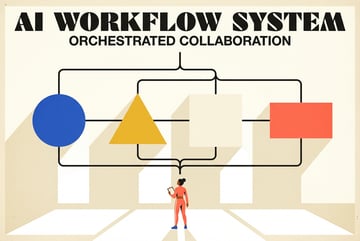
Multi-agent orchestration is the practice of coordinating multiple AI agents so they can divide work, communicate results, and complete tasks together that none of them could complete alone.
Each agent in the system has:
- A defined role (what it’s responsible for)
- A set of tools it can use
- A way to send and receive work from other agents
- Rules about when to ask for help versus proceed independently
The orchestration layer is what ties them together. It decides which agent handles which subtask, routes outputs from one agent as inputs to another, and maintains enough state to know where the overall workflow stands at any point.
Plans first. Then code.
Remy writes the spec, manages the build, and ships the app.

If you’re new to how this fits into the broader AI stack, the six layers of agent infrastructure is a good place to start — orchestration sits above the model layer but below your application logic.
The Four Core Architecture Patterns
Most production multi-agent systems are built on a small set of repeatable patterns. You can mix and match them, but it helps to understand each one independently first.
1. Orchestrator-Worker
This is the most common pattern. A single orchestrator agent breaks a task into subtasks, delegates them to specialized worker agents, and assembles the results.
The orchestrator doesn’t do the work itself. It plans, routes, and supervises.
Workers are narrow and focused — a research agent, a drafting agent, a validation agent. Each one is good at one thing and doesn’t need to know what the others are doing.
When to use it: Long, structured workflows where tasks have clear handoffs. Content production pipelines, data processing chains, and customer service escalation flows all map well to this pattern.
Watch out for: Orchestrator bottlenecks. If the orchestrator is also doing reasoning-heavy work, it becomes a single point of failure and a performance constraint.
2. Split-and-Merge (Parallel Fan-Out)
A coordinator agent splits a large task into parallel subtasks, dispatches them to multiple agents simultaneously, and then merges the results when they’re done.
This pattern is about speed. Instead of processing 50 documents sequentially, you fan out to 50 agents and merge the outputs in a fraction of the time.
The split-and-merge pattern also improves quality on tasks where diversity of approach matters — each sub-agent brings a slightly different perspective, and the merge step picks the best or synthesizes across all of them.
When to use it: Large-scale research, bulk processing, parallel code generation, competitive analysis across many sources.
Watch out for: Merge complexity. When sub-agents produce incompatible or contradictory outputs, the merge logic gets complicated fast. Define your output schema before you build.
3. Planner-Generator-Evaluator
This is a three-stage loop. A planner agent defines the approach, a generator agent executes it, and an evaluator agent scores the output. If the score is below threshold, the loop runs again with updated instructions.
It’s similar in structure to a GAN — adversarial feedback between generation and evaluation pushes output quality up. The planner-generator-evaluator pattern is particularly well-suited for tasks where quality is hard to define upfront but easy to judge after the fact.
When to use it: Code generation and review, long-form writing, product design iteration, anything where quality matters more than throughput.
Watch out for: Infinite loops. You need a hard exit condition (maximum iterations, minimum score threshold) or you’ll burn inference budget without converging.
4. Consensus and Debate
Multiple agents tackle the same problem independently, then compare and reconcile their answers. The final output reflects agreement across agents rather than the output of any single one.
Stochastic multi-agent consensus uses this principle to improve reliability on tasks where individual agents might hallucinate or miss edge cases. The idea is that independent errors are unlikely to all point in the same wrong direction.
When to use it: High-stakes decisions, fact-checking, risk assessment, anywhere false confidence from a single agent is dangerous.
Everyone else built a construction worker.
We built the contractor.
One file at a time.
UI, API, database, deploy.
Watch out for: Majority rule is not always right. If agents share training data, their errors can be correlated. Consensus doesn’t replace rigorous evaluation — it supplements it.
How Agents Communicate
Communication design is where most multi-agent systems break down. Agents need to pass information between each other reliably, and the method you choose affects latency, cost, and complexity.
Shared State (Blackboard Model)
All agents read from and write to a shared state store — a database, a file, or a structured document. Agents pull tasks, update status, and post results to the same central location.
This is simple to reason about and easy to debug. You can always inspect the shared state to see exactly what each agent did. It works well for agent teams coordinating on a shared task list in real time.
The downside is concurrency. If multiple agents write to the same record simultaneously, you need proper locking or optimistic concurrency control.
Message Passing
Agents send messages directly to each other, or through a message queue. Each agent has an inbox, processes messages, and sends results downstream.
This scales better than shared state for large agent networks. It also makes individual agent failures easier to handle — a dead agent just stops consuming from the queue, and messages pile up until it recovers or is replaced.
The tradeoff: harder to inspect in real time, and you need good tooling to trace a task through multiple hops.
Function Calls and Tool APIs
Agents invoke each other through typed function calls, same as they’d call any other tool. The calling agent passes structured arguments, the called agent returns a structured response.
This is the cleanest pattern for orchestrator-worker hierarchies. The orchestrator treats worker agents like any other capability in its tool belt. It’s easy to add, remove, or swap out workers without changing orchestration logic.
Reliability: The Real Challenge
A single agent with 95% reliability sounds decent. Chain five of them together and the system’s combined reliability is 0.95^5 ≈ 77%. Chain ten agents and you’re at 60%.
This is the reliability compounding problem — and it’s the main reason multi-agent systems that look good in testing fall apart in production.
There are three things you can do about it.
Design for Idempotency
Every agent action should be safe to repeat. If an agent crashes mid-task and restarts, it should be able to re-run its last step without producing side effects or duplicate results.
This means:
- Checking state before writing, not just writing
- Using transactions where possible
- Storing enough context to resume from the last known-good state
Add Checkpoints
Don’t wait for the entire pipeline to complete before saving progress. Break long workflows into stages and checkpoint after each one. If something fails at stage 7, you restart from stage 6 — not from the beginning.
Build in Human Gates
Not every step needs to be fully automated. Agentic workflows with conditional logic can include human review checkpoints at high-risk stages — before an agent sends an email, publishes content, or makes a financial decision.
The goal isn’t maximum autonomy. It’s the right level of autonomy for each step.
Avoiding Agent Sprawl
Built like a system. Not vibe-coded.
Remy manages the project — every layer architected, not stitched together at the last second.
As systems grow, teams often add agents reactively — one for this edge case, another for that integration. Before long you have dozens of agents with unclear ownership, duplicated capabilities, and no one who fully understands what the system does.
This is agent sprawl, and it’s essentially the microservices problem applied to AI systems. The same lessons apply: keep agents focused, document their contracts clearly, and resist the urge to keep subdividing until agents are too small to be useful.
A good rule of thumb: if you can’t describe what an agent does in one sentence, it’s either doing too much or not well-defined enough.
Building a Multi-Agent Workflow Step by Step
Here’s a practical sequence for building a multi-agent system that holds up in production.
Step 1: Map the Task Before You Build Anything
Write out every step a human would take to complete the task. Don’t think about agents yet. Just document the process — inputs, decisions, outputs, and failure cases.
This map becomes your architecture. Each major step is a candidate agent. Each decision point is a candidate branch in your agentic workflow.
Step 2: Define Agent Roles and Boundaries
For each agent, write a one-sentence description:
- What it takes as input
- What it produces as output
- What it’s allowed to do (tools, actions)
- What it should escalate rather than decide
Roles that bleed into each other create coordination overhead and debugging nightmares. Tight boundaries make each agent easier to test and easier to replace.
Step 3: Choose Your Communication Pattern
Match the communication pattern to your use case:
- Short pipelines with sequential steps → function call chain
- Parallel batch processing → message queue with fan-out
- Long-running workflows with shared state → blackboard model
- Mixed patterns → start simple, add complexity only when you need it
Step 4: Build the Orchestrator Last
Many people build the orchestrator first. This is backwards. Build and test your worker agents independently, then build the orchestrator to connect them.
If a worker agent can’t pass a simple isolated test, it won’t pass a complex integrated one.
Step 5: Add Observability Before You Scale
You need to be able to answer these questions at any point:
- What is each agent currently working on?
- What did each agent produce in the last run?
- Where did the last failure occur?
Structured logging at every agent boundary is the minimum. A proper command center for managing multiple agents gives you real-time visibility without digging through log files.
Step 6: Test Failure Modes Explicitly
Don’t just test the happy path. Test what happens when:
- An agent returns a malformed response
- An agent times out
- The orchestrator receives conflicting outputs from parallel workers
- A task gets stuck in a loop
Most multi-agent failures in production are failure modes that were never tested. Build them into your test suite deliberately.
Patterns Worth Knowing: Beyond the Basics
Once you have the fundamentals working, a few more advanced patterns add significant capability.
Explorer-Critic
Run multiple “explorer” agents that each generate a candidate solution independently, then run a separate “critic” agent that evaluates them and selects or synthesizes the best one. Claude Code’s Ultra plan multi-agent architecture uses exactly this structure — three explorers, one critic.
Other agents ship a demo. Remy ships an app.
Real backend. Real database. Real auth. Real plumbing. Remy has it all.
This works especially well for creative or open-ended tasks where “correct” isn’t binary.
Iterative Kanban
Map your agent workflow to a Kanban board structure: tasks move from backlog to in-progress to done as agents work through them. Agents pull from the board rather than waiting to be explicitly assigned work. The iterative Kanban pattern is good for human-agent collaboration — humans can see exactly where work stands and intervene without breaking the flow.
Structured Workflow as Controller
In this pattern, the workflow itself is the controller — not an orchestrator agent. Fixed logic defines when each agent runs and what it receives. Agents are called as functions, not as decision-makers.
This is closer to deterministic software than autonomous AI. Letting the workflow control the agent rather than the reverse gives you better predictability, easier debugging, and less risk of the system doing something unexpected.
Where Remy Fits
Remy is built for exactly the kind of full-stack applications where multi-agent coordination becomes valuable — workflows that span multiple steps, involve real data persistence, and need to keep running reliably without someone babysitting them.
When you describe an application in a Remy spec, you’re not just describing what the UI looks like. You’re describing the application’s contract: what data it holds, what operations it performs, what rules govern its behavior. That spec becomes the source of truth for the compiled application — backend methods, typed SQL database, auth, deployment, all generated from it.
For multi-agent workflows, this matters because the spec format gives both humans and agents something precise to reason against. When an agent needs to understand what a workflow step does, it reads the spec, not the compiled TypeScript. When you need to update the workflow, you update the spec and recompile.
If you’re building a production multi-agent system and need the full-stack infrastructure to support it — persistent state, real auth, deployment, 200+ models available for different agent roles — try Remy at goremy.ai.
Frequently Asked Questions
What is multi-agent orchestration?
Multi-agent orchestration is the process of coordinating multiple AI agents to work together on tasks that exceed what a single agent can handle reliably. An orchestration layer manages how agents communicate, divide work, share state, and handle failures. The goal is a system that completes complex, multi-step tasks with more reliability and throughput than any individual agent could achieve. You can dig deeper into why agent orchestration is such a hard problem in the AI stack.
How many agents should a multi-agent system have?
As few as the task actually requires. More agents means more coordination overhead, more failure points, and more debugging complexity. Start with the smallest number of agents that cleanly divides the work, and add agents only when a specific bottleneck or capability gap justifies it. Three to five well-defined agents usually outperform a dozen loosely defined ones.
What’s the difference between a workflow and a multi-agent system?
- ✕a coding agent
- ✕no-code
- ✕vibe coding
- ✕a faster Cursor
The one that tells the coding agents what to build.
A workflow is a fixed sequence of steps with defined inputs, outputs, and branching logic. A multi-agent system adds autonomous decision-making: agents can decide what to do next, which tools to use, and how to handle situations that weren’t explicitly anticipated. Most production systems are a hybrid — fixed workflow structure with agents handling the steps that require flexible reasoning.
How do you prevent multi-agent systems from hallucinating or going off the rails?
The main tools are: structured output schemas that constrain what agents can return, validation steps between agent handoffs, human checkpoints at high-stakes decision points, and hard limits on autonomous actions. Letting the workflow control the agents rather than letting agents control the workflow is probably the single most effective guardrail for production systems.
What causes multi-agent systems to fail in production?
The most common failure modes are: reliability compounding (small error rates multiply across agent chains), insufficient error handling when an agent returns unexpected output, lack of observability into what the system is actually doing, and agent sprawl — too many poorly-defined agents with overlapping responsibilities. Most of these failures are preventable with deliberate architecture up front.
Can multi-agent systems scale to handle large workloads?
Yes, particularly with parallel patterns like split-and-merge. The practical limits are inference costs, coordination overhead, and your ability to observe and debug the system at scale. Architectural choices like message queues over shared state, idempotent agent operations, and proper multi-agent hosting infrastructure all contribute to how far a system can scale without falling apart.
Key Takeaways
- Multi-agent orchestration requires deliberate architecture — clear roles, defined communication patterns, and explicit failure handling.
- The four core patterns (orchestrator-worker, split-and-merge, planner-generator-evaluator, consensus) handle most production use cases.
- Reliability compounds across agent chains. Design for it from the start with idempotent operations, checkpoints, and human gates where stakes are high.
- Build worker agents first, test them in isolation, then build the orchestrator to connect them.
- The workflow should control the agents, not the other way around — constraint and predictability are features, not limitations.
- Observability is not optional. If you can’t see what your agents are doing in real time, you can’t debug or improve the system.
Ready to put these patterns into practice? Try Remy — spec-driven development with full-stack infrastructure built to support production multi-agent workflows from day one.