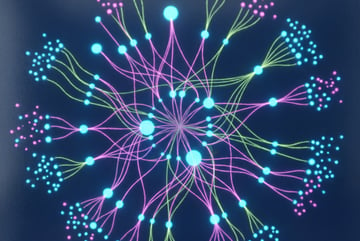
Multi-Agent Orchestration vs Single Model: Why 100+ Agents Beat One Frontier Model
Microsoft's M-dash uses 100+ models in tandem to outperform Claude Mythos on cybersecurity benchmarks. Here's why orchestration beats brute-force intelligence.

When More Models Beat a Better Model
The intuitive assumption is that the best single AI model wins. More parameters, more training data, more reasoning capability — just throw the frontier model at the problem.
Microsoft’s multi-agent cybersecurity research suggests that intuition is wrong, at least for complex, multi-step tasks. Their system, which coordinates over 100 specialized AI models in tandem, outperforms much larger single frontier models on industry cybersecurity benchmarks. The winning factor wasn’t raw intelligence. It was orchestration.
This result has implications well beyond cybersecurity. It reframes how teams should think about multi-agent AI design: not as a workaround for weaker models, but as an architectural choice that can systematically outperform brute-force scaling.
Here’s why it works, when it matters, and what it means for anyone building AI systems today.
The Benchmark That Changed the Conversation
Cybersecurity is one of the hardest domains for AI. Tasks include vulnerability discovery, exploit development, threat classification, malware analysis, and real-time incident response — each requiring different types of reasoning, pattern recognition, and contextual knowledge.
When researchers compare AI performance in this domain, they typically use structured benchmarks like CTF (Capture the Flag) challenges, red-team simulations, and vulnerability detection suites. These aren’t simple Q&A tasks. They require chaining multiple reasoning steps, holding context across long sequences, and adapting to adversarial conditions.
Microsoft’s research demonstrated that a coordinated network of over 100 smaller, specialized models could outperform a single large frontier model on these benchmarks. The specific comparison against Claude — Anthropic’s most capable model family — is significant because Claude represents the current ceiling of general-purpose AI reasoning.
The takeaway: specialization plus coordination beat generalization at scale, even when that generalization comes from one of the most capable models in the world.
What Multi-Agent Orchestration Actually Means
Before exploring why this works, it’s worth being precise about what multi-agent orchestration is and what it isn’t.
A single model handles everything sequentially
A frontier model like Claude or GPT-4o receives input, processes it in one continuous context window, and produces output. It’s powerful and often sufficient for tasks that fit within that window. But it has hard limits:
- Context window constraints: Long tasks or large datasets don’t fit in a single pass.
- Generalist trade-offs: A model trained to do everything well inevitably does specialized tasks less well than a system built for those tasks specifically.
- No error correction layer: If the model makes a wrong inference early in a chain of reasoning, subsequent steps build on that error.
- Sequential bottleneck: Everything waits for one model to finish.
A multi-agent system distributes and specializes
In a multi-agent setup, an orchestrator model breaks a complex task into sub-tasks and routes them to specialized agents. Each agent is built or fine-tuned for a specific function. Results are passed back, evaluated, and synthesized.
In Microsoft’s cybersecurity system, this might look like:
- An orchestrator receives a threat analysis request.
- It dispatches sub-agents to handle network traffic analysis, code decompilation, threat intelligence lookup, and behavioral pattern matching — simultaneously.
- Each sub-agent returns structured results.
- A synthesis agent combines findings and flags high-priority alerts.
- A verification agent checks for logical inconsistencies before output is surfaced.
The whole process runs in parallel, with specialized models at each step rather than one generalist model doing everything sequentially.
Why Orchestration Outperforms a Single Frontier Model
There are five core reasons why this architectural choice produces better results, not just faster ones.
1. Specialization compounds across the task chain
A general-purpose model trained on everything is, by design, averaging across all possible tasks. It knows a lot about malware analysis, but it also knows about French poetry and recipe generation. That breadth is useful in many contexts, but it comes at the cost of depth.
A specialized model — fine-tuned exclusively on network intrusion patterns or binary analysis — develops much sharper capabilities in that specific domain. When you chain ten such specialized models together, each contributing its best, the accuracy compounds rather than averaging out.
This is similar to why specialist teams often outperform generalists on complex deliverables. A surgeon doesn’t also do your anesthesia.
2. Parallel processing beats sequential reasoning
A single model must handle each reasoning step one at a time. Multi-agent systems run those steps in parallel.
Everyone else built a construction worker.
We built the contractor.
One file at a time.
UI, API, database, deploy.

In a threat investigation, while one agent is analyzing file signatures, another can be querying threat intelligence databases, and a third can be modeling behavioral anomalies. All of this happens simultaneously. The result isn’t just faster — it’s more comprehensive, because each agent has full attention on its sub-task rather than sharing cognitive load with every other step.
3. Built-in verification and error correction
One of the most underappreciated benefits of multi-agent design is the ability to route outputs through verification agents before they’re used downstream.
If a single frontier model makes a classification error early in a reasoning chain, every subsequent step amplifies that error. In a multi-agent system, a separate verification agent can challenge, re-evaluate, or reject the output of another agent before it propagates. This creates a form of adversarial checking that self-correction within a single model can’t fully replicate.
In cybersecurity specifically, false positives and false negatives are both expensive. A verification layer that catches reasoning errors before they influence alerts or remediation decisions is operationally significant.
4. Diverse model types for heterogeneous tasks
Cybersecurity work isn’t monolithic. Some tasks benefit from large language models (interpreting logs, writing threat reports). Others are better served by classification models, embedding models, or domain-specific fine-tuned models.
A multi-agent architecture lets you use the right model type for each task rather than forcing everything through one interface. Small classification models are faster and cheaper for high-volume pattern matching. Embedding models handle similarity search efficiently. LLMs handle the reasoning-heavy synthesis at the end. Each model type does what it does best.
5. Graceful failure handling
When a single model fails or produces low-confidence output, there’s no fallback within the same system. In a multi-agent design, the orchestrator can detect low-confidence outputs, route tasks to backup agents, or flag for human review on specific sub-tasks while letting others complete normally.
This makes multi-agent systems more resilient in production — particularly in domains like security where the cost of failure is high.
The Cybersecurity Case in Specific
The cybersecurity domain highlights all five of these advantages more clearly than most other fields.
Threat detection and response involves genuinely heterogeneous tasks that require different skills. Log analysis, binary reverse engineering, network flow inspection, threat intelligence correlation, and vulnerability scoring are all distinct disciplines. No single model — regardless of how large it is — can be simultaneously best-in-class at all of them.
Cybersecurity also operates under real-time constraints. Incident response windows can be measured in minutes. Parallel processing isn’t a nice-to-have; it’s operationally necessary.
And the cost asymmetry of errors in security is severe. A false negative on a ransomware event is catastrophic. A false positive generates expensive alert fatigue. The verification layers built into multi-agent systems directly address this.
Microsoft’s research demonstrates that when you design around these domain constraints rather than trying to override them with a more powerful general model, you get better results. The frontier model isn’t outclassed on reasoning — it’s outclassed on architecture.
When a Single Frontier Model Still Wins
Multi-agent orchestration isn’t the right choice for every problem. There are real trade-offs, and applying it indiscriminately creates unnecessary complexity.
A single frontier model is the better choice when:
- The task is self-contained and fits in a context window. Writing a report, answering a question, summarizing a document — these don’t need orchestration.
- Latency is critical and the task is simple. Multi-agent coordination adds overhead. For fast, one-shot tasks, that overhead isn’t worth it.
- You’re prototyping or testing. A single model is easier to debug and iterate on. Start simple and add orchestration when you’ve identified where the bottlenecks actually are.
- The task doesn’t benefit from specialization. If there’s no meaningful way to break it into specialized sub-tasks, orchestration won’t add value.
Other agents start typing. Remy starts asking.
Scoping, trade-offs, edge cases — the real work. Before a line of code.
The honest version of this comparison isn’t “multi-agent always wins.” It’s “multi-agent wins for complex, multi-step tasks in specialized domains, and single models win for simpler, general-purpose tasks.” The cybersecurity case sits firmly in the former category.
Building Multi-Agent Systems Without an Infrastructure Team
The catch with multi-agent orchestration is the implementation complexity. Coordinating 100+ models requires an orchestration layer, inter-agent communication protocols, routing logic, error handling, output synthesis, and monitoring. Historically, this meant a significant engineering investment.
That’s starting to change.
How MindStudio Handles Multi-Agent Orchestration
MindStudio is a no-code platform that lets teams build multi-agent workflows without writing infrastructure code. You design the orchestration logic visually — defining which agents handle which sub-tasks, how outputs are passed between them, and where verification or branching logic applies.
The platform includes access to 200+ AI models out of the box, which means you can assign different models to different nodes in your workflow — Claude for synthesis and reasoning steps, specialized classification models for pattern matching, embedding models for search and retrieval — all without managing separate API keys or accounts.
For teams exploring multi-agent orchestration, this matters because the architectural decisions — which model does what, how agents hand off to each other, where errors get caught — are the hard part. MindStudio handles the infrastructure layer so you can focus on those decisions.
You can also expose your multi-agent workflows as webhook endpoints, scheduled background processes, or agentic MCP servers that other AI systems can call. This makes it practical to build a cybersecurity analysis workflow that integrates with your existing security tooling.
MindStudio is free to start at mindstudio.ai.
Designing Your Own Multi-Agent Workflow: Core Principles
If you’re thinking about applying multi-agent orchestration to your own use case, here are the design principles that matter most.
Start with task decomposition
Before writing a single line of logic, map out the task in detail. What are the distinct sub-tasks? Which require different reasoning modes or data types? Where are the decision points where one path branches from another?
Good orchestration design starts with a clear understanding of the task structure, not the technology.
Match model type to task type
Resist the temptation to route everything through your most capable general model. Ask instead: what is the minimal model that handles this sub-task reliably? Smaller, faster models reduce cost and latency for high-volume operations. Reserve large frontier models for the tasks that genuinely require their reasoning depth.
Build verification into the architecture
Don’t treat verification as an afterthought. Decide upfront which outputs need to be checked, by what criteria, and by which agents. The most common failure in multi-agent design is assuming each agent will be right often enough that errors won’t compound. They will.
Design for observability
In a multi-agent system, debugging a failure means tracing which agent, at which step, produced the problematic output. Build logging and tracing into the design from the start. You need to be able to see what each agent was given and what it returned.
Iterate on the orchestration logic separately from the model selection
One coffee. One working app.
You bring the idea. Remy manages the project.
These are two separate problems. First, get the workflow logic right with capable placeholder models. Then optimize model selection for cost, speed, and accuracy. Mixing both problems at once makes debugging harder.
Frequently Asked Questions
What is multi-agent orchestration?
Multi-agent orchestration is an AI architecture where a central orchestrator model coordinates multiple specialized AI agents to complete a complex task. Rather than routing a request through a single model, the orchestrator breaks the task into sub-tasks, assigns each to the appropriate agent, and synthesizes the results. Each agent can be a different model type, fine-tuned or specialized for its specific function.
Why does multi-agent orchestration outperform a single large model on some tasks?
The core reasons are specialization, parallelism, and error checking. Specialized agents built for specific sub-tasks outperform general models on those sub-tasks. Running agents in parallel is faster than sequential processing. And built-in verification agents can catch errors before they propagate downstream — something a single model can’t do for itself as effectively. On complex, multi-step tasks in specialized domains, these advantages compound.
When should you use a single frontier model instead of multi-agent orchestration?
Single frontier models are the right choice for tasks that are self-contained, fit within a context window, don’t benefit from specialization, or where the overhead of orchestration isn’t justified. If you’re answering a question, generating a document, or handling a simple one-shot request, a single model is faster, cheaper, and easier to debug. Multi-agent orchestration adds value specifically when the task is heterogeneous, long, or requires parallel processing.
Is multi-agent orchestration more expensive than using a single model?
It depends on the design. A poorly designed multi-agent system that routes everything through large frontier models at every step will be significantly more expensive. A well-designed system that uses minimal models for high-volume sub-tasks and reserves expensive models for synthesis and reasoning steps can be cost-competitive or even cheaper than a single frontier model handling the same task. The cost equation is a design problem, not an inherent property of the architecture.
How does multi-agent AI apply to cybersecurity?
Cybersecurity tasks are well-suited to multi-agent design because they’re genuinely heterogeneous — log analysis, binary inspection, threat intelligence lookup, and behavioral modeling all require different capabilities. Running these in parallel reduces response time, which matters in incident response. Verification layers reduce false positives and false negatives. And specialized models trained on security data outperform general models on security-specific tasks. Microsoft’s research demonstrates this advantage at scale with 100+ coordinated models.
Do you need engineering resources to build a multi-agent system?
Traditional multi-agent implementations require significant engineering work — orchestration logic, inter-agent communication, routing, error handling, and monitoring. Platforms like MindStudio have changed this by providing visual no-code builders for multi-agent workflows, with model access and integrations handled by the platform.
Key Takeaways
- Multi-agent orchestration, as demonstrated by Microsoft’s 100+ model cybersecurity system, can outperform single frontier models on complex, multi-step tasks — not because the individual models are better, but because the architecture is better.
- The five core advantages of multi-agent design are: domain specialization, parallel processing, built-in verification, heterogeneous model type selection, and graceful failure handling.
- Cybersecurity is a particularly strong fit because its tasks are genuinely heterogeneous, time-sensitive, and high-stakes on both false positives and false negatives.
- Single frontier models remain the right choice for simple, self-contained tasks where orchestration overhead isn’t justified.
- Good multi-agent design starts with task decomposition, not model selection. Map the work first, then assign models to sub-tasks.