
Claude Code Workflows
Daily-driver tricks, hidden commands, and productivity patterns for power users of Claude Code. Includes /compact, /btw, /simplify, /batch, effort levels, opus plan mode, token hacks, git worktrees, auto mode, buddy easter egg.

What Is a Dark Factory? The Concept of Fully Autonomous AI-Driven Codebases
A dark factory is a codebase where AI agents plan, build, test, and deploy code with no human review. Learn how it works and what it takes to build one.

How to Build an AI Dark Factory: Autonomous Code That Ships Itself
A dark factory hands your codebase entirely to AI agents. Learn the architecture, governance layers, and validation patterns needed to make it reliable.

10 Apps You Can Build With a Spec and an AI Compiler
From SaaS tools to internal dashboards, here are 10 real apps you can describe in a spec and compile into a full-stack product ready for users.

10 Signs You're Ready to Stop Building Prototypes and Ship Real Apps
Prototypes are easy. Production apps are different. Here are 10 signs you're ready to move from demos to a real deployed product with real users.

10 Things That Break When Your App Doesn't Have a Real Backend
Frontend-only apps look great until users show up. Here are 10 things that break without a real backend — and why they matter for your product.
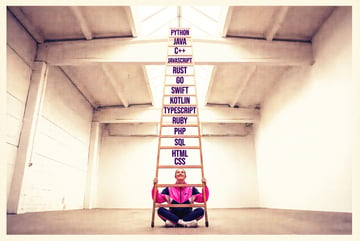
The Abstraction Ladder: From Assembly to TypeScript to Spec
Every generation of programming moves up in abstraction. Here's how annotated specs fit into that history and why the shift is happening now.
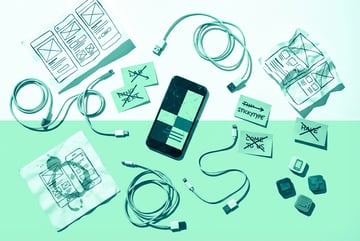
7 App Builder Mistakes That Lead to Dead-End Prototypes
Most AI app builders produce impressive demos that can't scale. Here are 7 mistakes that leave you with a dead-end prototype instead of a real product.

The Case for Browser-Based Development Environments
Local dev environments are painful to set up and share. Here's why browser-based environments are becoming the default for modern app development.

The Difference Between a Frontend and a Full-Stack App
Most AI app builders generate frontends. Full-stack means something more specific. Here's the real difference and why it matters for production apps.

The Fastest Way to Go From App Idea to Working Product
There are faster and slower paths from idea to working product. Here's the approach that cuts the most time without sacrificing production quality.

How AI Is Changing What It Means to Be a Developer in 2026
AI tools are reshaping how software gets built. Here's an honest look at what's changing for developers — and what still requires human judgment.

How to Avoid Getting Locked Into Your AI App Builder
Most AI app builders own your output. Here's how to evaluate lock-in risk, what to look for in the generated code, and how to protect your work.
How to Build and Launch a Product Without a Co-Founder
Solo founders can now ship full products faster than ever. Here's a practical guide to building and launching a web app on your own in 2025.

How to Build an App With AI Features Built In
A practical guide to building apps that use AI natively — covering image generation, content processing, autonomous tasks, and model selection.
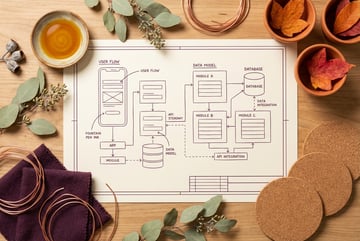
How to Think About App Architecture Before You Start Building
Good architecture decisions made early save weeks later. Here's a practical framework for thinking through your app's backend, data model, and user flows.

The Indie Hacker's Guide to Shipping Full-Stack Apps With AI
A practical guide for indie hackers who want to ship production apps faster using AI tools — covering what actually works and what wastes your time.

The Next Level of Abstraction: Why Software Is Moving Beyond Code
Every generation of programming moves up in abstraction. Here's why the next level looks like structured prose rather than syntax.

Progressive Disclosure in AI Agents: How to Load Context Without Killing Output Quality
Loading too much context at once causes context rot. Progressive disclosure loads reference files only when needed, keeping Claude focused and outputs sharp.

Why the Source of Truth in Software Development Is Changing
For decades, code was the source of truth. That's changing. Here's why specs are becoming the new source of truth and what that means for developers.

The State of AI App Builders in 2026: What's Actually Improved
AI app builders have come a long way. Here's an honest look at what's genuinely improved in 2026 — and where they still fall short for production use.

The Technical Founder's Checklist Before Launching a Web App
Before you launch, there's a lot to get right. Here's a practical checklist covering auth, database, deployment, error handling, and edge cases.

Why AI App Builders Still Struggle With Databases and Auth
Databases and auth are where most AI app builders fall short. Here's why these two layers are hard to generate reliably and what the workarounds are.
Why Generated Code Isn't the Problem With AI App Builders
Developers worry about AI-generated code quality. But the real problem is deeper. Here's why the source of truth matters more than the generated output.

Why Most Side Projects Never Ship (And How to Fix That)
Most side projects die before launch. Here's an honest look at why — and the specific decisions that separate projects that ship from ones that don't.