
AI Memory & Knowledge Bases
Persistent memory and knowledge bases for AI agents — Karpathy's LLM wiki, OpenBrain, second brain setups, self-evolving Claude Code memory, three-layer memory architectures, RAG patterns, vector databases, embeddings strategy.

What Is an AI Second Brain Knowledge Base? How to Build One with Claude Code
An AI second brain stores your knowledge so agents can search it by meaning. Learn how to build one with Claude Code using automated hourly processing.

How to Build a Brand Context Folder That Makes Every AI Output Sound Like You
A brand context folder with voice profile, visual identity, and positioning files gives every Claude session consistent, on-brand outputs from the start.

How to Build an AI Second Brain Knowledge Base with Claude Code
Learn how to build an AI second brain using Claude Code with voice profiles, visual identity files, and positioning docs that power every agent session.

How to Build a Brand Context Folder for AI Agents: Voice, Visual Identity, and Positioning
A brand context folder gives every AI session your voice, design tokens, and ICP. Learn how to build one in 30 minutes and inject it into every workflow.

Context Rot in AI Agents: What It Is and How to Fix It with Session Handoffs
AI models degrade as conversations grow longer. Learn what context rot is, when it starts, and how session handoff skills keep your agents sharp.

How to Use the Graphify Skill to Build a Queryable Knowledge Graph for AI Agents
Graphify converts codebases and notes into a queryable knowledge graph that reduces token costs by letting agents query structure instead of raw files.

How to Use Graphify to Build a Queryable Knowledge Graph for Your AI Agent
Graphify turns codebases and notes into a queryable knowledge graph, saving tokens and giving your agent persistent memory. Here's how to install and use it.

How to Add Persistent Memory to Claude Code: Storage, Injection, and Recall
Claude Code's built-in memory captures almost nothing. Here's how to add Memarch, Hermes, or GBrain for real storage, injection, and semantic recall.
How to Add Persistent Memory to Claude Code: Short-Term, Long-Term, and Scoped Access
Claude Code forgets everything between sessions. Learn how to build a memory system with cited sources, semantic search, and team-scoped access.

How to Build a Persistent Memory System for Claude Code: Short-Term, Long-Term, and Scoped Access
Claude Code forgets everything between sessions. Learn how to build a three-layer memory system with source citation, semantic search, and team-scoped access.
Memarch vs Hermes vs GBrain: Which AI Memory System Should You Use?
Memarch offers semantic search, Hermes injects frozen snapshots, and GBrain cites sources with team scoping. Here's how to choose the right memory system.

What Is Semantic Memory Injection for AI Agents? The Frozen Snapshot Pattern
The frozen snapshot pattern injects a capped set of recent context into every agent session automatically. Here's how Hermes uses it and how to build your own.

What Is the Three-Layer AI Memory Architecture? Storage, Injection, and Recall Explained
Every AI memory system answers three questions: where to store, what to inject at session start, and how to recall by meaning. Here's how to design each layer.

How to Build an AI Second Brain: 5 Levels from Basic Routing to Knowledge Graphs
Learn the five levels of AI second brain architecture—from simple folder routing to semantic search and knowledge graphs—and which level fits your needs.

How to Build a Portable AI Second Brain That Works Across Claude, Codex, and Hermes
Build your AI second brain as markdown files and folders so any agent harness can read it. Learn the routing rules, folder structure, and memory patterns.

Semantic Search vs Keyword Search for AI Agents: When Vector Databases Win
Understand when to use vector databases for semantic search versus simple keyword matching in AI agent memory systems, with real examples and trade-offs.
What Is a Knowledge Graph for AI Agents? How Relationship Mapping Beats Wiki Links
Knowledge graphs store typed relationships between entities, not just backlinks. Learn when they outperform LLM wikis for AI agent memory and retrieval.

What Is an AI Second Brain OS? How to Build a Portable Knowledge System for Your Agents
An AI second brain OS is a folder of markdown files any model can read. Here's how to build one that survives model bans, platform changes, and context resets.
What Is the AI Second Brain? How to Build a Knowledge Base Your Agents Can Search
An AI second brain stores your context so agents can recall it on demand. Learn how to build one with Claude Code, Notion, and markdown files.
How to Build an AI Second Brain with the Four C's Framework: Context, Connections, Capabilities, Cadence
The Four C's framework gives you a repeatable system for building an AI operating system that knows your business and automates work while you sleep.
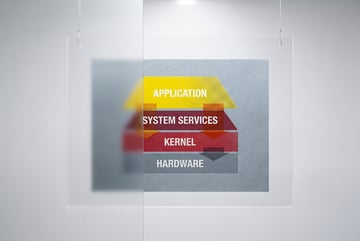
How to Build an AI Operating System Using the Four C's Framework
The Four C's—Context, Connections, Capabilities, and Cadence—are the building blocks of a personal AI OS. Learn how to implement each layer with Claude Code.
How to Build an AI Second Brain with Claude Fable 5 and Claude Code
Learn how to build a personal AI operating system using Claude Fable 5, the Four C's framework, and Claude Code skills for maximum productivity.

How to Build a Hybrid AI Memory System for Claude Code: Storage, Injection, and Recall
Learn how to combine MemSearch and Hermes to build a memory system that stores everything, injects smartly, and recalls by meaning with source citations.

What Is MemSearch? The Hybrid AI Memory Library for Claude Code Agents
MemSearch provides automatic summarized storage and hybrid semantic-keyword search for AI agents. Learn how it compares to Hermes and GBrain for memory.