What Is a Knowledge Graph for AI Agents? How Relationship Mapping Beats Wiki Links
Knowledge graphs store typed relationships between entities, not just backlinks. Learn when they outperform LLM wikis for AI agent memory and retrieval.

Why Backlinks Aren’t Enough for AI Agents
When people talk about giving AI agents “memory,” they often default to one of two approaches: dumping documents into a vector store or linking articles together in a wiki. Both work up to a point. But as soon as your agent needs to reason about how things relate — not just that they’re connected — those approaches start to crack.
A knowledge graph for AI agents solves a specific problem: it stores typed relationships between entities, so the agent understands not just that two things are linked, but what kind of link it is. That distinction sounds subtle. In practice, it changes what your agents can actually do.
This article explains what a knowledge graph is, how it differs from wiki-style linking, when each approach makes sense, and how to use relationship mapping to make AI agents meaningfully smarter.
What a Knowledge Graph Actually Is
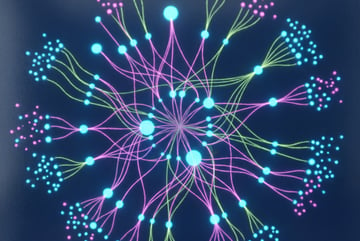
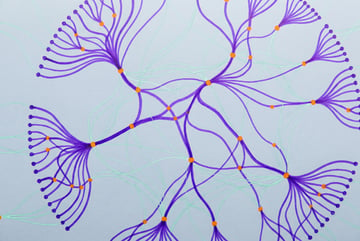
A knowledge graph is a data structure that represents real-world entities and the relationships between them as a network of nodes and edges.
- Nodes are entities: people, products, companies, concepts, events, documents — anything you want to represent.
- Edges are relationships: and critically, each edge has a type and often additional properties.
Other agents ship a demo. Remy ships an app.
Real backend. Real database. Real auth. Real plumbing. Remy has it all.

The key difference from a wiki or hyperlinked document system is that a wiki link just says “these two pages are connected.” A knowledge graph says “Company A acquired Company B in 2021” or “Drug X contraindicated with Drug Y” or “Customer C purchased Product D on 2024-03-15.”
That extra semantic layer — the typed, directional, property-rich relationship — is what separates a knowledge graph from a list of backlinks.
The Anatomy of a Knowledge Graph Triple
The fundamental unit in a knowledge graph is the triple: subject → predicate → object.
(Acme Corp) → [employs] → (Jane Smith)(Jane Smith) → [manages] → (Project Phoenix)(Project Phoenix) → [depends on] → (Vendor API v2)
Chain enough of these together and you get a graph structure that an AI agent can traverse, query, and reason over. This is fundamentally different from a vector search that returns “similar documents” — here, the agent can follow specific relationship paths to find precise answers.
Brief History: From RDF to LLM Context
Knowledge graphs aren’t new. Google’s Knowledge Graph, launched in 2012, was built on semantic web technologies like RDF and OWL. Enterprise systems have used graph databases for decades in supply chain, fraud detection, and biomedical research.
What is new is pairing these structures with large language models. LLMs are good at understanding language and generating responses. They’re weak at tracking precise structured facts over long contexts. Knowledge graphs supply exactly what LLMs lack: reliable, structured, queryable memory about relationships.
How Wiki-Style Linking Works (and Where It Falls Short)
Wiki-style knowledge bases — Notion, Confluence, Obsidian, and their equivalents — work on a simple model: documents contain text, and you can link documents to each other with hyperlinks.
When AI agents are given wiki-style memory, they typically:
- Store documents as embeddings in a vector store.
- At query time, retrieve the most semantically similar chunks.
- Feed those chunks to the LLM as context.
This is called Retrieval-Augmented Generation (RAG), and it works well for many use cases. Ask “what’s our refund policy?” and RAG will find the right document.
The Problems That Emerge
Semantic similarity ≠ relational accuracy. RAG retrieves documents that sound related to the query. But if the agent needs to follow a specific relationship chain — “find all products that depend on suppliers currently under contract dispute” — similarity search alone can’t do it. The relationships aren’t explicitly stored.
Backlinks are untyped. A link from Page A to Page B tells you they’re related. It doesn’t tell you how. Is Page B a prerequisite of Page A? A successor? An exception? A related concept? Without typed relationships, agents can’t reason about direction or kind of connection.
Context windows overflow. When relationship networks are implicit inside documents, the agent has to load many documents to reconstruct the network. Knowledge graphs make relationships explicit and machine-queryable, so agents can retrieve precisely what they need — not entire documents.
Everyone else built a construction worker.
We built the contractor.
One file at a time.
UI, API, database, deploy.
Multi-hop reasoning breaks down. If a user asks “who manages the team responsible for the integration that’s blocking our product launch?”, a wiki-based agent has to surface several documents and hope the LLM can chain the reasoning correctly from unstructured text. A knowledge graph lets you follow the relationship path directly: product launch → blocked by → integration → owned by → team → managed by → person.
Typed Relationships: The Core Advantage
The word “typed” is doing a lot of work here, so let’s be precise.
A typed relationship means every edge in the graph has a defined relationship type — usually a verb or verb phrase that describes exactly how two nodes connect. This gives agents three capabilities wiki links don’t offer:
1. Directional Queries
Edges in a knowledge graph are directional. (A) → [reports to] → (B) means something very different from (B) → [reports to] → (A). You can query “who reports to B?” or “who does A report to?” and get different answers.
In a wiki, a link between two pages doesn’t carry that directionality in a queryable way.
2. Relationship Filtering
Because relationships have types, agents can filter by type. “Show me all entities that have a depends on relationship with this API” is a precise graph query. A RAG system would have to guess which documents discuss dependencies based on semantic similarity.
3. Inference and Transitivity
Some relationship types are transitive. If A is a subclass of B, and B is a subclass of C, then A is a subclass of C. Knowledge graphs built on formal ontologies can make these inferences automatically. That’s how biomedical knowledge graphs can identify that a drug interacts with a class of enzymes, and therefore with any specific enzyme in that class — even if that specific combination was never explicitly stored.
When to Use a Knowledge Graph vs. a Wiki/RAG System
This isn’t an either-or choice in practice — most production AI systems use both. But knowing when each shines helps you design better.
Use a Knowledge Graph When:
- Relationships are first-class data. If how things connect is as important as what they are, you need a graph. Supply chains, org charts, dependency maps, medical ontologies, legal citations.
- Multi-hop queries are common. If users regularly need to trace connections across several steps (“what customers are affected by this supplier issue?”), graphs are dramatically more efficient.
- Data changes frequently in structured ways. Updating a node or edge in a graph is clean and precise. Updating a wiki document and re-embedding it is blunt.
- Reasoning accuracy matters more than retrieval recall. For compliance, healthcare, legal, or financial use cases, you want traceable, verifiable relationships — not probabilistic similarity.
Use RAG/Wiki-Style Memory When:
- Content is narrative or unstructured. Policy documents, meeting notes, product specs, and FAQs don’t have obvious entity-relationship structure. RAG is well-suited here.
- Quick setup matters. Indexing documents with embeddings takes minutes. Building a knowledge graph requires defining entities and relationships — that’s real design work.
- Questions are open-ended. “Summarize our Q3 strategy” doesn’t benefit from a graph. “Which initiatives depend on the partnership we’re about to close?” does.
Hybrid Systems Are Usually the Answer
Many effective agent architectures combine both: use a knowledge graph for structured relational data and use vector search for unstructured document retrieval. The agent’s reasoning layer queries whichever store is appropriate based on the nature of the question.
How AI Agents Use Knowledge Graphs in Practice
Let’s get concrete about what this looks like in actual agent workflows.
Populating the Graph
Agents can both read from and write to knowledge graphs. An ingestion agent can process new documents, extract entities and relationships using an LLM, and add triples to the graph. Over time the graph becomes a living knowledge base that reflects the current state of your domain.
Popular graph databases used for this include Neo4j, Amazon Neptune, and more recently purpose-built AI memory layers like Zep and Mem0.
Querying the Graph
When a user asks a question, the agent translates the query into a graph traversal (often using Cypher for Neo4j or SPARQL for RDF stores). The graph returns a structured result — not a chunk of text, but a precise set of facts. The agent then uses these facts to generate its response.
Some architectures use an LLM to generate the graph query itself (text-to-Cypher), similar to how text-to-SQL works. This means non-technical users can query complex graphs through natural language.
GraphRAG: Combining Graph Retrieval with Generation
Microsoft Research introduced GraphRAG as a method that builds a knowledge graph from documents and uses community detection to summarize clusters of related entities. When querying, it retrieves graph-informed summaries rather than raw document chunks.
The result is significantly better performance on questions that require synthesizing information across many related documents — exactly the multi-hop reasoning problem that standard RAG struggles with.
Knowledge Graphs in Multi-Agent Systems
In a multi-agent workflow, knowledge graphs become a shared memory layer that multiple agents can read from and write to simultaneously.
This solves a core coordination problem: how do agents share what they know without passing enormous context windows between each other?
Shared Knowledge, Not Shared Context
With a knowledge graph:
- Agent A, which handles customer interactions, can write
(Customer X) → [has issue with] → (Product Y). - Agent B, which handles escalations, can query “which products have open issues?” without needing Agent A’s full conversation history.
- Agent C, which monitors product health, can see the relationship and flag it as part of a pattern.
Each agent works with the piece of the graph relevant to its function. The graph itself becomes the coordination mechanism.
Persistent Relational Memory Across Sessions
Standard LLM memory fades between sessions. A knowledge graph persists relationships across time. An agent handling a long-running project can pick up exactly where it left off — not by summarizing previous conversations, but by querying the current state of the project graph.
This is especially valuable in AI workflows that span days or weeks, such as research pipelines, deal management, or ongoing customer support processes.
Frequently Asked Questions
What is a knowledge graph in simple terms?
Other agents start typing. Remy starts asking.
Scoping, trade-offs, edge cases — the real work. Before a line of code.
A knowledge graph is a database that stores facts as relationships between entities. Instead of saving information as text documents, it saves structured triples: subject → relationship → object. For example: “Alice manages the product team” becomes (Alice) → [manages] → (Product Team). This structure lets software (including AI agents) query and reason over relationships directly, rather than searching through text.
How is a knowledge graph different from a vector database?
A vector database stores documents as mathematical embeddings and retrieves them based on semantic similarity. It’s good for finding relevant text but can’t represent explicit, typed relationships. A knowledge graph stores entities and the named relationships between them — it’s optimized for relational queries like “what depends on this?” or “who is connected to whom through this path?” Most production AI systems use both.
Can AI agents build and update knowledge graphs automatically?
Yes. LLMs are quite good at entity and relationship extraction. You can build an ingestion pipeline where an agent reads incoming documents, identifies entities and relationships, and writes new triples to the graph. The quality depends on how well-defined your entity types and relationship types are — the more specific your schema, the more accurate the extraction.
What graph databases work best for AI agents?
Neo4j is the most widely used graph database for AI applications, largely because of its mature Cypher query language and LLM integration tooling. Amazon Neptune is a managed option for teams on AWS. For AI-specific memory, newer tools like Zep, Mem0, and Graphiti are purpose-built for persistent agent memory with relational structure. The right choice depends on your scale, existing infrastructure, and whether you need a hosted managed service.
What is GraphRAG and is it better than standard RAG?
GraphRAG is a retrieval method that builds a knowledge graph from documents and uses it to enhance answer generation. Rather than fetching the most similar text chunks, it retrieves graph-informed summaries that capture how related entities and concepts connect. It significantly outperforms standard RAG on complex, multi-hop questions but requires more upfront processing. For simple Q&A over a small document set, standard RAG is usually sufficient.
Do I need to be a developer to use knowledge graphs with AI agents?
Historically, yes — graph databases require schema design and query language expertise. That’s changing. Tools like MindStudio let you build agent workflows that interact with graph databases through visual builders and pre-built integrations, and LLM-driven text-to-query generation means agents can query graphs using natural language. That said, schema design — deciding what your entities and relationships should be — still requires thoughtful planning regardless of the tools.
Key Takeaways
- Knowledge graphs store typed relationships between entities, not just hyperlinks. That distinction enables multi-hop reasoning, directional queries, and inference that wiki-style backlinks can’t support.
- RAG/wiki systems are better for unstructured text retrieval; knowledge graphs are better for relational, structured, frequently-changing data where relationship type matters.
- Most production AI systems use both — vector search for narrative content, graph queries for structured relational data.
- Multi-agent workflows benefit most from knowledge graphs, which provide shared relational memory without requiring agents to pass full conversation context to each other.
- GraphRAG bridges the two approaches by building a graph from documents, giving agents better performance on complex questions than standard embedding search alone.
- ✕a coding agent
- ✕no-code
- ✕vibe coding
- ✕a faster Cursor
The one that tells the coding agents what to build.
If you’re building AI agents that need to reason across connected data — not just retrieve similar text — knowledge graphs are worth understanding deeply. MindStudio gives you a practical environment to build those workflows without starting from scratch. Start free at mindstudio.ai.