
AI Memory & Knowledge Bases
Persistent memory and knowledge bases for AI agents — Karpathy's LLM wiki, OpenBrain, second brain setups, self-evolving Claude Code memory, three-layer memory architectures, RAG patterns, vector databases, embeddings strategy.
How to Use Claude Memory vs ChatGPT Memory: Which Is Better for Power Users?
Claude uses automated nightly memory with categorized wikis. ChatGPT now matches it with dreaming updates. Here's how each works and which to trust.

ChatGPT Memory Dreaming Update: How to Audit and Optimize Your Memory Profile
ChatGPT's new Dreaming memory update changes how it learns from past chats. Learn how to review, correct, and optimize your memory summary.

ChatGPT Memory Dreaming Update: How to Use and Optimize Your Memory Profile
ChatGPT's new Dreaming memory system creates a structured profile from your past chats. Learn how to review, edit, and optimize it for better AI outputs.

How to Build an AI Second Brain Knowledge Base with Automated Hourly Processing
Learn how to build a personal AI second brain that captures notes, processes them hourly, and surfaces insights on demand using Claude Code and Obsidian.
How to Share AI Agent Memory Across a Team Without Exposing Private Data
Learn how to design shared vs private AI agent memory for teams using row-level security, Supabase, and permission-mirrored GitHub repos.

How to Build an AI Second Brain Knowledge Base: Step-by-Step with Claude
Learn how to build an AI-powered second brain knowledge base using Claude, with automated processing, memory search, and hourly updates.
Shared vs Private AI Agent Memory: How to Design Access Control for Teams
Learn how to structure shared and private memory in a team AI agent system using Notion, GitHub, and PostgreSQL row-level security.

How to Build a Three-Tier Storage System for Team AI Agent Workflows
Learn how to structure team AI agent files across Notion, Claude Code, and GitHub for shared access, version control, and permission management.

What Is the Agentic Context Management System? Folder Structures, Rules, and Injection
An agentic OS is just markdown files in folders with rules about when to load them. Learn how to build a portable context management system for AI agents.

How to Build an Agentic Context Management System with Folder Structures and Markdown Files
An agentic OS is just markdown files in folders with rules about when to load them. Learn how to architect context management for multi-client work.

How to Use AI for Agentic Context Management: Folder Structures, Rules, and Injection
Effective AI agent context management uses markdown files in folders with rules for when to load them. Learn the architecture that keeps agents on-brand.

How to Build an AI Second Brain Knowledge Base: Step-by-Step
Learn how to build a personal AI second brain that stores, organizes, and retrieves your knowledge using AI agents and automation workflows.
What Is the AI Second Brain? How to Build a Knowledge Base That Agents Can Search
An AI second brain stores your notes, decisions, and context so agents can retrieve them by meaning. Learn the architecture and tools to build one.
How to Build an AI Knowledge Base That Agents Can Search by Meaning
Turn your meeting notes, SOPs, and transcripts into a searchable knowledge base that AI agents can query by meaning using vector embeddings.

How to Build an AI Memory System for Claude Code: Storage, Injection, and Recall
Claude Code's built-in memory is weak. Learn how to combine Memarch and Hermes patterns for storage, injection, and tiered recall.

What Is the Frozen Snapshot Injection Pattern for AI Agents?
Frozen snapshot injection loads a curated memory file at session start so agents have instant context without burning tokens on every message.

Memarch vs Hermes Agent: Which AI Memory System Should You Use?
Memarch captures everything with vector search. Hermes curates facts with frozen snapshots. Compare both and learn when to combine them.

What Is the LLM Wiki? Karpathy's Knowledge Base Architecture for AI Agents
Karpathy's LLM wiki turns raw files into a structured, agent-searchable knowledge base. Here's how the architecture works and how to build one.

How to Build an AI Agent That Never Forgets: A Hybrid Memory Architecture
Combine automatic transcript capture, curated memory files, and vector search to build an AI agent that recalls client decisions from months ago on demand.
What Is Semantic Memory Search for AI Agents? How Vector Databases Enable Meaning-Based Recall
Keyword search misses synonyms and context. Semantic memory search uses vector embeddings to find information by meaning. Here's how to add it to your agents.
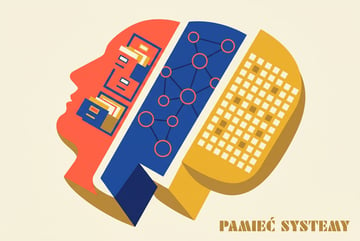
Claude Code Memory Systems Compared: Memarch vs Hermes vs Built-In
Compare Claude Code's built-in memory, Memarch's vector database, and Hermes's curated facts to find the best persistent memory setup for your agents.
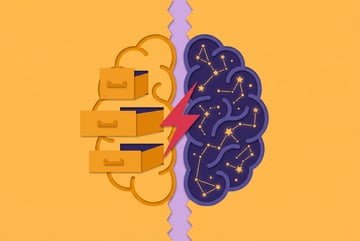
How to Build a Hybrid AI Memory System: Combining Memarch and Hermes
Learn how to combine Memarch's automatic vector capture with Hermes's curated memory injection for a complete Claude Code memory architecture.

How to Build an AI Agent with Persistent Memory Using RAG and Vector Search
Learn the multi-layer memory architecture that combines semantic search, file system tools, and backtracking to give Claude agents reliable long-term recall.

What Is Agentic RAG? How Multi-Layer Retrieval Beats Standard Vector Search
Agentic RAG uses semantic pre-filtering plus file system tools to retrieve information from complex documents. Here's the architecture and when to use it.