
Workflows Articles
Browse 1206 articles about Workflows.

How to Mix Claude and Gemini 3.5 Flash in One AI Coding Workflow for Better Frontends
Use Claude Opus for planning and page copy, then Gemini 3.5 Flash for UI design. This multi-provider workflow builds better full-stack apps at lower cost.

How to Build an AI Animated Short Film with Seedance 2.0: Full Workflow and Cost
One person built a 3-minute animated short film using Seedance 2.0, GPT Image 2, and ElevenLabs in 20-30 hours. Here's the complete workflow and cost breakdown.

How to Build an AI Second Brain Knowledge Base with Automated Hourly Processing
Learn how to build a personal AI second brain that captures notes, processes them hourly, and surfaces insights on demand using Claude Code and Obsidian.

How to Mix Claude and Gemini 3.5 Flash in One AI Coding Workflow
Use Claude Opus for planning and reasoning while Gemini 3.5 Flash handles UI generation. Learn how to mix providers in a single multi-step coding workflow.

How to Use Claude Code Agent Teams for Multi-Perspective Brainstorming
Claude Code agent teams let multiple AI personas debate and reach consensus. Here's how to enable the feature and use it for strategy and analysis.

How to Use the /insights Command in Claude Code to Audit Your AI Workflow
The /insights command generates a 30-day HTML report on your Claude Code usage, surfacing what's working, what's slowing you down, and what to build next.
How to Use Claude Code /rewind to Roll Back Conversations and Code to Any Checkpoint
The /rewind command in Claude Code lets you roll back both code and conversation to an earlier point—better than correcting mistakes mid-session.

How to Use the /status Line in Claude Code to Monitor Context and Model in Real Time
The Claude Code status line shows your model, effort level, and context usage at a glance. Here's how to configure it and why it matters for long sessions.

What Is the /workflows Command in Claude Code? Dynamic Multi-Agent Workflows Explained
The /workflows command in Claude Code lets you compose multi-agent workflows dynamically with full transparency. Here's how it works and when to use it.

What Is the Dark Factory Approach to AI Agent Pipelines? How to Remove Human Bottlenecks
A dark factory AI pipeline uses agents for PR reviews, merge conflicts, and monitoring so humans move from in-the-loop to over-the-loop oversight.
What Is the Harness vs Model Distinction? Why Your Agent Wrapper Matters More Than Benchmarks
The harness—file access, computer use, concurrency—often drives more performance than the underlying model. Here's how to evaluate both together.
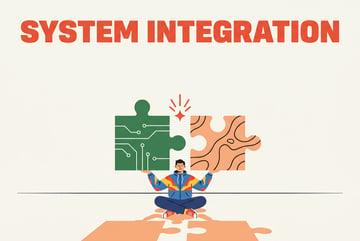
How to Mix Claude and Gemini in One AI Coding Workflow for Better Results
Use Claude Opus for planning and Gemini 3.5 Flash for UI design in a single multi-provider workflow. Here's the architecture and how to implement it.

What Is the Piling Problem in AI Agent Workflows? How to Prevent Output Bottlenecks
When agents generate work faster than humans can review it, output piles up. Here's how to design agentic pipelines that prevent unsustainable backlogs.
How to Share AI Agent Memory Across a Team Without Exposing Private Data
Learn how to design shared vs private AI agent memory for teams using row-level security, Supabase, and permission-mirrored GitHub repos.

How to Build a Team AI Operating System with Notion, GitHub, and Claude Code
Learn how to structure a three-tier agentic OS for teams using Notion for human edits, Claude Code for agent files, and GitHub for version control.
How to Use AI Agents to Build and Test LLM Benchmarks: Lessons from Claude Opus 4.8
Claude Opus 4.8 built an entire economic simulation benchmark autonomously. Learn how to use AI agents to design and run your own LLM evals.

Anthropic Dynamic Workflows: What Everyone Gets Wrong About When to Use Them
Dynamic workflows burn tokens fast. Learn exactly when to use them vs sub-agents or /goal, and how to avoid costly mistakes in Claude Code.
What Is Claude Opus 4.8 Ultra Code Mode? Dynamic Workflows vs /goal Explained
Claude Opus 4.8 Ultra Code mode activates dynamic workflows for parallel sub-agents. Learn when to use it vs /goal for agentic tasks.

How to Build an AI Second Brain Knowledge Base: Step-by-Step with Claude
Learn how to build an AI-powered second brain knowledge base using Claude, with automated processing, memory search, and hourly updates.

How to Use Prompt Caching to Cut Claude Code Token Costs in Dynamic Workflows
Dynamic workflows burn tokens fast. Learn how to use prompt caching, scope bounding, and Haiku sub-agents to control costs in Claude Code.