
Workflows Articles
Browse 1206 articles about Workflows.
What Is Loop Engineering? The New Meta for AI Coding Agents
Loop engineering replaces manual prompting with goal-based automation. Learn what loops are, how they work, and when to use them in your AI workflows.

How to Use AI for Brand Voice Extraction: Build a Voice Profile in 15 Minutes
Learn how to extract your brand voice using AI interviews, podcast transcripts, and writing samples to create a reusable voice profile for all your content.

How to Build a Body of Work File for Your AI Agent: Extract Your Core Ideas
A body of work file captures your 7–12 foundational concepts so AI agents generate content anchored to your real opinions—not generic takes on your topic.
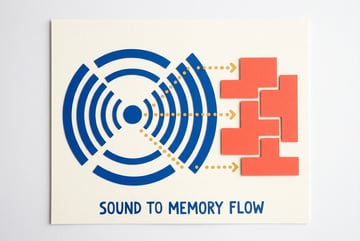
Cache-Aware Streaming ASR: How NVIDIA Nemotron 3.5 Cuts Transcription Latency
Cache-aware streaming reuses encoder states instead of reprocessing audio chunks, cutting latency by up to 17x. Here's how it works for real-time transcription.
What Is a Design Token System for AI Agents? How to Lock In Consistent Brand Visuals
Design tokens store your brand colors, fonts, and layout rules in a JSON file that AI agents reference every time they generate visual content.

What Is NVIDIA Nemotron 3.5 ASR? The Streaming Speech-to-Text Model Explained
NVIDIA Nemotron 3.5 ASR is a 600M streaming model supporting 40 languages with cache-aware architecture. Learn how it works and when to use it.

Word Boosting in AI Transcription: How to Fix Product Names and Rare Vocabulary
Word boosting lets you inject custom vocabulary into ASR models at decode time—no fine-tuning needed. Here's how it works and when to use it.

How to Use AI for Ad Creative Variation at Scale: The Marketing Sub-Agent Pattern
Anthropic's growth team uses two specialized sub-agents—one for headlines, one for descriptions—to generate hundreds of ad variations in minutes.
How to Build an AI Brand Voice System: Voice Profile, Body of Work, and Design Tokens
Build three reusable brand context files so every AI output sounds and looks like your brand—without re-explaining yourself every session.

Anthropic RSI Report: Three Scenarios for the Future of AI and What They Mean for Builders
Anthropic's recursive self-improvement report outlines three futures: plateau, human-guided acceleration, and full RSI. Here's the builder's guide.

ChatGPT Memory Dreaming Update: How to Audit and Optimize Your Memory Profile
ChatGPT's new Dreaming memory update changes how it learns from past chats. Learn how to review, correct, and optimize your memory summary.

Claude Code Skills for Non-Technical Teams: How to Build, Name, and Structure Them
Learn how to build Claude Code skills that non-engineers can actually use—with the right name, description, and reference file structure.

How to Use Design Tokens with AI Agents: Consistent Brand Visuals Across Every Output
Design tokens stored in a JSON file let AI agents apply your brand colors, fonts, and layouts consistently across carousels, slides, and ads.

How Anthropic's Non-Engineering Teams Use Claude Code: 4 Patterns That Work
Legal, marketing, design, and finance teams at Anthropic use Claude Code differently than engineers. Here are the four patterns that drive real results.

How to Build a Brand Voice Profile for AI: Extract Your Voice in 15 Minutes
Learn how to create a brand voice file that makes every AI output sound like you—using skills, interviews, and real content samples.

How to Use AI for Brand Identity: Voice, Body of Work, and Visual Design Tokens
Build three brand context files—voice, body of work, and design tokens—so every AI output looks and sounds like your brand automatically.

Local AI Inference with RTX Spark: What Changes When You Run LLMs On-Device
NVIDIA's RTX Spark chip enables local LLM inference with 128GB unified memory. Learn the privacy, cost, and offline benefits for AI workflows.

What Is the Slot Machine Method for AI Agents? Why Restarting Beats Correcting
Anthropic's own teams restart Claude sessions instead of correcting drift. Learn why this approach produces better results and how to apply it.

How to Use Claude Code for Non-Engineers: 4 Patterns from Anthropic's Own Teams
Anthropic's legal, marketing, design, and finance teams use Claude Code without coding skills. Here are the 4 patterns that drive their results.

GitHub Copilot App vs OpenAI Codex: The Key Difference Is Model Choice
The new GitHub Copilot app offers a Codex-like coding experience but lets you pick any model provider. Here's how it compares and when to use each.