
Multi-Agent Articles
Browse 597 articles about Multi-Agent.
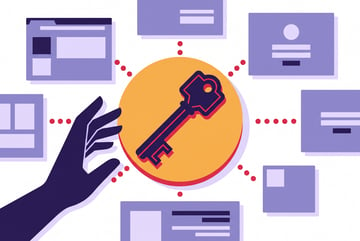
Claude 1Password Integration: How AI Agents Can Log Into Websites Automatically
Claude can now use 1Password credentials to log into websites autonomously. Learn how it works, what stays private, and when to use it in your agents.

Open-Weight AI Reaches the Frontier: What Kimi K3 Means for Your Agent Stack
For the first time, an open-weight model matches frontier performance on coding. Here's what Kimi K3's release means for AI builders and agent stacks.
What Is ChatGPT Work Mode? OpenAI's Agentic Super App Explained
ChatGPT Work is a new agentic mode that does work for you instead of with you. Learn how it builds websites, runs tasks, and what makes it different.

Kimi K3 vs Claude Fable 5: Which Open-Weight Model Wins for Agentic Coding?
Kimi K3 matches Claude Fable 5 on coding benchmarks at Sonnet-level pricing. Compare both models for agentic workflows, cost, and real-world performance.

What Is the Vercel Eve Framework? File-System-First AI Agents That Scale to Production
Vercel Eve lets you build production AI agents as a single folder of markdown and TypeScript. Learn how it compares to traditional agent frameworks.

How to Use GPT-5.6 Ultra Mode: Multi-Agent Coordination for Complex Tasks
GPT-5.6 Ultra mode spawns at least four AI agents simultaneously to tackle demanding tasks. Here's when to use it and what to expect on cost and speed.

How to Build an AI Agent Workflow That Generates a Complete YouTube Video from One Prompt
Use a multi-agent pipeline to go from a single prompt to a finished YouTube video: script, storyboard, AI-generated visuals, voice, and editing—all automated.

How to Use AI Agents for Business Automation: Shared Workspace, Capture, and Evals
Learn the three-component system for integrating AI agents into your business: a shared workspace, low-friction task capture, and evaluation guardrails.
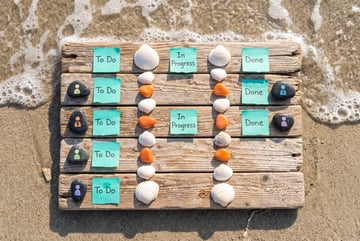
How to Use AI Agents in a Shared Human-AI Workspace: Capture, Queue, and Eval
Learn how to integrate AI agents into a project management tool like Linear so humans and agents work from the same task queue with built-in quality checks.

How to Use AI Video Generation for Content Marketing: A Multi-Agent Workflow
Build a multi-agent content pipeline that turns a single prompt into scripted, voiced, and edited video content using AI video tools and Claude Code.

How to Build Production AI Agents with Vercel Eve: A Step-by-Step Guide
Build and deploy a production-grade AI agent using Vercel Eve's file-system-first framework. Covers skills, sub-agents, channels, evals, and Slack integration.

What Is GPT-5.6 Ultra Mode? Multi-Agent Coordination for Complex Tasks
GPT-5.6 Ultra Mode spawns four or more parallel agents to tackle demanding tasks. Learn when to use it, what it costs, and how it compares to standard mode.

How to Use AI Agents for Shared Workspace Productivity: Capture, Queue, and Eval
Discover how to build a shared AI-human workspace using low-friction capture, agent queues, and evaluation checklists that run 20+ tasks simultaneously.

How to Build an AI Content Factory: Automate Product Videos with Multi-Agent Workflows
Turn a static product catalog into marketing videos automatically. Learn how to use multi-agent workflows and AI video tools to generate content at scale.

How to Build an AI Video Generation System with Multi-Agent Workflows
Learn how to use parallel agent workflows to generate marketing videos for an entire product catalog automatically—from image validation to final render.

How to Use Multi-Agent Workflows for Parallel Content Production at Scale
Fan out multiple AI agents to process product catalogs, generate content, and validate outputs in parallel using orchestration tools like Archon.

How to Build an Autonomous Marketing Campaign with GPT-5.6 and AI Video Tools
Learn how to use GPT-5.6 Sol to autonomously generate products, ad images, and marketing videos using a parallelized multi-agent pipeline.

How to Use the /goal Command in Claude Code for Fully Autonomous Agent Loops
The /goal command lets Claude Code run until a condition is met. Learn how to set goals, success criteria, and verification steps for autonomous workflows.

How to Use GPT-5.6 Sol as an Orchestrator with Cheaper Sub-Agent Models
GPT-5.6 Sol excels at planning and orchestration. Learn how to pair it with Luna or Terra sub-agents to cut costs while keeping output quality high.

GPT-5.6 Sol vs Claude Fable 5: Which Frontier Model Wins for Planning and Code Review?
GPT-5.6 Sol and Claude Fable 5 excel at different tasks. Learn which model to use for planning, code review, and long-running agentic workflows.