
AI Memory & Knowledge Bases
Persistent memory and knowledge bases for AI agents — Karpathy's LLM wiki, OpenBrain, second brain setups, self-evolving Claude Code memory, three-layer memory architectures, RAG patterns, vector databases, embeddings strategy.

How to Auto-Process YouTube Transcripts into a Searchable Wiki with Obsidian and Codex (Hourly)
Obsidian Web Clipper pulls YouTube transcripts automatically. Codex processes them into wiki pages every hour. Here's the full setup in 20 minutes.

Claude Code 1M Token Context Window vs. Old Rate Limits — What Actually Changed
Claude's 1M token context was always there — but rate limits made it unusable. The SpaceX compute deal changes that calculus entirely.

Claude Code vs. Codex as Your Second Brain Engine — Which AI Agent Works Best with Obsidian?
Your Obsidian vault is just markdown — meaning Claude Code, Codex, or any agent can power it. Here's how each performs as your second brain engine.

Gemini 3.5 (Speed) vs. Gemini Ultra (Memory) — Google's Two-Track Model Strategy Explained
Leaked: Gemini 3.2/3.5 optimized for speed, Gemini Ultra going deep on memory and long-context. Here's what Google's two-track model strategy means for…

How to Build an Agentic Context Grounding System for Any Vertical
Agentic context grounding prevents generic AI outputs by reading a source of truth before generating. Learn how to build this pattern for any industry.

How to Build an AI-Powered CRM Inside Your Second Brain
Learn how to add a personal CRM to your AI second brain using Claude Code and Obsidian to track contacts, meetings, and conversations.

How to Build an AI Second Brain with Obsidian and Claude Code
Learn how to build a second brain system with a wiki, CRM, and AI journal using Obsidian and Claude Code. Step-by-step guide.

How to Use AI for Journaling: Building a Second Brain That Responds to Your Entries
AI-powered journaling grounds responses in your saved knowledge base instead of generic advice. Learn how to build a journal that actually knows you.

How to Use Hourly Automations in Claude Code to Process Your Knowledge Base
Set up hourly automations in Claude Code to process new files, update your wiki, and push changes to GitHub—all without manual intervention.

How to Use the Obsidian Web Clipper to Build an AI Knowledge Base
The Obsidian Web Clipper saves YouTube transcripts, articles, and podcasts directly into your vault. Learn how to use it to build an AI-powered wiki.

What Is Context Inheritance in Claude Code? How to Manage Multi-Client Projects
Claude Code's context inheritance lets parent folders pass shared methodology to client subfolders. Learn how to structure multi-client AI agent projects.

Context Mode for Claude Code Compresses 315KB Sessions to 5KB — Here's How to Install and Use It
Context Mode achieves a 63x compression ratio on Claude Code sessions. Install steps, slash commands, and when to use it over alternatives.

How to Build an Obsidian-Style 3D Agent Memory Graph Using Gemini Video API and Claude Code
Screen-record Obsidian, send the video to Gemini's video understanding API, ask Claude Code to replicate it. Zero graph libraries required.

Claude Code Context Mode Compresses 315KB Sessions to 5KB — Here's How to Install It
Context Mode routes tool calls through a sandbox and shrinks a 56KB Playwright snapshot to 299 bytes. Two commands to install.
Claude Code Memory Levels Explained: 6 Layers from claude.md to Cross-Tool Shared Memory
Claude Code has 6 distinct memory levels. Here's what each one does, when to use it, and which skills unlock the higher tiers.

Andrej Karpathy's LLM Wiki Pattern: Cut Claude Token Usage 95% with a Two-Folder System
One user turned 383 files and 100+ meeting transcripts into a compact wiki using Karpathy's raw/wiki pattern — and dropped Claude token usage by 95%.

Open Brain: The Open-Source Memory System That Lets You Rebuild AI Indexes Without Losing Your Data
Open Brain separates raw data from embeddings in SQL — so when better embedding models arrive, you rebuild the index without touching source data.

What Is Semantic Memory Search for AI Agents? Tools, Levels, and When to Use Each
Semantic memory search lets agents recall relevant context by meaning, not keyword. Learn the 6 levels of AI memory and which combination fits your use case.
What Is an AI Memory System? How to Build Persistent Context for Your Agents
AI models are stateless but your work isn't. Learn how to build a durable memory layer using SQLite, Postgres, embeddings, and MCP servers for your AI agents.
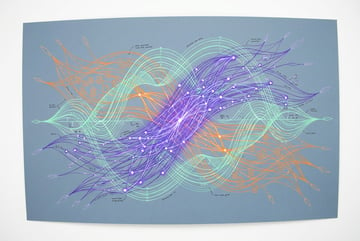
Graphify for Claude Code: How a Karpathy-Inspired Knowledge Graph Cuts Large Codebase Costs by 70x
Graphify maps file relationships into a queryable graph before Claude touches your code. For 500+ file projects, it can cut token costs by up to 70x.

Nvidia's DGX Spark Puts 128GB of Unified Memory on Your Desk — Is It Finally the Personal AI Computer?
The DGX Spark matches cloud inference nodes with 128GB coherent unified memory on a desktop. Here's who should buy it and who should stick with Mac.

Agentic Operating System File Structure: A Practical Folder Layout
Build an agentic OS with a deliberate folder structure for rules, context, skills, and memory. Here's the file layout and patterns that make it work.

Claude Code Memory Systems Explained: Which One Should You Use?
From claude.md to semantic vector search to cross-tool databases — six levels of Claude Code memory compared so you can pick the right one for your workflow.

Karpathy's AI Wiki vs Structured Databases: Which Memory System Is Right for You?
Karpathy's wiki compiles knowledge at write time. Structured databases query at runtime. Here's when to use each and how to combine both approaches.