What Is Gemini Omni Flash? Google's Conversational Video Editing Model Explained
Gemini Omni Flash is Google's multimodal video model that lets you edit video through conversation—changing characters, lighting, and style iteratively.
Google’s Approach to Conversational Video Editing
Video editing has always required specialized tools, technical knowledge, and a lot of trial and error. You make a change, render the file, watch it back, and repeat. It’s slow, frustrating, and unintuitive — especially if you’re not a professional editor.
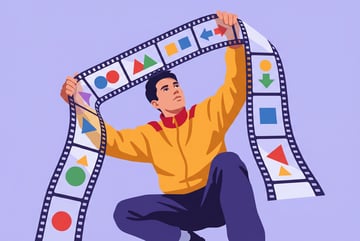
Gemini Omni Flash represents a different approach entirely. Instead of clicking through timelines and adjustment panels, you describe what you want in plain language. The model interprets your intent, applies changes, and returns an updated result — all in a back-and-forth conversation. It’s video editing that behaves more like talking to a collaborator than operating a piece of software.
This article explains what Gemini Omni Flash is, how its multimodal architecture makes conversational video editing possible, what you can actually do with it today, and where the technology is headed.
What Gemini Omni Flash Actually Is
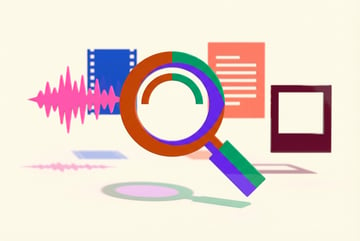
Gemini Omni Flash is a variant of Google’s Gemini model family, optimized for speed and multimodal reasoning. The “Flash” designation signals it’s built for low-latency, high-throughput tasks — fast enough to handle real-time or near-real-time interactions. The “Omni” aspect refers to its ability to process multiple types of input and output simultaneously: text, images, audio, and video.
Most AI models specialize. A text model handles language. An image model handles visuals. Gemini’s architecture is designed to reason across all these modalities in a single pass — which is what makes conversational video editing possible in the first place.
When you upload a video clip and ask Gemini to “change the lighting to golden hour,” the model isn’t just executing a lookup table or applying a preset. It’s interpreting the visual content of the video, understanding the semantic meaning of your request, and generating modifications that are coherent with the scene.
How It Differs From Traditional Video AI Tools
Traditional AI video tools tend to work in one direction: you provide an input and get an output. If the output isn’t right, you adjust your prompt and try again — but you’re essentially starting fresh each time.
Gemini Omni Flash is designed for iteration. The model maintains context across a conversation. So if you say “make the background darker” and then follow up with “now add a warmer color grade,” the second instruction builds on the first. It doesn’t forget what came before.
This conversational continuity is what separates it from one-shot generative video tools.
The Multimodal Architecture Behind It
To understand why this works, it helps to understand what “multimodal” actually means in practice.
Older AI systems handled different types of data by routing them to separate specialized models. Text went to a language model. Images went to a vision model. Outputs were sometimes combined, but reasoning happened in silos.
Gemini was built from the ground up to handle multiple modalities natively. The model’s training included text, images, video, audio, and code all together — which means it developed an integrated understanding of how these formats relate to each other.
Tokenizing Video
Video is essentially a sequence of image frames plus audio. Gemini processes video by breaking it into discrete tokens — compressed representations of visual content at different points in time. These tokens are fed into the model alongside your text instructions.
The model then generates outputs (modified video frames, new audio, altered visual elements) based on both the original content tokens and the instruction tokens together.
This is what allows specific, targeted edits. When you say “replace the red jacket with a blue one in the second half of the clip,” the model can identify the jacket, track it across frames, and modify it — rather than treating the whole video as a single undifferentiated object.
Flash Optimization
The Flash variant specifically trades some of the heavier reasoning capacity of larger Gemini models for significantly faster inference. This matters for video editing because video is data-intensive. A slower model might take minutes to process even a short clip. Flash is designed to return results quickly enough to feel interactive.
Speed isn’t everything — but in a conversational context, latency kills the experience. If every exchange takes five minutes, the back-and-forth conversation breaks down into something that feels more like batch processing.
What You Can Do With Conversational Video Editing
The range of edits possible through Gemini Omni Flash can be grouped into a few categories. It’s worth being clear about what works well today versus what’s still emerging.
Style and Color Adjustments
This is one of the more reliable use cases. Requests like “add a cinematic color grade,” “make this feel like it was shot in the 1970s,” or “increase the contrast and add a slight vignette” translate well because they map to established visual concepts the model has encountered extensively in training.
Built like a system. Not vibe-coded.
Remy manages the project — every layer architected, not stitched together at the last second.

The model understands visual aesthetics at a conceptual level — so it can apply stylistic changes that go beyond simple filter overlays.
Character and Object Modification
Changing the appearance of people or objects in video — swapping clothing, altering hair color, changing background elements — is possible, though the quality depends heavily on the complexity of the scene and the specificity of the request.
Simple substitutions in clean, well-lit footage tend to work better than complex changes in busy or poorly-lit scenes. The model needs enough visual information to accurately track and modify the target element across frames.
Scene-Level Changes
You can request changes to the overall environment of a video: “change the setting from indoors to outdoors,” “replace the background with a city skyline,” or “make it look like it’s raining.” These are more computationally demanding and can introduce artifacts, but they’re within the model’s capability.
Iterative Refinement
This is where conversational video editing genuinely outperforms traditional workflows. Once you’ve established a direction — say, you’ve applied a specific color grade and modified a background element — you can refine incrementally.
“Make the background slightly less saturated.” “Can you make the transition between these two clips smoother?” “The character’s jacket looks a little artificial — can you adjust the texture?”
Each instruction is in plain language. The model applies the change and returns a result. You review and continue.
Real-World Use Cases
The practical applications of conversational video editing span several industries.
Content Creation and Social Media
Short-form video creators need to produce content quickly and consistently. Gemini Omni Flash lets them iterate on style, make quick fixes, and experiment with different looks without opening a dedicated editing suite.
A creator can shoot raw footage, upload it, and have a conversation: “Cut the dead space at the beginning. Add subtitles in bold white text. Make the color grade warmer. Now add a subtle zoom on the main subject.”
That workflow — text in, edited video out — is fundamentally different from traditional non-linear editing.
Marketing and Advertising
Marketing teams frequently need to produce multiple versions of the same asset: different aspect ratios, different color treatments, different text overlays for different audiences. Conversational video editing makes versioning much faster.
Instead of opening the source file in an editing tool for each variation, teams can describe the differences and generate them iteratively.
Film and Video Production
For pre-production and early-stage editing, conversational video editing is useful for exploring options. Directors and editors can test looks, blocking adjustments, or rough cuts in conversation with the model before committing time to detailed manual editing.
It’s not replacing professional editors for final output — but it reduces the time spent on exploration and revision in earlier stages.
Education and Documentation
Training videos, product demos, and explainer content often need updates when products change. Rather than re-shooting or fully re-editing, teams can make targeted conversational edits: “Update the UI shown in this screen recording to match the current design” or “Change the narrator’s clothing to match our brand guidelines.”
Current Limitations
Being honest about limitations is useful here, because the technology is still early-stage in some respects.
Temporal consistency is a real challenge. Maintaining a changed element consistently across many frames — especially with motion, lighting changes, or occlusion — can degrade quality. A modified object might flicker or shift appearance across cuts.
Complex multi-element edits are harder than simple ones. “Change the background and the character’s outfit and add subtitles and adjust the audio” as a single instruction tends to produce worse results than breaking it into separate sequential requests.
Long video is still computationally expensive. The model handles short clips well, but performance and coherence can drop with longer content — both in terms of processing time and consistency across the full duration.
Interpretive mismatches happen. Describing visual intent in language is inherently ambiguous, and the model’s interpretation won’t always match what you had in mind. The conversational format helps because you can course-correct, but it requires patience and clear language.
Gemini Omni Flash vs. Other Video AI Models
It’s useful to understand where Gemini Omni Flash sits relative to other tools in the AI video space.
Veo (Google) is Google’s dedicated video generation model — focused on generating new video from text prompts rather than editing existing footage. Gemini Omni Flash and Veo are complementary: Veo creates, Gemini edits.
Sora (OpenAI) is similarly oriented toward text-to-video generation. Strong at creating stylized video from scratch. Less focused on conversational editing of existing content.
Runway ML is a professional video production platform that incorporates AI tools for editing — including inpainting, background replacement, and motion generation. It has a more traditional UI compared to a conversational interface.
Pika Labs focuses on short-form video generation and stylization, aimed at social content creators.
The distinction for Gemini Omni Flash is its conversational, iterative nature and its tight integration with Google’s broader ecosystem (Search, Workspace, Drive). If your workflow already lives in Google’s tools, Gemini’s video capabilities integrate more naturally.
What’s Coming Next
Google has been moving quickly on multimodal capabilities, and the trajectory for conversational video editing points toward a few developments worth watching.
Real-time editing — latency improvements that allow edits to appear near-instantaneously, making the experience feel more like working with a live collaborator.
Audio editing integration — conversational control over audio elements (dialogue, music, sound effects) alongside visual edits.
Longer-form video support — handling feature-length content with consistent quality is a significant technical challenge but a clear target.
Tighter integration with Google Workspace — video editing capabilities surfaced directly within Google Drive, Slides, or Meet, accessible through natural language in those contexts.
Google’s Gemini model documentation tracks updates to capabilities as they’re released.
Frequently Asked Questions
What is Gemini Omni Flash used for?
Gemini Omni Flash is used for multimodal tasks that require fast, responsive interactions across text, images, video, and audio. Its primary video editing use case is conversational — you describe changes to existing video in natural language and the model applies them iteratively, maintaining context across the conversation.
How is Gemini Omni Flash different from Gemini Pro?
Other agents start typing. Remy starts asking.
Scoping, trade-offs, edge cases — the real work. Before a line of code.
The Flash variant is optimized for speed and efficiency at the cost of some reasoning depth. Gemini Pro handles more complex, multi-step reasoning tasks. Flash is better suited for high-throughput, latency-sensitive applications like real-time conversational editing. For detailed analytical tasks or long-context reasoning, Pro models are generally more capable.
Can Gemini Omni Flash generate video from scratch?
Gemini’s primary video capability is editing and understanding existing video. For text-to-video generation from scratch, Google’s Veo model is the dedicated tool. The two can work together: generate base video with Veo, then iteratively edit and refine using Gemini’s conversational interface.
Is conversational video editing available to developers?
Yes. Google exposes Gemini’s capabilities through the Gemini API, and developers can build applications that incorporate video understanding and editing. Access to specific video features varies by API tier and region. No-code platforms like MindStudio also provide access without requiring direct API integration.
What types of video edits work best with Gemini Omni Flash?
Simple, specific edits on shorter clips tend to work best: color grading, style changes, object substitutions, background modifications, and incremental refinements. Complex simultaneous edits, very long clips, and edits requiring precise temporal consistency across fast motion are more challenging.
Does Gemini Omni Flash support audio editing?
Gemini can process audio as part of its multimodal understanding — it can transcribe, analyze, and reason about audio in a video. Full conversational audio editing (generating new audio, replacing dialogue, music mixing) is still developing. The model understands audio context but precise audio generation and replacement capabilities are more limited than its visual editing features.
Key Takeaways
- Gemini Omni Flash is a fast, multimodal AI model that processes text, images, video, and audio together — making conversational video editing possible.
- The conversational format means edits are iterative: each instruction builds on previous context rather than starting fresh.
- It handles style changes, object modification, scene alterations, and incremental refinement well; complex multi-element edits and long video are more challenging.
- It complements rather than replaces dedicated generation models like Veo — those create video from scratch, Gemini edits existing content.
- Practical applications include content creation, marketing versioning, production exploration, and documentation updates.
- Platforms like MindStudio let you build automated workflows around Gemini’s video capabilities without needing to manage API infrastructure directly.