What Is Claude Dreaming? Anthropic's Scheduled Memory Feature for Managed Agents
Claude Dreaming reviews past sessions, extracts patterns, and updates agent memory on a schedule. Here's how it works and why it matters.

How Memory Consolidation Works in Claude’s Agent Architecture
There’s an interesting problem that emerges the moment you try to run an AI agent over a long period of time: it forgets things.
Not right away. Within a single session, Claude is sharp. It remembers everything you told it five minutes ago, tracks the thread of reasoning, builds on earlier context. But end the session, and that context is gone. Start a new one, and the agent begins from scratch.
This is one of the core challenges in building useful, long-running AI agents — and it’s why Anthropic introduced a mechanism that developers have started calling Claude Dreaming. It’s a scheduled memory consolidation process for managed agents, where Claude periodically reviews past sessions, extracts what matters, and writes updated memories before the next conversation begins.
This article explains what Claude Dreaming actually is, how it works mechanically, why it matters for multi-agent systems, and what it means for teams building production AI agents.
The Memory Problem Claude Dreaming Solves
Most AI models, including Claude, are stateless by default. Each API call is independent. The model receives a prompt, generates a response, and the connection closes. Nothing carries over.
For simple, single-turn use cases — summarizing a document, answering a question — this is fine. But for agents that need to learn from past interactions, maintain relationships with users, or improve over time, statelessness is a hard constraint.
Developers have worked around this in a few ways:
- Stuffing full conversation history into the context window — works until you hit the token limit, then you’re forced to truncate
- Storing raw logs and retrieving relevant chunks via RAG — better, but retrieval is noisy and doesn’t synthesize meaning
- Manually maintaining a “memory file” — labor-intensive and hard to keep current at scale
Everyone else built a construction worker.
We built the contractor.
One file at a time.
UI, API, database, deploy.

None of these approaches produce agents that genuinely learn and adapt. They produce agents that either forget everything or drag around a bloated, unorganized history.
Claude Dreaming takes a different approach: scheduled, automated memory consolidation. Instead of trying to keep everything in context or retrieve it on demand, the agent periodically does the work of reviewing what happened and extracting what’s worth keeping.
What Claude Dreaming Actually Is
The name comes from an analogy to human sleep. During sleep — particularly REM sleep — the brain replays recent experiences, strengthens important memories, discards noise, and integrates new information with existing knowledge. It’s not passive storage. It’s active processing.
Claude Dreaming borrows that framing. When a managed agent “dreams,” it’s not idle. It’s running a scheduled process in which Claude reviews accumulated session data, identifies patterns, updates its memory store, and prepares a cleaner, more useful state for its next active session.
Specifically, this involves:
- Reviewing recent session logs — Claude reads through what happened in recent conversations or task executions
- Extracting durable information — preferences, facts, recurring patterns, user behaviors, task outcomes
- Updating memory representations — writing concise, structured summaries back to persistent storage
- Pruning stale or redundant information — removing memories that are no longer relevant or have been superseded
The result is an agent that starts each new session with a meaningful, current picture of its context — not a raw dump of everything that ever happened, but a curated set of memories that actually inform better behavior.
How Scheduled Memory Works Technically
Understanding the mechanics helps clarify why this is a significant architecture decision and not just a clever naming choice.
The Role of External Memory
Claude Dreaming assumes an external memory store — some form of persistent storage outside the model itself. This could be a database, a vector store, a document store, or a simple key-value system. The agent reads from and writes to this store, which persists between sessions.
During active sessions, the agent operates primarily from its context window, supplemented by relevant memories retrieved from the store. The dreaming process is what keeps that store accurate, current, and useful.
Scheduled vs. On-Demand Consolidation
The “scheduled” part is important. Memory consolidation doesn’t happen during an active user session — that would add latency and distract from the primary task. Instead, it runs on a schedule: nightly, hourly, or at whatever interval makes sense for the use case.
This mirrors how background jobs work in traditional software systems. The agent’s active-session behavior remains responsive. The heavy processing of memory consolidation happens asynchronously, when the agent isn’t busy doing something else.
What Claude Does During a Dream Cycle
During a scheduled consolidation run, Claude receives a structured prompt that instructs it to:
- Read recent session transcripts or event logs
- Compare what happened against existing memories
- Identify what’s new, what’s changed, and what can be removed
- Write updated memory entries back to the store
One coffee. One working app.
You bring the idea. Remy manages the project.
This isn’t a simple summarization pass. Claude is doing genuine reasoning about what matters and why. If a user repeatedly asks about a specific topic, the memory might note that preference. If a task consistently fails under certain conditions, the memory might record that pattern. If previously stored information turns out to be wrong, it gets corrected.
The output is a structured, current memory state that the agent can rely on at the start of its next session.
Why This Matters for Multi-Agent Systems
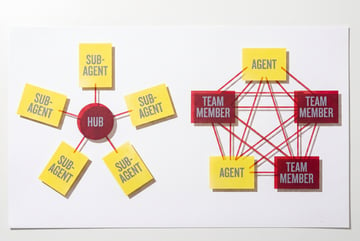
Memory consolidation is useful for single agents, but it becomes especially important in multi-agent architectures — systems where multiple Claude instances collaborate, delegate tasks, and operate in parallel.
Shared Context Across Agents
In a multi-agent system, different agents may handle different parts of a workflow. One agent might handle customer communication. Another might process data. A third might generate reports. If each agent operates in isolation with no shared memory, they can’t coordinate meaningfully.
Scheduled memory consolidation creates a shared context layer. Each agent can read from and write to a common memory store, updated on a regular schedule. This gives the system a coherent picture of what’s happening — without requiring agents to be running simultaneously or passing enormous context windows between each other.
Learning Without Retraining
Fine-tuning a model to learn from new data is expensive and slow. It requires collecting training data, running training jobs, evaluating outputs, and deploying a new model version. For most teams, that’s not practical on a continuous basis.
Claude Dreaming offers a middle path: the model’s weights don’t change, but its accessible memory does. An agent can get meaningfully smarter about a specific domain or user base over time, just by systematically consolidating what it’s learned from past sessions.
This isn’t the same as training, and it’s important not to overstate it. The model’s underlying capabilities stay the same. But its working knowledge — the specific facts, patterns, and context that inform its behavior — can be continuously updated without touching the model itself.
Long-Running Autonomous Agents
Some of the most interesting applications of Claude involve agents that run for extended periods without direct human involvement: monitoring systems, research assistants, automated analysis pipelines, relationship managers.
These agents need memory that evolves with them. A customer success agent running for six months needs to remember what it learned in month one. A market monitoring agent needs to track how trends have developed over time. Scheduled memory consolidation is what makes this kind of continuity possible.
Real-World Applications
The abstract mechanics matter less than what you can build with them. Here are some concrete use cases where Claude Dreaming changes what’s possible.
Customer-Facing AI Assistants
An AI assistant that handles customer support can remember past issues, preferences, and communication styles — not just within a session, but across weeks and months of interactions. Each morning, it consolidates what it learned the day before. Each conversation starts with better context than the last.
Research and Knowledge Management Agents
An agent tasked with tracking developments in a specific field can periodically process new information — articles, reports, updates — and update its internal model of the domain. Over time, it builds a genuinely current picture of the landscape, not a static snapshot from when it was first configured.
Operations and Monitoring Agents
Remy doesn't build the plumbing. It inherits it.
Other agents wire up auth, databases, models, and integrations from scratch every time you ask them to build something.
Remy ships with all of it from MindStudio — so every cycle goes into the app you actually want.
Agents that monitor systems, processes, or pipelines can consolidate patterns from past observations. If a particular failure mode keeps recurring on Tuesday mornings, the agent notices and records it. Future sessions start with that knowledge already loaded.
Personal Productivity Agents
An executive assistant agent can learn an individual’s preferences, recurring tasks, and working patterns over time. The longer it operates, the more useful it becomes — because it’s continuously updating its understanding of that person.
What Claude Dreaming Doesn’t Do
It’s worth being precise about the limitations.
It doesn’t change the model’s weights. Claude’s underlying capabilities are fixed. Dreaming updates the accessible memory the model can read, not the model itself.
It’s not perfect recall. The consolidation process involves compression and judgment. Some things will be summarized, some will be dropped. There’s no guarantee every detail is preserved exactly.
It requires deliberate architecture. Claude Dreaming isn’t automatic — it requires intentional design. You need to decide what gets stored, when consolidation runs, and how memories are structured. Those decisions matter.
It can accumulate errors. If the agent misinterprets something in session and writes a faulty memory, that error can persist and compound. Good memory architecture includes mechanisms for correction and auditing.
Understanding these constraints helps you design around them rather than running into them as surprises.
Frequently Asked Questions
What is Claude Dreaming in simple terms?
Claude Dreaming is a scheduled memory consolidation process for AI agents built on Claude. At regular intervals — say, nightly — the agent reviews recent sessions, extracts important information, and updates a persistent memory store. This lets the agent carry useful context from one session to the next without requiring everything to be in the context window at once.
Is Claude Dreaming an official Anthropic product feature?
It’s a feature and conceptual framework developed in the context of Anthropic’s managed agent infrastructure. The “dreaming” label draws on the analogy to how biological memory consolidation happens during sleep — a process of reviewing, synthesizing, and storing what was recently experienced.
How is this different from RAG (retrieval-augmented generation)?
RAG retrieves relevant information from a store in response to a query. Dreaming actively updates and maintains that store over time. They’re complementary: a well-designed agent might use both — dreaming to keep the memory store current and accurate, RAG to retrieve the most relevant parts of that store during active sessions.
Does Claude Dreaming work with other AI models?
The specific implementation is designed around Claude’s capabilities and Anthropic’s agent infrastructure. However, the underlying concept — scheduled memory consolidation for AI agents — is model-agnostic. Similar patterns can be implemented with other capable language models that can reason about and synthesize past context.
What kind of information does an agent store during dreaming?
That depends on the use case, but common categories include: user preferences and communication styles, recurring patterns in tasks or requests, factual information learned over time, outcomes of past actions, and corrections to previously held beliefs. The goal is information that will meaningfully improve future sessions.
How often should a dreaming cycle run?
It depends on how much activity the agent is handling and how quickly things change. A high-volume customer support agent might run consolidation every few hours. A research agent might run it weekly. The right frequency balances freshness against the overhead of running consolidation jobs.
Key Takeaways
- Claude Dreaming is a scheduled memory consolidation process: Claude reviews past sessions, extracts patterns, and updates a persistent memory store before the next active session.
- It solves the statelessness problem that limits long-running AI agents — without requiring model fine-tuning or keeping full conversation history in context.
- In multi-agent systems, scheduled consolidation creates a shared, evolving context layer that lets agents coordinate and improve over time.
- The approach has real constraints: it doesn’t change model capabilities, requires deliberate architecture, and can propagate errors if not designed carefully.
- Platforms like MindStudio make it practical to build agents with scheduled memory consolidation — connecting the scheduling, storage, and model layers without custom infrastructure.
If you’re building agents that need to operate over time, maintain context, and genuinely improve with experience, memory consolidation isn’t optional. It’s the piece that makes continuity possible. Start experimenting with it at mindstudio.ai.