What Is Claude Dreaming? Anthropic's Self-Improving Agent Memory Feature
Claude Dreaming reviews past agent sessions to find patterns, fix recurring mistakes, and restructure memory automatically. Here's how it works.

The Memory Problem That Claude Dreaming Solves
AI agents forget things. That’s not a flaw in how they’re marketed — it’s a fundamental property of how most large language models work. Each session starts fresh, with no awareness of what happened before unless you explicitly feed that context back in.
For simple chatbots, that’s fine. For autonomous agents running complex, multi-step workflows, it’s a real problem. Agents repeat the same mistakes across sessions. They rediscover the same workarounds. They never accumulate the kind of task-specific intuition that makes a skilled human assistant genuinely better over time.
Claude Dreaming is Anthropic’s approach to fixing that — a process where Claude agents automatically review past sessions, identify recurring patterns and failure modes, and restructure their own memory without waiting for a human to tell them what to fix. The name is a deliberate nod to how biological brains consolidate learning during sleep.
Understanding how this works matters if you’re building or deploying AI agents at any real scale. It changes what’s possible with Claude specifically, and it signals where agentic AI memory is heading more broadly.
What “Dreaming” Actually Means in This Context
The neuroscience framing isn’t just metaphor. During REM sleep, the human brain replays recent experiences, reinforces useful patterns, and prunes connections that aren’t worth keeping. You don’t consciously direct this process — it runs automatically while you’re offline.
Other agents ship a demo. Remy ships an app.
Real backend. Real database. Real auth. Real plumbing. Remy has it all.

Claude Dreaming applies a structurally similar idea to AI agents. When an agent session ends (or during idle periods between tasks), the system reviews logs from recent sessions. It looks for:
- Recurring errors — tasks the agent consistently got wrong or needed correction on
- Successful strategies — approaches that worked well and should be retained
- Redundant or outdated information — memory entries that no longer reflect current context
- Patterns that generalize — specific observations that point to broader principles worth storing
The output isn’t raw session logs. It’s structured memory updates — condensed, prioritized, and formatted so they’re actually useful in future sessions rather than just adding noise to the context window.
This is distinct from simple memory logging. Lots of agent frameworks let you dump conversation history into a vector database. Claude Dreaming is about curation — deciding what matters, what generalizes, and what should be discarded.
How Claude Handles Memory Architecture
To understand where Dreaming fits, it helps to understand how Claude structures memory in agentic contexts more broadly.
The Four Memory Layers
Anthropic’s agentic architecture describes four distinct ways information persists:
- In-context memory — What’s in the current context window. Temporary, precise, but limited in size.
- External memory — Information stored in databases, files, or retrieval systems outside the model. Retrieved via search.
- In-weights memory — Knowledge baked into the model through training. Stable but can’t be updated at runtime.
- Cache memory — Saved computation states that allow faster retrieval of previously processed content.
Most agent memory systems operate at layer two — external memory. They store and retrieve facts. What makes Claude Dreaming different is that it adds a maintenance layer on top of external memory: a process that periodically reorganizes, updates, and improves the quality of what gets stored there.
Think of standard external memory as a filing cabinet. Dreaming is the process of going through that cabinet, throwing out outdated files, combining related folders, and flagging the most-referenced documents for easy access.
Why the Maintenance Layer Matters
Without active maintenance, external memory degrades in usefulness over time. Agents accumulate:
- Contradictory facts stored in different sessions
- Workarounds documented for bugs that have since been fixed
- User preferences that have changed
- Long entries that could be summarized into shorter ones
A naive memory system treats all stored entries equally. A well-maintained one knows that a note saying “user prefers summaries under 200 words” from last week should override one from six months ago — and that the older entry can be safely removed.
The Technical Mechanism Behind Claude Dreaming
Claude Dreaming runs as what Anthropic describes as a background consolidation process. Here’s the basic flow:
Step 1: Session Log Collection
After each agent session, structured logs are preserved — not just the conversation transcript, but metadata about task outcomes, corrections made, time spent, tool calls that failed, and which memory entries were retrieved and used.
Step 2: Pattern Detection
The consolidation process analyzes these logs across multiple sessions. It’s looking for statistical patterns — things that happened more than once, corrections that cluster around specific task types, memory entries that were retrieved frequently versus never.
Everyone else built a construction worker.
We built the contractor.
One file at a time.
UI, API, database, deploy.
This is where the analogy to REM sleep is most direct. The agent isn’t learning new things during this phase. It’s reorganizing what it already knows based on which patterns proved durable.
Step 3: Memory Restructuring
Based on pattern detection, the system generates proposed memory updates:
- New entries for patterns that emerged across multiple sessions
- Updates to existing entries where newer information is more accurate
- Deletions for entries that proved consistently unhelpful or contradictory
- Promotions that elevate frequently-useful entries to more prominent retrieval positions
Step 4: Validation and Commit
Depending on configuration, memory updates can be applied automatically or held for human review. In fully autonomous deployments, the agent commits updates on its own. In human-in-the-loop setups, a summary of proposed changes gets surfaced for approval before they’re written to the memory store.
This gives teams control over how much autonomy the self-improvement process has — a meaningful distinction when agents are operating in sensitive domains.
Why This Is a Big Deal for Multi-Agent Systems
Single-agent memory improvement is useful. Multi-agent memory improvement is where Claude Dreaming gets genuinely interesting.
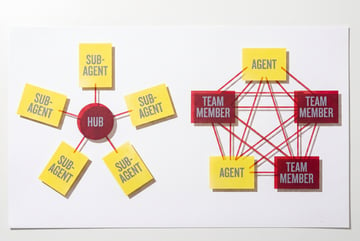
In a multi-agent architecture, you might have an orchestrator agent coordinating a set of subagents — each handling different tasks like research, writing, code review, or customer communication. Each of those agents can develop its own memory through Dreaming.
But the system also enables something more powerful: shared memory consolidation across agents. When multiple subagents encounter the same type of problem and each develops its own resolution strategy, Dreaming can synthesize those separate learnings into a unified memory entry accessible to all agents in the network.
This mirrors how human teams actually improve. Individual team members learn from their own experience. But the team as a whole benefits when that learning gets documented and shared.
Implications for Long-Running Agent Deployments
For agents that run continuously — handling customer support, managing data pipelines, running research workflows — Dreaming creates a compounding improvement effect. The agent that handles your support queue in month three should genuinely be better at your specific use cases than it was in month one, not because the underlying model changed, but because its memory has been curated toward what actually works in your environment.
This is a meaningful shift from how most people currently think about AI agents. The dominant mental model is still “prompt + model = output.” Dreaming points toward something closer to “prompt + model + accumulated operational experience = output” — and that third variable matters more the longer an agent runs.
What Claude Dreaming Doesn’t Do
It’s worth being precise about the limits here, because this feature is easy to overstate.
It doesn’t update model weights. The underlying Claude model isn’t being fine-tuned during Dreaming. What changes is the agent’s external memory — what it knows about your specific context, preferences, and task patterns. The base model stays the same.
It’s not real-time learning. Dreaming is a batch process, not a live feedback loop. The agent doesn’t update its memory mid-session based on what’s happening right now. That updating happens between sessions.
It requires enough session history to work. Pattern detection needs signal. An agent that’s only run two sessions doesn’t have enough data for meaningful consolidation. The benefits compound over time and across volume.
It’s not autonomous goal-setting. Dreaming restructures memory to improve task performance. It doesn’t change what tasks the agent is trying to accomplish or allow the agent to set new objectives for itself. The goals are still defined by the deployment configuration.
Understanding these limits is important for setting realistic expectations — and for understanding where human oversight still matters.
How to Build Claude Agents With Self-Improving Memory in MindStudio
If you want to actually deploy agents that benefit from this kind of memory architecture — whether using Claude’s native Dreaming capabilities or building analogous consolidation logic yourself — MindStudio is one of the more practical ways to do it.
MindStudio’s no-code builder lets you configure Claude agents with persistent memory connected to external stores. You can set up agents that log session data, retrieve relevant past context on each new run, and feed that context into the model’s reasoning process. And because MindStudio connects to 1,000+ tools out of the box, you can wire that memory to wherever your data actually lives — Notion, Airtable, Google Sheets, a database — without writing infrastructure code.
For teams that want to implement their own memory consolidation logic (essentially a DIY version of what Dreaming does natively), MindStudio supports custom JavaScript and Python functions. You can build a scheduled background workflow that reviews recent session logs, runs a Claude pass to extract patterns, and writes structured updates back to your memory store. That workflow runs automatically, on whatever cadence makes sense for your use case.
The average agent build in MindStudio takes 15 minutes to an hour. You can start with a basic Claude agent and memory store, then layer in consolidation logic as your deployment matures. You can try it free at mindstudio.ai.
For teams already thinking about AI agent orchestration, this kind of memory infrastructure is increasingly the difference between agents that feel like demos and agents that actually work in production.
The Broader Context: Where Agent Memory Is Heading
Claude Dreaming isn’t an isolated product decision. It fits into a larger trend across the AI industry toward agents that improve through operational experience rather than just model updates.
Anthropic’s research on long-horizon tasks and autonomous agents has consistently emphasized the importance of persistent, structured memory as a prerequisite for reliable performance on complex workflows. Dreaming is one specific mechanism for maintaining that memory’s quality over time.
Other AI labs are approaching the same problem from different angles — fine-tuning on deployment-specific data, retrieval-augmented generation with smarter indexing, or constitutional approaches that let agents evaluate their own outputs. What’s notable about Dreaming is that it’s specifically designed for the between-session period, treating that time as a resource for improvement rather than dead time.
Built like a system. Not vibe-coded.
Remy manages the project — every layer architected, not stitched together at the last second.
The underlying insight is simple but important: if an agent is going to operate continuously over months or years, the quality of its memory system matters as much as the quality of its base model. A less capable model with excellent, well-maintained memory will often outperform a more capable model with no persistent context — especially on specialized, domain-specific tasks.
For anyone building AI workers or deploying agents in production, that’s worth sitting with.
Frequently Asked Questions
What is Claude Dreaming?
Claude Dreaming is a memory consolidation process for Claude agents, developed by Anthropic. It runs between active sessions, reviewing logs from past agent interactions to identify recurring patterns, successful strategies, and outdated or incorrect information. The result is automatic restructuring of the agent’s external memory — improving future performance without requiring manual intervention.
How is Claude Dreaming different from regular agent memory?
Standard agent memory systems store and retrieve information from previous sessions. Claude Dreaming adds a maintenance layer on top of that: a process that periodically audits stored memory, removes low-value entries, surfaces high-value patterns, and reconciles contradictions. The difference is between a growing pile of notes and a regularly organized knowledge base.
Does Claude Dreaming change the underlying AI model?
No. Claude Dreaming operates on the agent’s external memory store, not the model’s weights. The base Claude model doesn’t change. What improves is the contextual knowledge available to the agent within a specific deployment — things like user preferences, task-specific strategies, and domain knowledge accumulated through operation.
Is Claude Dreaming available to developers right now?
Anthropic has been rolling out agentic memory features as part of its broader agent infrastructure work. Availability for specific features varies depending on API access tier and the version of Claude being used. Developers building on the Claude API should check Anthropic’s current documentation for the latest on memory-related capabilities.
Can Claude Dreaming work in multi-agent systems?
Yes, and multi-agent contexts are where it’s arguably most valuable. When multiple agents are working in the same deployment, Dreaming can synthesize learnings from across the agent network — not just improving individual agent memory, but creating shared context accessible to all agents in the system. This is particularly useful for complex orchestration setups where different agents handle different task types but need consistent underlying knowledge.
What are the risks of autonomous memory updates?
The main concerns are accuracy and drift. If the pattern detection gets something wrong, it could write incorrect generalizations into memory that persist across future sessions. Anthropic addresses this through configurable review modes — teams can require human approval for memory updates in sensitive deployments. Monitoring memory entries over time (rather than treating the memory store as a black box) is also a practical safeguard.
Key Takeaways
- Claude Dreaming is a between-session memory consolidation process that reviews past agent logs, identifies patterns, and restructures external memory automatically.
- It’s inspired by how biological brains consolidate learning during sleep — the agent is “offline” during consolidation, not actively processing tasks.
- It operates on external memory, not model weights — the base Claude model doesn’t change.
- In multi-agent systems, it can synthesize learnings across the entire agent network, not just individual agents.
- The practical value compounds over time: agents that have been running for months with active Dreaming should outperform fresh deployments on domain-specific tasks.
- Building Claude agents with robust memory infrastructure — including consolidation logic — is increasingly straightforward using platforms like MindStudio, where you can configure persistent memory, scheduled workflows, and custom logic without writing infrastructure code from scratch.