The 3 Levels of AI Proficiency: From Answers to Autonomous Agents
Most people jump from basic AI use to autonomous agents and fail. This framework explains the progression from AI for answers to AI working for you.

Most People Are Stuck at Level 1 and Don’t Know It
Ask someone how they use AI at work and you’ll hear the same answers. They use it to draft emails. To summarize documents. To answer questions they’d otherwise Google. Maybe to generate a quick outline.
That’s AI proficiency at its most basic level — and for a lot of people, that’s where it stays.
The problem isn’t that these uses are bad. They’re genuinely useful. The problem is that most people assume this is what AI is. A faster way to get answers. A smarter search box. A writing assistant with good grammar.
They miss the two levels above it entirely — and those levels are where most of the real productivity gains actually live.
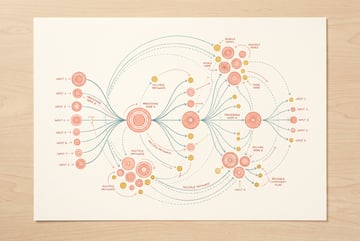
This article breaks down all three levels of AI proficiency: what each one looks like in practice, what separates them, and what you need to build to move up. It’s not a framework for its own sake. It’s a map for where you are and where to go next.
Level 1: AI as an Answer Machine
At this level, AI is reactive. You ask. It answers. You move on.
This is the entry point for most people, and the tools make it easy to stay here. ChatGPT, Claude, Gemini — all of them work perfectly well as conversational Q&A interfaces. You type a question, you get a response, done.
What Level 1 looks like in practice
- Asking AI to explain a concept
- Summarizing a long document by pasting it in
- Drafting an email or Slack message
- Generating a list of ideas for a project
- Asking for feedback on something you wrote
Each of these is a one-shot interaction. Input in, output out. No memory of what you asked before. No connection to your actual work systems. No ability to act on anything — only to produce text you then act on yourself.
Why it’s still useful
Level 1 AI use isn’t a failure state. It genuinely saves time. A well-crafted prompt can produce a usable first draft in seconds, compress a 40-page report into a readable summary, or explain a dense concept in plain language. That has real value.
The issue is the ceiling. At Level 1, you are always the last mile. AI produces output. You take that output and do something with it. Every interaction resets to zero. There’s no accumulation, no compounding, no automation.
You’re doing more with AI, but you’re also doing more overall. That’s the AI productivity paradox in action: more tools, more switching, more context-shifting — and the gains get eaten by the overhead.
The skill gap that keeps people here
Most people don’t move past Level 1 because they don’t have a clear model for what’s next. They know prompting. They’ve heard the term “AI agents.” But the space between “writing better prompts” and “autonomous agents running my business” feels impossibly large.
It isn’t. But the path requires building something that most Level 1 users don’t have yet: context.
The Missing Layer: Context
Before you can reach Level 2, you need to understand why so many AI interactions feel shallow or inconsistent.
The answer isn’t the model. Models are powerful. The answer is that the model has no idea who you are, what you’re working on, what standards you care about, or how your business operates. Every prompt starts from scratch.
The context layer is what bridges Level 1 and everything above it. It’s the collection of structured information that turns a generic AI into something that knows your work: your tone, your processes, your terminology, your customers, your constraints.
Without context, you’re always writing long prompts to compensate. You’re explaining things the AI should already know. You’re re-doing work across sessions because nothing carries forward.
With context, the interaction changes fundamentally. The AI doesn’t need to be re-briefed. It already knows what good output looks like for you specifically. That’s when things start to get useful in a different way.
Building your context layer — the documents, reference files, structured knowledge bases, and system prompts that define how AI should behave for your use case — is the real prerequisite for Level 2. It’s also one of the most in-demand AI skills that nobody talks about clearly.
Level 2: AI for Workflows
At Level 2, you stop using AI to answer individual questions and start using it to run repeatable processes.
The shift is significant. Instead of asking AI “write me a subject line,” you build a workflow where AI takes a defined input (say, a blog post draft), applies a defined process (extract the key message, generate five subject line variants, score them against your criteria), and returns a structured output you can immediately use.
Same capability, very different structure. And very different results.
What Level 2 looks like in practice
- A content review workflow that checks every draft against your brand guidelines automatically
- A lead enrichment process that takes incoming email inquiries and produces a structured brief before your first call
- A weekly reporting workflow that pulls data, formats it, and drafts the summary
- A document processing pipeline that extracts key information from contracts and flags anything outside standard terms
- A customer support triage system that categorizes tickets, drafts responses, and routes complex issues
Seven tools to build an app. Or just Remy.
Editor, preview, AI agents, deploy — all in one tab. Nothing to install.

The defining characteristic of Level 2 is that these processes are defined once and then run reliably. You’re not prompting from scratch each time. You’ve built something that does the prompting for you, in a consistent way, with consistent output quality.
The difference between Level 1 and Level 2
This is partly captured in the distinction between AI chatbots and AI agents: one responds to individual inputs, the other operates within a defined structure.
At Level 2, you’re closer to the agent end of that spectrum — not because the AI is fully autonomous, but because you’ve done the work of encoding a process. The AI isn’t winging it. It has a structure to follow, context to draw on, and a clear output format to produce.
The cognitive work you’re doing shifts too. You’re spending less time in execution and more time in specification: figuring out exactly what the process should be, what the criteria are, what good output looks like. That’s a different skill set than prompting, and a more valuable one. Specification precision — the ability to clearly define what you want with enough detail that AI can execute reliably — becomes your primary leverage.
Why most people skip this level
The temptation is to jump straight from Level 1 to “autonomous agents.” You see demos. You read about AI doing research end-to-end or running entire marketing campaigns. You want that.
But the people who successfully deploy autonomous agents almost always built Level 2 workflows first. The workflow phase is where you learn how AI handles your specific use cases, where the edges are, what needs human review, and what can run unattended. Skipping it usually means building agents that fail in production.
There’s even a name for what happens when you try to skip straight to complexity: AI setup porn. You spend weeks building an elaborate agent architecture that looks impressive in diagrams and produces nothing useful in practice.
Level 2 is where you avoid that trap. Build workflows first. Prove they work. Then extend them.
Level 3: Autonomous AI Agents
At Level 3, AI stops waiting for your instruction and starts working on your behalf.
This is agentic AI: systems that can take a goal, break it down into steps, use tools to execute those steps, handle exceptions, and complete multi-step tasks without you managing every decision point.
The difference from Level 2 isn’t just scale. It’s architecture. Level 2 workflows follow a fixed path. Level 3 agents can branch, loop, and adapt based on what they encounter. If a data source returns an unexpected result, an agent can decide how to handle it. If one approach fails, it can try another. If a task requires ten steps and only seven of them were anticipated, the agent figures out the other three.
That’s a genuinely different capability. And it requires a different relationship between you and the AI.
What Level 3 looks like in practice
- An agent that monitors your inbox, identifies high-priority leads, researches them, drafts personalized outreach, and queues it for your review
- A research agent that takes a question, searches multiple sources, synthesizes findings, identifies contradictions, and produces a structured briefing document
- A scheduling agent that manages your calendar proactively, identifies conflicts, and handles rescheduling based on your stated priorities
- A competitive intelligence agent that tracks specified sources, flags relevant changes, and summarizes implications for your strategy
Remy doesn't write the code. It manages the agents who do.
Remy runs the project. The specialists do the work. You work with the PM, not the implementers.
If you want to understand the range of what’s possible here, AI agent use cases for knowledge workers covers what’s actually working in production, not just in demos.
Why this level requires foundation
Level 3 agents fail when deployed without the groundwork from Levels 1 and 2. The most common failure modes:
Underspecified goals. If you can’t describe what good output looks like with enough precision for a human to follow, an agent won’t manage it either. The clarity you build at Level 2 becomes the specification your Level 3 agent operates against.
No trust calibration. Handing an agent access to your inbox, calendar, or customer data without understanding its failure modes is how you create real problems. Progressive autonomy — expanding what an agent can do as you verify it handles edge cases correctly — is the right approach. Start narrow. Expand based on evidence.
Missing evaluation. At Level 3, you’re no longer reviewing every output. But you need a way to verify things are working correctly. Developing what might be called a sniff-check skill — the ability to quickly assess whether AI output is trustworthy — becomes more important than your ability to produce output directly.
The post-prompting shift
Something fundamental changes at Level 3. You’re no longer in a reactive loop with AI. You’re operating in the post-prompting era: the AI isn’t waiting for your next instruction. It’s working toward your goals between interactions.
This changes how you spend your time. Less execution, more oversight. Less writing prompts, more defining goals and reviewing outcomes. Less doing, more directing.
That shift feels uncomfortable for people who equate productivity with doing. But it’s the right direction. Your judgment, your domain expertise, and your standards are what the agents are executing against. That’s not less work — it’s higher-leverage work.
How to Actually Move Between Levels
The three levels aren’t a ladder you climb by reading more about AI. They require deliberate practice at each stage.
Moving from Level 1 to Level 2
-
Pick one repetitive task you do more than twice a week. Not a one-off project — a recurring process with consistent inputs and expected outputs.
-
Write it out as a procedure. Before automating anything, describe the task in enough detail that someone who doesn’t know your work could follow it. This forces the specification clarity you need.
-
Build the context. What background information does the AI need to do this well? Your brand voice? Industry terminology? Quality criteria? Assemble this into a reusable system prompt or reference document.
-
Build the workflow, not the prompt. Structure the task as a defined sequence: input → process → output. Test it against real examples. Iterate on the process until output quality is consistent.
-
Run it 20 times before calling it done. Workflows that work once aren’t reliable. You need to see it handle variation before you trust it with real work.
Moving from Level 2 to Level 3
-
Identify a workflow that needs branching. The right upgrade candidate is a workflow where you currently have to make judgment calls mid-process — “if this, then that” decisions that you’ve been making manually.
-
Map the decision logic. Write out the branches explicitly. Agentic workflows with conditional logic and branching require the same kind of specification clarity as Level 2, applied to more complex decision trees.
-
Add tools incrementally. Start with agents that can read and produce text. Add tool access (search, calendar, email, database queries) only when you’ve verified the core logic works.
-
Build in review points. Before removing human review from any step, verify the agent handles that step correctly across at least 20 real-world cases. Move review gates later in the process as trust builds — but keep them until you have evidence you don’t need them.
-
Monitor outputs, not just completion. At Level 3, the signal you need isn’t “did the task complete” — it’s “was the output good.” Build a lightweight review habit before you trust agents to operate fully unsupervised.
Other agents ship a demo. Remy ships an app.
Real backend. Real database. Real auth. Real plumbing. Remy has it all.
Where Remy Fits This Framework
Remy is relevant to this framework at Level 2 and beyond — specifically for people who want to build the tools that run their workflows and agents, without spending months writing code.
Here’s the concrete connection: most workflow and agent tooling requires custom software. A lead enrichment workflow needs a real backend that receives data, processes it, and stores results. An agent that manages scheduling needs a real application with auth, a database, and integrations. Building that from scratch is expensive and slow.
Remy lets you describe the application in a spec — annotated prose that defines what it does, what data it handles, and how it behaves — and compiles that into a full-stack app: backend, database, auth, deployment, everything. You’re not writing TypeScript line by line. You’re specifying what you need, and the code is derived from that.
For someone building at Level 2 or Level 3, this means you can ship the custom tooling your workflows need without a dedicated engineering team. Domain expertise becomes the bottleneck in a good way — the people who understand the workflow are the ones building it.
If you want to see what that looks like in practice, try Remy at goremy.ai.
Common Traps at Each Level
Level 1 traps
The copy-paste loop. Spending more time formatting and editing AI output than you would have spent writing from scratch. Usually a sign your prompts aren’t specific enough, or you’re using AI for tasks where it doesn’t add enough value to justify the friction.
Tool accumulation. Adding new AI tools for every new task type. There’s a real cost to managing multiple tools, keeping up with updates, and switching between interfaces. The three-tool rule exists for a reason.
Cognitive outsourcing. Asking AI for opinions on everything, including things you know well. This feels productive. It isn’t. Over time, you start to need AI for things you used to handle easily — and your own reasoning atrophies. Cognitive debt is a real risk at this level.
Level 2 traps
Over-engineering before testing. Building complex multi-step workflows before verifying that each step works. Build linear first. Add complexity only when the simple version is proven.
Skipping output review. Trusting workflow output without checking it regularly. Quality drifts. Prompt changes affect outputs in unexpected ways. Keep a lightweight QA habit even for workflows you consider stable.
Solving the wrong problem. Building a workflow for a task that didn’t need automation. Not everything should be systematized. Focus on the highest-volume, most consistent work first.
Level 3 traps
Agent sprawl. Building multiple agents that overlap in scope, create competing actions, or don’t share state correctly. AI orchestration — managing how multiple agents interact — is a real engineering challenge that most people underestimate.
Missing failure handling. Agents encounter unexpected inputs and edge cases constantly. Without explicit failure handling, a Level 3 agent will either produce bad output silently or get stuck in ways that create downstream problems.
- ✕a coding agent
- ✕no-code
- ✕vibe coding
- ✕a faster Cursor
The one that tells the coding agents what to build.
Premature unsupervised operation. The biggest Level 3 mistake. Removing human review before you have enough evidence the agent handles your real-world cases correctly. Trust should be earned through track record, not assumed from demo performance.
Frequently Asked Questions
What is AI proficiency and why does it matter?
AI proficiency is your ability to use AI effectively to accomplish real work — not just to get answers, but to automate processes and eventually delegate tasks to AI agents that operate with increasing independence. It matters because the gap between Level 1 and Level 3 users is large and growing. People who have built genuine AI proficiency can do significantly more with less time than those who use AI only reactively.
What’s the difference between an AI chatbot and an AI agent?
A chatbot is reactive: it waits for input and responds. An AI agent is structured to pursue a goal, potentially across multiple steps, using tools, and handling variation along the way. The difference between chatbots and AI agents comes down to whether the AI is responding to a single query or executing a multi-step process toward a defined outcome. Most people start with chatbots. Agents come later, after you’ve built the context and process structure they need to operate.
Do you need to be technical to reach Level 3?
No, but you need to be precise. The biggest skill required to build and deploy AI agents isn’t coding — it’s the ability to specify exactly what you want with enough detail that AI can execute reliably. That’s a domain expertise skill as much as a technical one. Tools like Remy exist specifically to remove the coding requirement from building custom AI-powered applications. The real constraint is clarity of thought about your process, not ability to write code.
How long does it take to move from Level 1 to Level 2?
For most people: weeks, not months. The prerequisite is identifying one repeatable process, building the context layer for it, and running the workflow until it’s consistent. None of that requires specialized skills — it requires focused effort on one specific task. The people who stall usually try to build comprehensive systems before proving a single workflow works. Start with one thing and finish it.
Can AI agents really work without supervision?
Some can, in some contexts, after sufficient validation. But “unsupervised” is a gradient, not a switch. Most effective Level 3 deployments have a human review point somewhere in the process — often at the output stage rather than for every step. The right framing isn’t “does it need supervision” but “where in the process does human judgment add the most value, and where can the agent operate independently with low risk.” Building that map is part of what separates competent Level 3 users from people who deploy agents that quietly fail.
What skills should I build first if I’m starting from scratch?
Other agents start typing. Remy starts asking.
Scoping, trade-offs, edge cases — the real work. Before a line of code.
Start with context engineering: the ability to build structured background knowledge that makes AI reliably useful for your specific work. Then move to workflow design: breaking down a process into defined steps with clear inputs, outputs, and quality criteria. Prompting comes naturally as part of both of these — you don’t need to study it separately. If you want a structured view of what skills are most valuable, the AI skills that are in demand in 2026 covers the full picture.
Key Takeaways
- Level 1 is AI for answers: reactive, single-turn, useful but limited.
- Level 2 is AI for workflows: repeatable processes that run consistently with defined inputs and outputs.
- Level 3 is autonomous agents: AI that pursues goals, branches on decisions, and operates with limited supervision.
- The context layer is the prerequisite for moving beyond Level 1. Without it, every interaction starts from scratch.
- Most people fail at Level 3 because they skip Level 2. Build workflows first. Earn trust before removing oversight.
- The skills that matter most at higher levels aren’t prompting — they’re specification, evaluation, and process design.
If you’re ready to build beyond basic prompting — and want to ship the actual tooling your workflows need without writing everything from scratch — try Remy at goremy.ai.