How to Spot Setup Porn in Your AI Workflow (And Escape It)
A practical checklist for spotting setup porn in your AI workflow — and the simpler, ship-first patterns to use when agent frameworks aren't earning their keep.

The Seductive Trap of Infinite Configuration
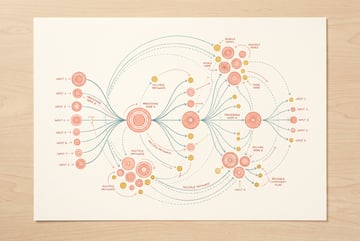
There’s a recognizable pattern in AI productivity circles right now. Someone gets excited about automating their workflow. They spend a weekend reading about multi-agent architectures, orchestration layers, and vector databases. They set up LangChain, or CrewAI, or AutoGen. They wire together five specialized agents — a researcher, a planner, a writer, a reviewer, a formatter. They configure memory backends, retry logic, and logging pipelines.
Then nothing ships.
This is AI setup porn — and it’s one of the most effective ways to feel productive while producing zero actual output. If you’ve found yourself deep in a YAML file at midnight, configuring an agent framework you haven’t actually used yet, this article is for you.
What “Setup Porn” Actually Means
The phrase borrows from “productivity porn” — a term for consuming content about being productive instead of doing productive things. Setup porn is a subset: spending disproportionate time on configuration, tooling, and infrastructure as a substitute for doing the real work.
In the AI context, it shows up as an obsession with the architecture of your AI system rather than its outputs.
Signs you’re in it:
- You’ve spent more than three hours configuring a system that hasn’t produced a single useful output yet
- You’re tweaking agent prompts for a pipeline that doesn’t have a real use case attached to it
- You’re reading about orchestration strategies for a task that a single well-prompted model could handle in five minutes
- You’ve installed and uninstalled three different frameworks this week trying to find the “right” one
- Your README is longer than your actual results document
The setup feels like work. It involves technical knowledge, problem-solving, and decision-making. But it isn’t work — it’s the appearance of work.
Why Complex Agent Frameworks Are So Appealing
Understanding why this trap is so easy to fall into is the first step to avoiding it.
They Look Impressive
Multi-agent architectures with specialized roles, handoff protocols, and shared memory stores look sophisticated. They invoke the language of real engineering. There’s a social dimension here too — sharing a diagram of your six-agent research pipeline gets engagement on Twitter in a way that a screenshot of useful output usually doesn’t.
They Promise to Solve Everything at Once
The fantasy is a system so well-designed that you never have to manually do anything again. The agent framework becomes an all-or-nothing bet: if you just get the architecture right, everything flows from there. This is appealing because it defers the hard work of figuring out what you actually need.
The Complexity Feels Proportional to the Value
Intuitively, it seems like a more complex system should produce more complex, valuable results. If one agent can write a blog post, surely six agents with distinct roles and a reviewing layer will write a much better blog post. This intuition is wrong more often than it’s right — but it feels true.
The Tooling Is Genuinely Fascinating
LangChain, CrewAI, AutoGen, LlamaIndex, and similar frameworks are intellectually interesting. The ideas behind agentic reasoning, tool use, and multi-step planning are legitimately compelling. Getting lost in them isn’t evidence of laziness — it’s evidence of curiosity pointed at the wrong target.
The Real Cost of Over-Engineering Early
The hidden cost of complex agent setups isn’t just wasted hours. It’s compounding damage to your actual productivity.
You Never Build Feedback Loops
When a system is too complex to understand, you can’t debug it. When something goes wrong — and it will — you don’t know if it’s the orchestration layer, the model choice, the prompts, the tool calls, or the data pipeline. So you rebuild instead of learning.
Simple systems fail in readable ways. Complex ones fail mysteriously.
Your Assumptions Stay Untested
The purpose of an AI workflow is to produce outputs that are useful to real people or real processes. The only way to know if your output is useful is to produce some and check. Every hour spent in configuration is an hour where your core assumptions about what the system should do remain untested.
Most over-engineered agent systems get abandoned not because the technology failed, but because the builder eventually realized the problem they were solving either wasn’t real or could be solved in a fraction of the time with a much simpler approach.
Maintenance Becomes a Second Job
Complex frameworks accumulate dependencies. API changes in one library break another. Model updates change behavior. Rate limits shift. Memory backends need management. What started as a productivity tool becomes a maintenance project.
Research on software complexity consistently shows that systems with more components have disproportionately higher failure rates — and AI agent pipelines are no different.
The Opportunity Cost Is Real
Other agents start typing. Remy starts asking.
Scoping, trade-offs, edge cases — the real work. Before a line of code.

Every hour spent configuring a system that doesn’t ship is an hour you didn’t spend doing the thing directly, learning from it, and iterating. For most knowledge work tasks, the person who ships imperfect output consistently outperforms the person optimizing for the perfect output they never deliver.
The Psychology Behind It
Setup porn isn’t just a time management problem. It’s a psychological one.
Configuration feels safe. There’s no risk of failure in setup mode. You can’t be told your output is bad if you haven’t produced any output. The framework becomes a buffer between your effort and judgment.
It scratches the completion itch. Finishing a piece of configuration — getting a framework installed, wiring two agents together, successfully running a test — produces a sense of accomplishment that mimics finishing real work. The brain doesn’t always distinguish between these.
Complexity signals effort. We’re trained to associate hard work with complex outputs. A simple solution can feel like you didn’t try hard enough, even if it works perfectly.
The “almost working” spiral is addictive. Once you’re inside a complex framework, you’re constantly one fix away from success. This keeps you engaged in a way that switching to a different approach feels like giving up.
How to Tell If You’re Actually Stuck
Not every complex system is over-engineered. Some workflows genuinely require multi-agent coordination, memory management, and complex tool orchestration. The question is whether the complexity is earning its keep.
Ask yourself:
-
Can I state the actual output this system should produce in one sentence? If not, you’re probably over-architecting a problem you haven’t fully defined.
-
Have I tried solving this with a single model call first? A well-crafted prompt to GPT-4o or Claude often does in 30 seconds what a five-agent framework does in 30 minutes — with fewer errors and no maintenance overhead.
-
Is the complexity solving a real bottleneck, or a hypothetical one? Don’t build for scale you don’t have yet. Don’t add a memory layer because someday you might need one.
-
What’s the simplest thing that could possibly work? Build that first. Add complexity only when the simple version demonstrably fails.
-
How long have I been in setup mode? If it’s been more than two hours without a meaningful output, that’s a signal worth taking seriously.
What to Do Instead
The antidote to AI setup porn isn’t abandoning ambition — it’s applying it at the right layer.
Start With the Output, Not the Architecture
Before touching any tooling, write down exactly what you want the system to produce. Be specific. “A weekly competitor analysis report with three sections: new product announcements, pricing changes, and key social media posts” is a useful spec. “An AI research assistant” is not.
Once you have a specific output, the simplest possible path to that output becomes obvious.
Use Single Agents for Single Tasks
For most business automation tasks, a single well-prompted AI agent is enough. The tasks that genuinely require multi-agent coordination are rarer than the hype suggests. Specialized agents are useful when:
- Different parts of a task require fundamentally different capabilities (e.g., web search + code execution + image generation)
- A task is too long to fit in a single context window
- You need parallel processing for speed
For everything else, one agent is probably fine.
Plans first. Then code.
Remy writes the spec, manages the build, and ships the app.
Build for Today, Not Tomorrow
The classic engineering trap is building for hypothetical future requirements. In AI workflows, this looks like adding routing logic for edge cases you haven’t encountered, building memory systems for conversations that haven’t happened, or creating multi-step pipelines for tasks you haven’t validated yet.
Ship the simple version. Let real usage tell you where the complexity is actually needed.
Measure Output Quality Before Measuring System Performance
Before you start optimizing latency, cost, and scalability, ask whether the output is actually good. A faster pipeline producing mediocre results is not an improvement over a slower one producing excellent results.
Get the output right first. Then optimize.
Practical Framework: The Minimum Viable Agent Test
Before committing to a complex architecture, run this test:
Step 1: Write the task as a single prompt. Take your full workflow and compress it into the best single prompt you can write. Give it to a capable model (Claude Sonnet, GPT-4o, etc.) with the necessary context and see what comes back.
Step 2: Evaluate the output honestly. Is the output 70% of the way to what you need? If so, your problem might be prompt quality, not architecture. Spend time improving the prompt before adding complexity.
Step 3: Identify specific failure modes. If the single-prompt approach fails, be specific about how it fails. Does it fail because the task requires real-time data? Because it needs to take actions in external tools? Because it’s too long for a single context? Because different parts require different expertise?
Step 4: Add only the complexity that addresses those specific failures. If the problem is real-time data, add a search tool. If it’s tool use, add the relevant integrations. If it’s length, consider breaking into sequential steps. Add the minimum complexity needed to fix the identified failure — nothing more.
Step 5: Ship and measure. Get the thing running. See if it produces useful outputs in the real context it was designed for. Let actual usage drive the next round of improvements.
This five-step process won’t produce the most architecturally impressive system. It will produce one that works and gets used.
Frequently Asked Questions
What is AI setup porn?
AI setup porn refers to the pattern of spending excessive time configuring AI agent frameworks, orchestration systems, and technical infrastructure — often as a substitute for actually producing useful output. Like productivity porn more broadly, it involves activities that feel productive (researching frameworks, setting up pipelines, configuring agents) without generating the results that motivated the work in the first place.
When does a complex multi-agent framework actually make sense?
Multi-agent architectures are genuinely useful when: different parts of a task require distinct model capabilities or tools that can’t be combined in a single call; tasks are too long to fit in a single context window; parallel processing is needed for speed at scale; or you need separate quality control layers for high-stakes outputs. For most everyday automation tasks — content creation, data processing, research summarization — a single well-configured agent is sufficient.
Other agents ship a demo. Remy ships an app.
Real backend. Real database. Real auth. Real plumbing. Remy has it all.
How do I know if I’m over-engineering my AI workflow?
The clearest signal is a growing gap between time spent building and useful outputs produced. If you can’t describe your system’s output in one sentence, haven’t tested a single real example through the full pipeline, or find yourself rebuilding the architecture rather than improving the output quality, you’re likely over-engineering. Another signal: if removing a component wouldn’t break the output, it shouldn’t be there yet.
Why do people keep building complex agent systems that don’t work?
Several factors converge: complex architectures are intellectually stimulating and look impressive; the “almost working” state is psychologically engaging; configuration feels like work without carrying the risk of judgment; and the AI tooling ecosystem actively promotes sophisticated architectures. The incentives in content creation (impressive diagrams get more engagement than useful outputs) reinforce the pattern.
What’s the fastest way to start getting value from AI automation?
Define a specific, narrow output you want first. Then try to produce it with a single model call before adding any infrastructure. If that works, automate the trigger and inputs. If it doesn’t work, identify the specific gap and add the minimum tooling to bridge it. Starting narrow and specific — rather than building a general-purpose system — almost always produces useful results faster. Platforms like MindStudio are designed specifically to minimize the time between idea and working automation.
Does using no-code tools mean sacrificing capability?
No — it means shifting where you spend your time. No-code AI platforms handle the infrastructure layer (auth, retry logic, rate limiting, integrations) so you can focus on the logic, prompts, and outputs that actually determine whether your automation is useful. For tasks that genuinely require custom code, most platforms including MindStudio support JavaScript and Python functions. The tradeoff isn’t capability — it’s whether you want to spend your time on plumbing or on outcomes.
Key Takeaways
- AI setup porn is spending more time configuring systems than using them — it’s a real productivity trap that feels like work because it involves genuine technical effort.
- Most business automation tasks can be handled by a single well-prompted agent. Multi-agent complexity earns its place in specific cases, not as a default starting point.
- The psychological pull is real: configuration feels safe, completion loops are addictive, and complexity signals effort in ways that override practical judgment.
- The antidote is output-first thinking: define what you want to produce, try the simplest path to producing it, and add complexity only when specific failures require it.
- Reducing setup friction matters. The harder it is to start, the more likely you’ll never ship. Tools that get you from idea to working automation in minutes reduce the setup porn trap by making the productive path the path of least resistance.
Remy doesn't build the plumbing. It inherits it.
Other agents wire up auth, databases, models, and integrations from scratch every time you ask them to build something.
Remy ships with all of it from MindStudio — so every cycle goes into the app you actually want.
If you’re sitting on an automation idea that’s been buried under framework research and configuration experiments, it’s worth trying the simplest possible version right now. MindStudio lets you build and deploy AI agents without the infrastructure overhead — free to start, and fast enough that you’ll know within an hour whether the idea works.