
Use Cases Articles
Browse 627 articles about Use Cases.

What Is Meta Muse Spark 1.1? Meta's New Frontier-Competitive LLM Explained
Meta Muse Spark 1.1 is Meta's return to competitive AI with terminal bench scores matching GPT 5.5. Here's what it can do and how to access it.

How to Use AI Screen Monitoring to Optimize Your Workflow: A Practical Guide
Use AI to screenshot your screen every 5 seconds, identify inefficiencies, and get actionable suggestions. Recover 2+ hours per day with this simple system.

How to Build AI Video Intros and Location Transitions Using Runway and Seedance
Learn how to create cinematic video intros and seamless location transitions using Runway's keyframe feature and Seedance 2.0. Step-by-step workflow.
Grok 4.5 vs Claude Opus 4.8: Cost, Speed, and Real-World Coding Results
Grok 4.5 scores 83% on Terminal Bench at a fraction of Opus 4.8's cost. Compare both models on coding, legal tasks, and real-world professional work.

Grok 4.5 vs Claude Opus 4.8: Which Model Wins for Agentic Coding?
Grok 4.5 trained on Cursor data now rivals Claude Opus 4.8 on coding benchmarks. Compare cost, speed, and real-world agentic performance.
Hunyuan-3 vs GLM 5.2: Which Open-Weight Model Is Better for AI Agents?
Compare Tencent's Hunyuan-3 and GLM 5.2 on agentic coding, tool use, context length, and cost to find the right open model for your workflows.

What Is Grok 4.5? xAI and Cursor's First Jointly Trained Coding Model
Grok 4.5 is the first model trained using Cursor's real-world coding data and xAI's compute. Learn what makes it different and when to use it.

What Is Tencent Hunyuan-3? The 295B MoE Model Built for Agentic Tasks
Tencent's Hunyuan-3 is a 295B mixture-of-experts model optimized for agentic tool use, structured outputs, and local enterprise deployment.
How to Build an AI Second Brain Knowledge Base Using Claude Code
Learn how to build a personal AI knowledge base that stores, organizes, and retrieves your information using Claude Code and structured memory systems.
The 5 Levels of AI Coding: From Spicy Autocomplete to the Dark Factory
Discover the five levels of AI coding autonomy—from manual reference tools to fully autonomous dark factories—and find the right level for your workflow.

How to Use AI Agents for High-Stakes Paperwork: Insurance, Taxes, and Healthcare
Learn how to apply a 9-part agent skeleton to organize messy documents into structured case files for insurance appeals, tax prep, and healthcare claims.
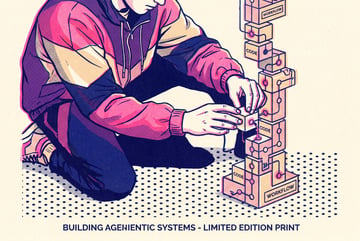
How to Use GLM 5.2 for Agentic Workflows: Agent Harness, Chrome Extensions, and Game Clones
GLM 5.2 excels at coding agents, Chrome extensions, and long-context tasks at a fraction of frontier model costs. Here's how to use it effectively.
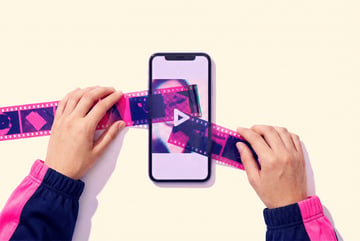
What Is Gemini Omni Flash? Google's Conversational Video Editing Model Explained
Gemini Omni Flash is Google's multimodal video model that lets you edit video through conversation—changing characters, lighting, and style iteratively.

OpenAI Codex Record and Replay: How to Automate Repetitive Computer Tasks Without Code
Codex's record-and-replay feature lets you demonstrate a workflow once and have AI repeat it. Learn how it works, its limits, and how to use it effectively.

What Is GLM 5.2? The Open-Weight Model Beating GPT 5.5 on Design and Coding Benchmarks
GLM 5.2 from ZAI offers a 1M token context window, MIT license, and frontier-level coding performance at a fraction of the cost of closed models.
What Is Seed Audio 1.0? ByteDance's Audio Scene Generator for AI Video Workflows
Seed Audio 1.0 generates full audio scenes with dialogue and ambient sound at 18 cents per minute. Learn how it improves Seedance video generation quality.

How to Build an AI Second Brain Knowledge Base with Claude Code
Learn how to build an AI second brain using Claude Code with voice profiles, visual identity files, and positioning docs that power every agent session.

ByteDance Volcano Arc: How Seedance Is Solving the IP Problem for AI Video
ByteDance's Volcano Arc platform licenses real actor likenesses and film assets for AI video generation with revenue sharing. Here's how it works.

Seedance 2.5: 30-Second Video, 4K Output, and 50 Multimodal References Explained
Seedance 2.5 doubles video length to 30 seconds, adds 4K output, and supports 50 multimodal references. Here's what it means for AI video workflows.

Seedance 2.5: 30-Second Video, 4K, and 50 Multimodal References Explained
Seedance 2.5 doubles video length to 30 seconds, supports 50 reference inputs, and adds 4K output. Here's what the upgrade means for AI video workflows.